Animal Dream Symbol
Cat Dream Meaning: Dreams About Cats Explained
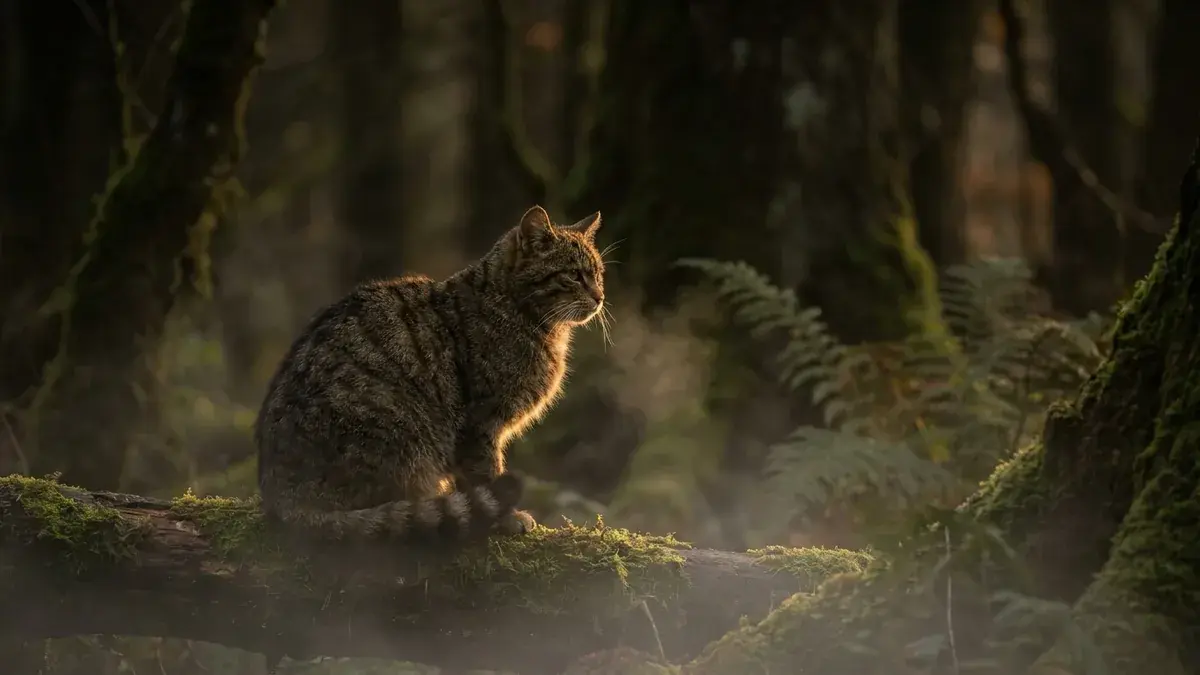
Dreaming about a cat usually points to independence, sharp intuition, and a call to trust your own judgment instead of following the crowd. A calm or napping cat signals contentment and a settled home life, while a hissing, cornered, or water-avoidant cat flags tension or an imbalance you've been avoiding. Black cats and big cats like lions and tigers carry the same core themes, just filtered through folklore or turned up in intensity.
An almanac
- Core message
- Trust your own instincts
- Spirit animal
- Independence and self-direction
- In dreams
- Calm cat = contentment; hissing or water conflict = tension
- Best qualities
- Focus, adaptability, quiet confidence
- Watch for
- Hissing, flattened ears, tripping underfoot
- Cultural roots
- Egypt's Bastet; Japanese and Celtic folklore
- Night vision
- Sees at ~1/6 the light level humans need
- Sleep needs
- 12–16 hours a day, cats included
A cat curling through your dream rarely shows up by accident. In the language of sleep, felines tend to stand in for independence, sharp intuition, and a kind of feminine power that moves on its own schedule. Whether the cat is a stray on the porch, a black shadow crossing your path, or a full-grown lion, the message usually centers on trusting your instincts and reclaiming a sense of self-direction. The scenarios below cover what the most common cat dreams tend to reveal about your waking life.
What It Means When a Cat Shows Up in Your Dream
At the broadest level, a cat in your dream reflects your relationship with independence and self-reliance. Cats don't answer to anyone, and when one appears in your sleep, it often points to a part of your life where you're being asked to trust your own judgment instead of following the crowd.
Where the cat appears matters. A cat wandering through your house, especially crossing a doorway, often points to a relationship that feels unpredictable or a little standoffish, much like the cat's own temperament. A cat weaving between fragile objects can be a nudge that something in your waking life is delicately balanced and could tip either way depending on how carefully you handle it.
If the cat trips you or gets underfoot, treat it as a mild warning that something small and easy to overlook is about to trip you up in real life too. On the gentler end, a cat napping in a sunbeam or curled up somewhere cozy usually signals contentment: things at home are settled enough to actually enjoy rather than worry over.
Common Cat Dream Scenarios
6 scenarios — tap the one you remember
When the Cat Dream Features a Lion or Tiger
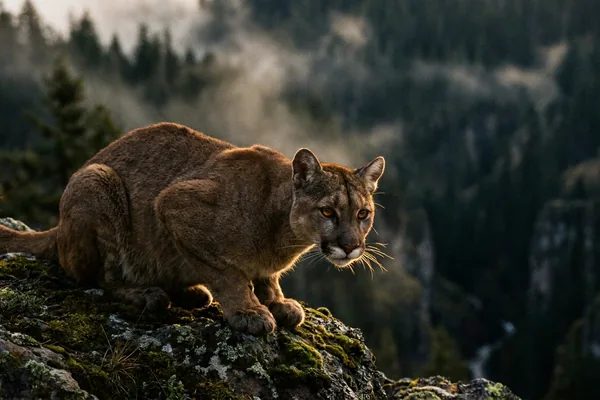
Big cats carry the same core themes as house cats, just turned up in intensity.
Lions in dreams usually carry a message about protection and leadership. Lions are the rare big cat that lives in a family group, so seeing one, or a whole pride, often mirrors your own sense of community and loyalty, and the leadership you hold or could step into at work, at home, or in a spiritual sense. A lion's mane brings in imagery of sunlight and warmth: it may be time to stop hiding and let your strength be visible. Seeing a lion on a crest, flag, or shield adds a note of nobility, a reminder that real courage is often quiet rather than showy.
Tigers, by contrast, tend to symbolize intense energy, resolve, and a more sensual kind of power. A tiger sitting or walking suggests untapped potential worth acting on, but a crouched, ready-to-pounce tiger is a cue to commit fully once you've decided on your target. If a tiger is crossing your path or attacking, expect a challenge you need to face head-on rather than avoid; a tiger simply watching or resting suggests the timing isn't right yet. Chasing a tiger down a long trail, or holding a tiger by the tail, reflects a situation where you feel more at the mercy of circumstances than in control of them.
Black Cat Dreams and Their Reputation
Cats perceive far more of their surroundings than we do, and that heightened perception may be why black cats in particular carry such a mystical reputation. In Japan, black cats are considered good luck and linked to the beckoning maneki-neko, while in Scottish Celtic tradition the black Cat Sìth carries an air of magic and the otherworldly. In dream terms, that can be a nudge to decide whether you'll meet a challenge head-on or find a cleverer way to slip past it.
Other traditions read black cats less kindly: in European folklore, especially medieval Britain, a black cat was often linked to witches, bad luck, or even a malevolent presence. But even in these darker readings, the story isn't all grim. A cat's famous nine lives and knack for landing on its feet often show up in dreams as reassurance that you'll get through a rough patch and adapt when you need to.
Spiritual Meaning of Cat Dreams
Across many cultures, cats have been treated as guardians rather than ordinary pets, and that protective role often carries into dream symbolism. Sailors historically considered cats good luck charms aboard ship, so a cat dream can carry an undertone of safe passage through uncertainty.
In Thailand, Siamese cats have long been recorded in the ancient Tamra Maew manuscripts as prized companions of the Siamese royal court, and a Siamese cat in a dream often points toward spiritual protection and a call to deepen your own inner practice. In ancient Egypt, cats were connected to Bastet, the goddess of the home, fertility, and protection whose festivals were celebrated with music, dance, and joy; if your dream involves a cat during a warm family gathering, especially one with music, it can read as a kind of blessing over that connection.
That protector role wasn't only symbolic. Bastet's earliest images, from the third millennium BCE, show her as a fierce lioness; her look softened into a domestic cat by the Third Intermediate Period (roughly 1070–712 BCE), a change that reflects how Egyptians came to prize cats for very practical protection against the mice, rats, and snakes that threatened their grain stores. Devotion to her ran deep: archaeologists excavating her temple at Bubastis uncovered more than 300,000 mummified cats left as offerings, a scale of reverence that helps explain why a cat still reads as a guardian symbol in dreams today.
Put together, these details suggest a cat dream is rarely a warning to fear. More often, it's an invitation to trust the quieter, instinctive parts of yourself that already know when to rest, pounce, or walk away.
Symbolism & the Message Behind Your Dream
Taken as a whole, a cat dream is asking you to notice your own instincts. Cats don't second-guess themselves, and the recurring message across nearly every version of this dream, playful, tense, regal, or wild, is that you already have more inner authority than you're using.
If the dream felt calm, let it confirm that your current path is stable enough to enjoy. If it felt tense, distressed, or watery, treat it as a signal to address whatever imbalance you've been avoiding. And if a big cat showed up, take it as encouragement to step into a leadership role, defend what matters to you, or simply let your own strength show instead of staying hidden.
What Psychologists Say About Cat Dreams
Dream researchers have long treated animal dreams as a shorthand for parts of the self we don't fully claim in waking life, and cats are one of the animals most often read this way. Carl Jung described the anima, the unconscious feminine dimension of the psyche he believed lived in everyone, as "the archetype of life itself" — a current tied to instinct, mood, and creative vitality rather than a simple stand-in for femininity. A cat slipping through your dream can be read as this same current: it wants intuition and feeling to stand equal to logic and control.
That framing lines up with everything else a cat tends to represent in dream language throughout this guide. If the cat felt like an ally, the invitation is to let that intuitive, feeling-led part of yourself lead for a while instead of overriding it. If it felt threatening, erratic, or hard to read, it may point to a rift between what your instincts are telling you and what you're actually doing about it, the same tension that shows up when a dream cat hisses or backs into a corner elsewhere in this guide.
Frequently Asked Questions
Is dreaming about a cat always a bad omen?
No. Most cat dreams reflect independence, intuition, or a settled sense of home rather than misfortune. Only specific signals, like hissing, flattened ears, or conflict with water, tend to point toward real tension worth addressing.
What does a black cat in a dream specifically mean?
It depends on the tradition you draw from. Japanese and Celtic folklore link black cats to hidden magic and sharp perception, while other cultures treat them as a warning sign, though even then, the cat's resilience often reassures you that you'll land on your feet.
Do lion and tiger dreams mean something different from house cat dreams?
They share the same root themes of independence and instinct, but scale them up. Lions tend to highlight leadership, protection, and community, while tigers point to intense drive, sensuality, and the need to commit fully once you've chosen your target.
What does it mean to dream about a kitten?
Kittens tend to soften whatever theme is already present in the dream. Rather than the sharper independence or warning signals a full-grown cat can carry, a kitten usually points to a fresh start, a new project or relationship still finding its footing, or a more vulnerable, in-progress version of your own instincts that needs a little patience and protection before it's ready to stand on its own.
Why do I keep having the same cat dream over and over?
A recurring cat dream usually means the underlying message, whatever independence, boundary, or intuitive nudge the cat represents for you, hasn't been fully addressed yet. Dreams often repeat a scene until you actually act on it, so it's worth noting the specific behavior the cat repeats (hissing, hiding, following you); that's often the one detail your waking mind keeps circling back to.
Sources
Claims on this page were checked against these published sources.
- Lion
The lion is the most social of all wild felid species, living in groups of related individuals with their offspring. A lion pride consists of related females and cubs, and a few or one adult male who is unrelated to the females.
Read the source → - Bastet
Bastet is the Egyptian goddess of the home, domesticity, women's secrets, cats, fertility, and childbirth. She protected the home from evil spirits and disease... women were freed from all constraints [during her festival and] celebrated the festival of the goddess by drinking, dancing, making music, and displaying their genitals.
Read the source → - Ship's cat
They were considered to be intelligent and lucky animals, and a high level of care was devoted to keeping them happy. It was believed to be lucky if a cat approached a sailor on deck, but unlucky if it only came halfway, and then retreated.
Read the source → - Black cat
In Scottish mythology, a fairy known as the Cat sìth takes the form of a black cat with a white spot on its chest.
Read the source → - Cat righting reflex
The cat righting reflex is a cat's innate ability to orient itself as it falls in order to land on its feet.
Read the source → - Anima and animus
anima is the archetype of life itself
Read the source → - Cat
The daily duration of sleep varies, usually between 12 and 16 hours, with 13 to 14 being the average.
Read the source → - Bastet
Bast first appears in the third millennium BCE, where she is depicted as either a fierce lioness or a woman with the head of a lioness... during the Third Intermediate Period of Egypt (c. 1070–712 BCE), Bast began to be depicted as a domestic cat or a cat-headed woman.
Read the source →