Animal Dream Symbol
Coyote Dream Meaning: Dreams About Coyotes Explained
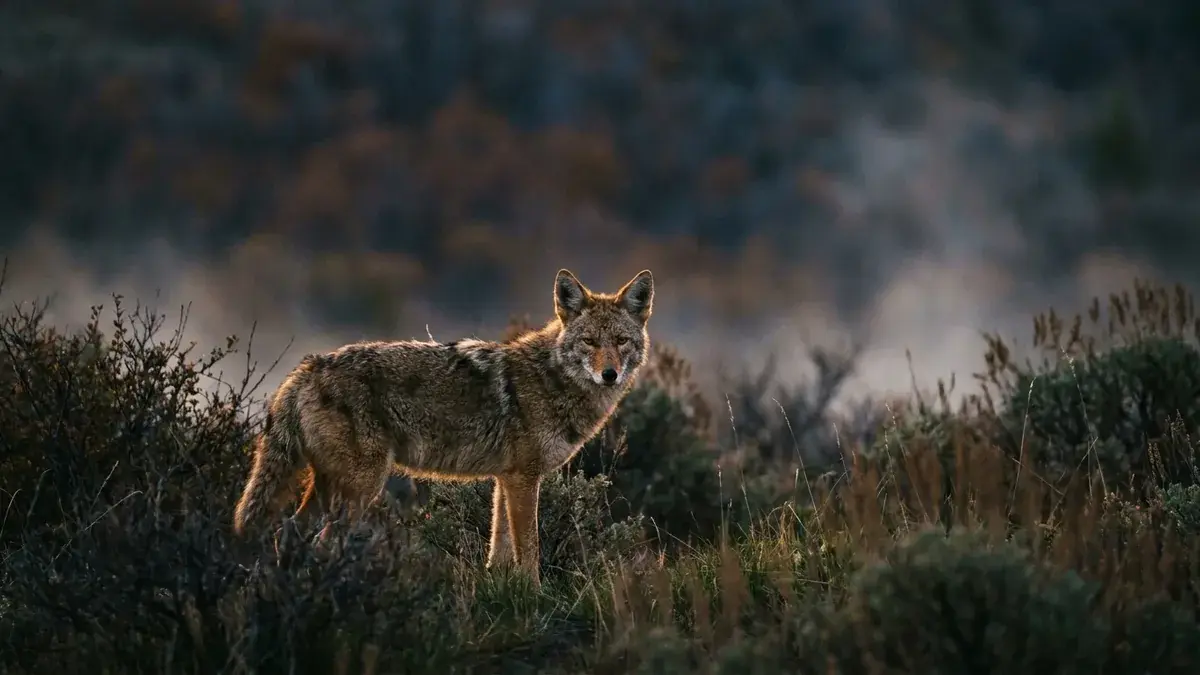
You'll dream of coyotes if things are stalled out in a rut and change is not going to come on its own. And you might be deceiving yourself, avoiding the truth that your instincts are already seeing. Coyote's presence isn't to warn about disaster or bad fortune but to tell you that change is coming whether you like it or not.
An almanac
- Core message
- Necessary upheaval clears stagnation
- In dreams
- Advance warning of overdue change
- Spirit animal
- Symbol of transformation & adaptability
- Best qualities
- Cunning, adaptability, resilience
- Watch for
- Self-deception you're avoiding
- Cultural roots
- North American trickster mythology
- Real family size
- 4-5 members, not a wolf-style pack
- Howl's job
- Reunites family, marks territory
Coyotes often symbolize change and unpredictability, just like the trickster animal shows up in a lot of different stories. They're not usually signs of danger but of radical change on the horizon. If you have a coyote in your dream, you may need to keep an open mind about the future and see things from an untraditional perspective.
What It Means
The word coyote has a reputation for being cunning and slippery. But when it shows up in a dream, the spirit it carries is less menacing than healing. It can set loose anxiety and disorder, but it's just clearing the path to forward progress.
If you've hit a dead end in life — if nothing you do seems to help — coyote's sudden arrival might be what you need to push your old assumptions aside and move in the right direction. It will bring up some difficult, unfinished business, but don't get angry at it for doing what has to be done.
The deeper lesson that coyote teaches is about honesty, especially with yourself. You're probably not going to like its approach — especially if your whole life is based on pretending that nothing is wrong. But this creature won't stop at the first obvious barrier. It will keep uprooting stuff until you face whatever self-deception you're ignoring.
If this animal is more than just a figment of your imagination, it is urging you toward honesty over evasion.
Common Coyote Dream Scenarios
Sometimes a coyote in your dream looks like it's approaching, without bothering you — it could mean that an unavoidable change is coming, but you still have a chance to prepare for it.
Sometimes the coyote in your dream looks like it's chasing or stalking you. It may be because your dreams know something you're ignoring — something about your habits, your feelings, or what other people think. These are the instincts that tell you which decisions are dangerous.
You could see a coyote break into your house or yard — maybe that points to an unavoidable change in your family life.
If lots of coyotes surround you in a dream, that might mean things are going to get very challenging for the group you're part of.
You could hear a coyote howl in your dream without seeing one. This might be the earliest part of a chain reaction — maybe change is coming to your life sooner than you expected.
An injured, trapped, or dead coyote could represent a tendency to lie or silence instinctive thoughts that aren't very nice. That kind of thing can lead to acting contrary to your own beliefs.
If the coyote in your dream was just "stealing" or carrying something off, that's probably because one of the situations above was painful and disruptive but actually cleared away unhealthy ways of feeling and acting.
Symbolism & Message
In the world of dreams, the coyote often shows up right before things start spinning out of control. This is how coyote is thought to protect you: to warn you that everything's about to get turned upside down so that you can prepare instead of getting caught flat-footed.
This kind of upheaval often feels confusing and unpleasant at first, but when it's over, you'll be glad that the coyote pushed things in the right direction. The change was probably fast, even a bit uncomfortable — that's part of what made it feel like upheaval — but the end result should be something good.
Spiritual Meaning
Coyote is one of the clearest dream symbols of transformation itself. As an untamed, adaptable member of the canine family, it carries wild, unpredictable energy alongside the real necessity of change — a combination that shows up again and again in mythology and folklore, where trickster characters use disruption not to destroy but to teach.
Many storytelling traditions across North America cast this figure as a boundary-crosser, someone whose games and mischief eventually push a community or an individual toward a lesson they couldn't have reached any other way.
That boundary-crossing role isn't uniform — it shifts by nation and story. Coyote can appear as a revered culture hero who creates, teaches, and helps humans in one telling, an antihero whose greed or recklessness becomes the cautionary center of another, or a comic trickster whose cleverness gets him out of the very trouble his foolishness caused. Sometimes, within a single tradition, he's some combination of all three at once. Nations from the Blackfoot to the Caddo, the Achumawi, the Apache, and the Pueblo peoples of the Southwest each carry their own version of him, which is part of why his dream meaning resists being pinned to one fixed lesson.
Carried into your own dream life, that mythic role becomes personal encouragement: hold steady when circumstances get rocky, and treat hardship as something you grow from rather than proof that something has gone wrong. If coyote keeps appearing in your sleep, it's likely telling you that the discomfort of transition is temporary, and that staying resilient through it is what turns disruption into progress.
The Howl in Dreams: What It's Really Signaling
When coyotes howl, they're usually not having a spooky evening. Coyotes do howl, but they don't do it at random. They howl for two basic reasons: to bring family members who've been doing their own thing back together, and to advertise their territory and tell other groups it's claimed so they don't bother.
You probably won't be seeing actual coyotes. And most of the time when a coyote makes an appearance in your dreamscape, the howling isn't a call for outside danger — it's an invitation for something scattered and alone to join a larger group.
Howling calls things back together. If that resonates with where your life feels right now, it could signal a way forward. The howling happens before the coming-together does — that's why it can feel spooky. But when multiple voices are involved, be sure to check whether the situation is really as big as it seems.
Why 'Pack of Coyotes' Deserves a Second Look
A coyote pack isn't the same thing as a wolf pack. The typical coyote family group is an adult breeding pair plus offspring. Unlike a wolf pack, there's no anonymous crowd of animals in a coyote family.
When you're having this dream, the relationship you see between the animals and their environment is probably like your own relationship with your life situation — so look carefully to see which members of your family are coming along with you.
To make this dream less scary, make sure you've recognized these points:
• It's not wolves; they're not a gigantic mob. • They're a group of people you know. • They're not anonymous, faceless strangers; there's a story behind them. • They're working toward survival in cooperation.
Frequently Asked Questions
Is dreaming about a coyote a bad omen?
Coyote dreams aren't inherently a bad omen. They signal a need for change, even when the change feels disruptive and makes you uncomfortable. You can think of the coyote as a trickster, there to cause your troubles, but really, it's on your side. It's there to upset the status quo, so something better can come into view.
What does it mean when a coyote is chasing you in a dream?
If you're chased by a coyote in a dream, it could be telling you that a truth or realization is trying to catch up with you. Coyotes are associated with self-deception, so the chase might represent the instinctive part of your mind trying to keep up with the part of you that tends to ignore or look away from what's happening.
Why do coyotes keep showing up in my dreams during a stressful time?
Dreaming of coyotes may come at a time of upheaval in your life or when you're due for change. If that's happening, the coyotes may be showing up to reassure you that all the turmoil is eventually getting you to a better place.
What does a white or pale-colored coyote mean in a dream?
Pale or white coyotes often amplify whatever they’re already signaling — think of their color as turning up the volume, not changing the message.
What does a dead or dying coyote mean in a dream?
A dead or dying coyote typically indicates a silenced instinct rather than an end of fear. It isn't that something fearful has ended, but rather that something deeper — cunning, adaptability, or plain-spokenness — has gone quiet, worn down, or been talked into giving up.
A dream like this is worth taking seriously, because it may be indicating a part of you that used to fight back against stagnation and has stopped doing its job.
The next step should be to do something about the dead part: revive your instincts on purpose, because these things rarely come back once you've stopped paying attention.
Is a howling coyote in a dream a warning?
Dreaming about a howling coyote isn't usually a warning that you're in danger. In real life, coyotes use howling to reunite their families. It's also a way for them to let other packs of coyotes know which parts of the territory they control.
Dream howls tend to borrow that same energy. Most often, a coyote's howl in your dreams is a call to bring something or someone back into alignment, or it's a reminder that you should restate an important boundary. It probably isn't a signal that someone is stalking you.
Sources
Claims on this page were checked against these published sources.
- Coyote
the species is versatile, able to adapt to and expand into environments modified by humans
Read the source → - Coyote in Native American Legends
In some Native American coyote myths, Coyote is a revered culture hero who creates, teaches, and helps humans; in others, he is a sort of antihero who demonstrates the dangers of negative behaviors like greed, recklessness, and arrogance; in still others, he is a comic trickster character, whose lack of wisdom gets him into trouble while his cleverness gets him back out.
Read the source → - Coyotes: Decoding Their Yips, Barks, and Howls
Howling is a basic communication behavior in coyotes... One is to call the pack—really a family group—back together again after a period of individual hunting... Coyotes don't form large packs the way that wolves do. A typical family group may number four of five individuals.
Read the source →