Animal Dream Symbol
Buzzard Dream Meaning: Dreams About Buzzards Explained
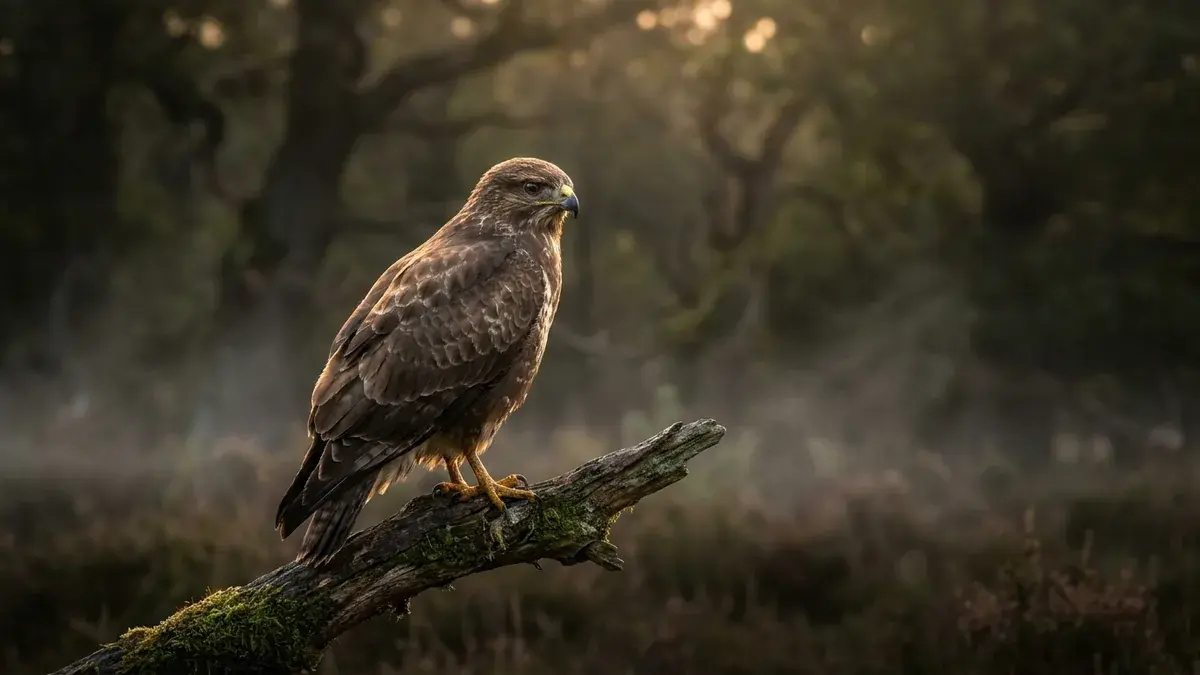
Dreaming of a buzzard usually means some part of your waking life, a habit, a relationship, or an old version of yourself, has already run its course, and your subconscious is ready to clear it away so something new can grow. Rather than a bad omen, the dream points to closure, balance, and trust in your own instincts instead of fighting the change. How threatening the buzzard feels is the key: a calm bird points to a transition you're already handling with grace, while an aggressive one points to anxiety about a change you're still avoiding.
An almanac
- Core message
- Release what's ended to make room for growth
- Spirit animal for
- Accepting endings gracefully
- In dreams
- Signals closure and renewal, not disaster
- Power animal for
- Trusting instincts over conflict
- Best qualities
- Balance, resourcefulness, restraint
- Watch for
- Suppressed intuition or an unresolved past
- Real-world sense
- Locates carrion mainly by smell, not sight
- Egyptian symbolism
- Nekhbet, protector goddess of Upper Egypt
When a buzzard drifts into your dream, it rarely signals anything sinister, despite the bird's grim reputation in folklore. A buzzard dream usually points to closure, renewal, and restraint instead of lashing out. This scavenger survives by tidying up what has already died rather than hunting it down, and your sleeping mind often reaches for its image when some part of your waking life is finally ready to be cleared away so something new can take root.
What It Means
A buzzard appearing in sleep tends to mirror an ending your subconscious has already accepted, even if your waking mind hasn't caught up yet. This bird thrives on remains instead of fresh prey, so it naturally comes to represent tidying up loose ends and clearing space for whatever comes next.
Spotting one in a dream can be a nudge that a stale routine, a worn-out relationship, or an outdated version of yourself has run dry, and the sooner you accept that, the sooner room opens for growth.
There's also a quieter lesson tucked into this dream: balance. A buzzard doesn't overhunt or take more than it needs; it simply restores order by returning what's spent back into the wider cycle of life. If this bird shows up while you sleep, ask whether some part of your own life has tipped out of proportion, whether that's overworking, overreacting, or holding on to a grudge long past its expiration date.
How the buzzard behaves in the dream shifts the message further. A bird calmly going about its business often reflects a transition you're already handling with grace. One that feels menacing, relentless, or impossible to shake usually points instead to anxiety about a change you're avoiding, or a sense that outside pressures, or your own inner critic, are circling you the way this bird circles its next meal.
Common Buzzard Dream Scenarios
10 scenarios — tap the one you remember
Symbolism & Message
The clearest thread running through buzzard symbolism is necessary transformation. Because this bird earns its keep by processing what's already gone rather than chasing something living, it embodies the ability to accept an ending without a fight and to trust that clearing space is progress, not defeat.
There's also a message here about restraint. Despite its association with death, the buzzard is a remarkably peaceful creature: it doesn't kill for a living, and when threatened, it protects itself with a foul-smelling deterrent instead of attacking outright.
If a buzzard turns up in your dream, it may be steering you away from an aggressive response to conflict and toward a calmer, more strategic way of standing your ground.
Buzzards are also tied to resourcefulness. By making use of what everyone else overlooks or discards, this bird represents the wisdom of not writing anything off too soon, whether that's an idea, a connection, or an opportunity that only looks used up on the surface.
Spiritual Meaning
The buzzard is often framed as a guide for trusting your instincts. This bird locates its meals largely through smell and sight sharpened over generations, and many traditions read that as a cue to lean harder on your own intuition, your gut sense about people, timing, or situations, rather than talking yourself out of it. The turkey vulture in particular has an olfactory bulb roughly four times larger than a black vulture's, with twice as many scent-processing cells. That lets it detect a diluted trace of decay from hundreds of feet in the air and circle down toward the source, like a bloodhound on the wing, and it shows how a faint signal, followed instead of dismissed, can lead somewhere useful.
The bird's connection to death is also treated less as a threat and more as a teacher of natural cycles. Rather than causing loss, the buzzard simply tends to it: every ending, however uncomfortable, clears the way for the next season of growth. Dreaming of one can be an invitation to stop resisting a transition and let it complete itself.
Finally, the buzzard's gentle nature also points to living without unnecessary conflict. Its instinct is to withdraw or rely on a nonviolent deterrent rather than fight, which many read as encouragement to handle your own waking-life battles with patience and restraint instead of aggression.
The Buzzard Across Cultures
Long before dream dictionaries got hold of this bird, entire cultures had already worked out what it meant to live alongside a creature that thrives on endings.
In ancient Egypt, the vulture was raised to the level of royalty rather than shunned. Nekhbet, the vulture goddess of Upper Egypt, was shown hovering above the pharaoh with her wings spread wide, clutching the shen symbol of eternal protection in her claws. Far from a scavenger to fear, she was one of Egypt's two great patron deities, a guardian whose presence over the throne meant safety, not doom.
Among several Native American nations, the buzzard held a similarly two-sided reputation. The Menominee and Miami peoples counted a Turkey Buzzard Clan among their traditions, and tribes such as the Seminole and Lenape kept a Buzzard Dance alive as part of their ceremonial life. The bird wasn't universally beloved; it was often the trickster of the story who overstepped his welcome, but it was still respected enough to anchor a clan's identity.
And here's a wrinkle worth knowing before you go hunting for more symbolism: the word 'buzzard' doesn't even point to one bird. In Britain and much of Europe, it names a true hawk in the genus Buteo, while in North America the same word is borrowed for the turkey vulture, a completely different scavenging species. If your dream buzzard felt more like a hawk circling with intent than a vulture cleaning up remains, you may be blending two very different symbols into one image.
Frequently Asked Questions
Is dreaming about a buzzard a bad omen?
Not usually. Despite its reputation, a buzzard dream is more often a signal that something in your life is ready to be released so new growth can take its place, rather than a warning of disaster. Pay closer attention to how threatening the bird feels in the dream than to its species alone.
What does it mean when a buzzard is chasing you in a dream?
This scenario often reflects a feeling of being pursued by judgment, gossip, or pressure from someone who seems to be waiting for you to fail. It can also represent an inner fear about an ending you're trying to outrun rather than accept.
Why do I keep dreaming about buzzards circling overhead?
Recurring circling-buzzard dreams tend to point to a lingering sense that some outcome, criticism, or consequence is closing in, even if you can't pinpoint the exact source yet. It's worth reflecting on any situation in your life where you feel watched, judged, or on the verge of a verdict.
Is a buzzard the same bird as a vulture?
Not technically, though the names get used interchangeably in North America. A true buzzard is a hawk in the genus Buteo, while the bird most Americans picture when they hear 'buzzard' is actually the turkey vulture, an unrelated scavenger. In your dream, it's less about the exact species and more about the scavenging, circling behavior your mind is drawing on.
What does it mean to dream of an injured or broken-winged buzzard?
A wounded or grounded buzzard often points to your own instincts or resilience feeling compromised, as though the part of you that normally handles endings with steady detachment is currently struggling instead. It can be worth asking where you've been ignoring your gut or pushing through exhaustion rather than resting.
What does it mean when a buzzard lands near you in a dream?
A buzzard settling nearby, rather than circling overhead or attacking, often reads as an approaching opportunity tied to closure: something good becomes available precisely because an old situation is ending. It's less a warning and more a sign that you're about to be able to act on a change you've already accepted.
Sources
Claims on this page were checked against these published sources.
- Turkey Vulture
feeds almost exclusively on carrion
Read the source → - Nekhbet
Nekhbet was the tutelary deity of Upper Egypt... usually was depicted hovering, with her wings spread above the royal image, clutching a shen symbol (representing eternal encircling protection), frequently in her claws.
Read the source → - Native American Indian Buzzard Legends, Meaning and Symbolism from the Myths of Many Tribes
Tribes with Buzzard Clans include the Menominee tribe (whose Turkey Buzzard Clan is named Apaeskasiw) and the Miami tribe... Some eastern tribes, like the Seminole and Lenape, have also had a Buzzard Dance among their tribal dance traditions.
Read the source → - Common buzzard
The Buteo species of Eurasia and Africa are usually commonly referred to as 'buzzards' while those in the Americas are called hawks... It should not be confused with the turkey vulture, which is sometimes called a buzzard in American English.
Read the source → - Turkey Vultures Have a Keen Sense of Smell and Now We Know Why
the turkey vulture has an olfactory bulb that is four times larger than that of the black vulture... twice as many mitral cells as black vultures, despite having a brain that is a fifth smaller... can smell very diluted plumes of volatile gases in the air column, hundreds of feet above the ground... circle around like bloodhounds to seek the source of the odor
Read the source →