Birds · Spirit animal
Swisher Spiritual Meaning & Symbolism
A twilight traveler with a gift for adaptability, patience, and quiet mastery of timing.
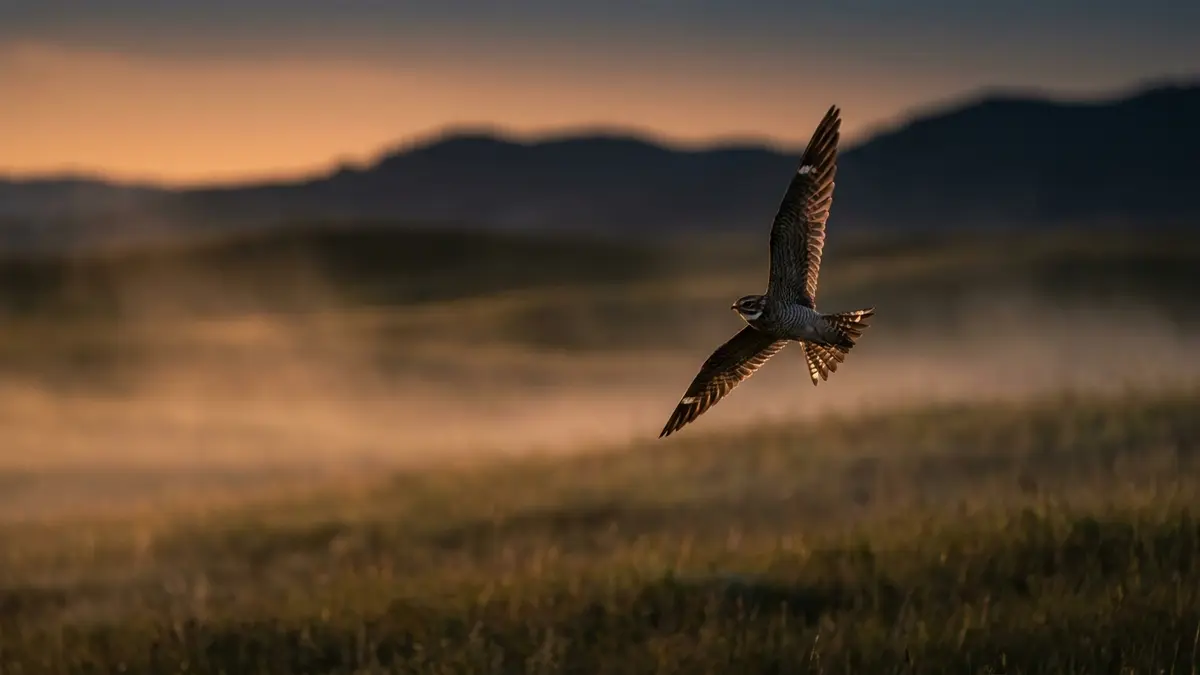
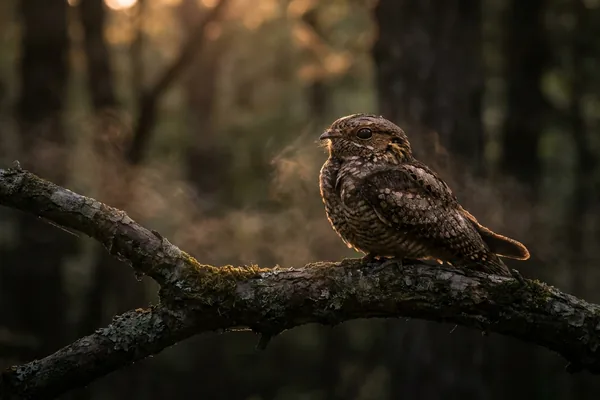
The Swisher is a spirit animal, totem animal, and power animal that can help you navigate challenges. Its wise teachings offer guidance, allowing you to adapt, remain patient, and use your timing for better outcomes. As a symbol of adaptability, it signifies the importance of traveling light and keeping your own rhythm. Swisher encourages you to take deliberate action rather than rushing or showing off. It reminds you that clear plans and good timing can help you achieve your goals. In dreams, Swisher often appears as a signal for change, specifically regarding work or career. It urges you to stay grounded and focused on your path.
An almanac
- Core message
- Match inner will to outer timing
- Spirit animal
- Adaptability paired with intention
- Totem for
- Hard to overlook, yet quietly effective
- Power animal
- Patience and time management
- In dreams
- Signals change, often at work
- Element
- Air
- True kin
- Nightjars, not true hawks
- Diet
- Beetles, bees & wasps in flight
The Swisher bird lives where the sky meets the ground, and it can make a home almost anywhere: prairie, forest, desert, or coastline. Swishers live where one world gives way to the next. This guide covers what Swishers mean when they show up in dreams or at twilight on your path.
Swisher Symbolism & Meaning
Adaptability is this bird's defining trait. It settles into prairies, woodlands, desert scrub, coastal dunes, and low-lying basins alike, and will even resettle a recently burned forest or drift into city limits if that's where a meal can be found. The logic is simple: wherever food exists, that ground is worth claiming, and survival drives its long seasonal journeys. Swishers travel in loose flocks numbering into the thousands, covering 1,500 to 4,200 miles as they head south from midsummer into fall and swing back north by late spring, and there's real safety in that crowd. Just after sundown you'll hear the male's distinctive call, his courtship signature, before the pair settles to earth where he shows off with a bold sweep of his tail. Females answer threats with a sharp alarm that sends the male diving at intruders near the nest. The female alone chooses the nest site, favoring rocky, forested ground, and incubates the eggs for roughly eighteen days. Adult Swishers fly high and far, guided chiefly by sight, and by an old pull toward light of any kind.
That courtship 'call' near sundown isn't a call at all in the usual sense. It's a mechanical boom, produced when the male folds into a steep dive and snaps his wings downward, sending air rushing through his primary feathers like breath through a reed. No voice box is involved, only timing and the shape of his own body used as an instrument. It's a fitting detail for a bird whose whole symbolism rests on working with what you have rather than what you wish you had, and a reminder that the Swisher isn't a hawk at all by blood. It belongs to the nightjar family, kin to the whip-poor-wills, carrying a hawk's name without a hawk's lineage. The lesson fits: effectiveness rarely needs the right pedigree, just the right instinct for timing.
Swisher Spirit Animal
When a Swisher appears in your awareness, it asks you a question: are you genuinely going after what matters, or just looking at it from a distance? This spirit animal wants you to put real effort into translating your intention into results, because spirit will only move with you as far as you've committed to going.
The Swisher gives you practical tools for the job: reading body language, knowing how and when to step in, trusting the information that comes through from your higher self, and knowing when to leave the stage to someone else. It never forgets where nourishment can be found, and it advises creating an actual plan for what you want instead of relying on luck or hitting-and-missing.
Being an Air element spirit animal, Swishers have insight and communication skills, and they never stop moving. Their advice is this: know what you want and then get up and go for it.
Does Swisher fit you?
Tap the ones that sound like you — 6 traits, no right answer.
0 of 6 Nothing picked yet — start tapping.
Swisher Totem Animal
If you're a Swisher, you arrived in this world loud and hungry. Although subtlety is rare with this bird, they can also blend right into the background.
Usually, they're most awake and alert late in the afternoon. At this time, they're filled with energy and their minds are sparked with ideas.
Because few people know what a Swisher looks like, they have the advantage of doing their best work unnoticed by most others. Like the Fey (fairies), who they often watch out of the corner of their eyes, the Swisher blends in so well that they can still call solid ground home.
This type of bird is not one for showiness or for being noticed when doing a job. They prefer to do their work so thoroughly that when it is done correctly, others will notice that care has gone into it.
If this animal represents you as a totem, it's usually because you are capable and have goals that you work hard to achieve.
Swisher Power Animal
When you're waiting for a change to hit, it's easy to get restless and distracted. It's just as easy to overcommit yourself, then find yourself spread too thin to accomplish anything at all. Swisher steps in as your power animal when your patience is wearing thin and you're struggling to focus on the prize in front of you.
Instead of rushing ahead, let Swisher guide you toward a lighter step. This will remind you that there's a time for action and a time for rest, so don't force progress to keep up with your current pace. Instead, consider how much progress you've made already and what you can do next.
Native American Swisher Symbolic Meanings
The Hopi call this bird the "rain flopper." That's because it makes a low, thunder-like sound during its courtship display. Seeing a nest nearby is taken as a good sign for the season. It hints that fields will remain abundant.
The Hopi thought highly of the Swisher, associating it with sacredness.
Swisher as Folkloric Animal Symbol
Because it's active mainly at dusk, some folk stories cast Swishers as kind of messengers for the Fae, carrying them back and forth between this world and whatever lies just beyond. Other stories claim that nightjars, Swisher's cousins, are real milk thieves. They're supposed to fly around at night taking milk away from goats, leaving them dry or blind in the morning. This legend was already around when Aristotle wrote about it over two thousand years ago. It goes way back: the order of birds that these nightjars belong to is still called Caprimulgiformes in Latin today.
That means the truth was much more like this: Nightjars aren't so much thieves as they are insect hunters who just happen to take some of their prey from pastures where grazing goats attract insects to eat. There's a lesson in this story: People tend to see the quietest folk as the most mysterious and problematic people. You can make a better impression if you let your results speak for you more than your presence.
Swisher Dreams
- A Swisher's sharp cry in a dream means that in real life, when management changes the rules and makes unreasonable demands, make sure you stand up for yourself, even though it may be uncomfortable.
- If a Swisher lands on the ground, then maybe it's time to not get so stressed out.
- When a group of Swishers fly together and there's fighting among them, it could represent community problems like conflict or tensions. Maybe pay more attention to other people who may be having similar issues.
- If a Swisher takes off and its beak opens wide in flight, maybe someone is about to give you something good.
- When they start taking off straight into the air, it can mean that you're trying to look for answers or figure things out.
Swisher Spiritual Meaning
Where your will and timing match up, you're ready to receive the full message of Swisher. This is a bird of twilight and thresholds, comfortable with any space where one world flows into another. It's time to move confidently through your own transitions rather than hesitate.
Swisher teaches the quiet mastery of deliberate, unhurried action, using Air's momentum and clarity. Read the moment, choose a direction, and head toward it in a steady, private way that flexibly reshapes you to fit new ground.
Above all, trust that staying oriented toward the light—literal or spiritual—matters more than being seen.
The Cherokee Nighthawk Keetoowah
Beyond the Hopi's 'Rain Flopper,' the Swisher's name carries a second, more political weight in Cherokee history. In the late 1850s, and again around 1900 when U.S. Pressure to divide tribal land into individual allotments intensified, a traditionalist faction of the Keetoowah Society took the bird's name for itself: the Nighthawk Keetoowah. Led by Redbird Smith, the group grew to thousands of members and worked largely in secret, in the eastern hills of what is now Oklahoma, to hold onto ceremonies, sacred wampum records, and the old ways of Cherokee life rather than accept assimilation on someone else's timetable.
Whether or not the name was chosen deliberately for the bird's twilight habits, the parallel holds. The Nighthawk Keetoowah operated largely unseen, gathering strength after dark and refusing to be rushed into a future they hadn't chosen. As a spirit lesson, it echoes everything else the Swisher teaches: that quiet, patient resistance can outlast pressure that arrives loud and fast, and that some of the most important work happens where no one is watching.
Frequently Asked Questions
What does the Swisher spirit animal represent?
It symbolizes flexibility and determination. Swisher prompts you to stop circling your objectives and actually throw yourself into them. It gives you the resources: timing, body language, inner vision, and knowing when to stay inconspicuous, so aspiration becomes actual progress.
What does it mean to dream about a Swisher?
Dreaming of a Swisher usually means that you're going through changes, often related to your job. A grounded Swisher means you should stay focused even when there are delays, and dreaming of a flock can point to your position in the community. If an open-beaked Swisher appears, it may mean you're about to receive nourishment, and a Swisher climbing skyward may symbolize your reach for greater insight.
What is the Swisher totem personality like?
People with this totem tend to be hard to overlook, because they are energetic and they tend to do most of their best work in the late afternoon or evening. But it isn't their showy behavior that makes them so easy to notice; it is that they are very competent at doing careful work without needing anybody's approval.
Is the Swisher actually related to hawks?
No, the Swisher is not actually related to hawks. It's from the family of nightjars, the same family as whip-poor-wills. These birds have special features for camouflage and hunting at dusk instead of for daytime hunting and talons like a true hawk would have.
The name is used informally, it isn't an actual bloodline, and that fits in with the overall message of this animal symbol: that substance matters more than how you label something.
What is the 'goatsucker' myth associated with this bird's family?
Since ancient times, Europeans have believed that nightjars (Swisher's closest relatives) break into farms at night and drink milk directly from their goats. By morning, the goats are often dry or blind. The name 'Caprimulgiformes' translates as 'goat-milker' from Latin, and Aristotle himself recorded this belief. However, nightjars were only feeding on the insects that gathered around their livestock after dark.
Swisher also represents
Sources
Claims on this page were checked against these published sources.
- Common nighthawk
These birds travel 2,500 to 6,800 kilometers between breeding and wintering grounds... They depart breeding areas mid-July through early October and return late February through mid-June, traveling in loose flocks sometimes numbering in the thousands.
Read the source → - Common Nighthawk Life History
They occupy forests, deserts, savannas, cities, and prairies from sea level to 3,000 meters... drawn into urban built-up areas by insects... converge on artificial light sources in an effort to forage for insects enticed by the light.
Read the source → - European nightjar
old even in the time of Aristotle... that nightjars suckled from nanny goats, which subsequently ceased to give milk or went blind
Read the source → - Keetoowah Nighthawk Society
formed in 1858 and re-established around 1900... to preserve traditional Cherokee spiritual beliefs and 'old ways' of tribal life
Read the source → - Redbird Smith Movement
When Keetoowah Society leaders softened their antiallotment stance circa 1900, Smith formed the more traditional Nighthawk Keetoowah.
Read the source →