Birds · Spirit animal
Whip-poor-will Spiritual Meaning & Symbolism
A hidden voice in the dark that calls you toward honest connection and lunar rhythm.
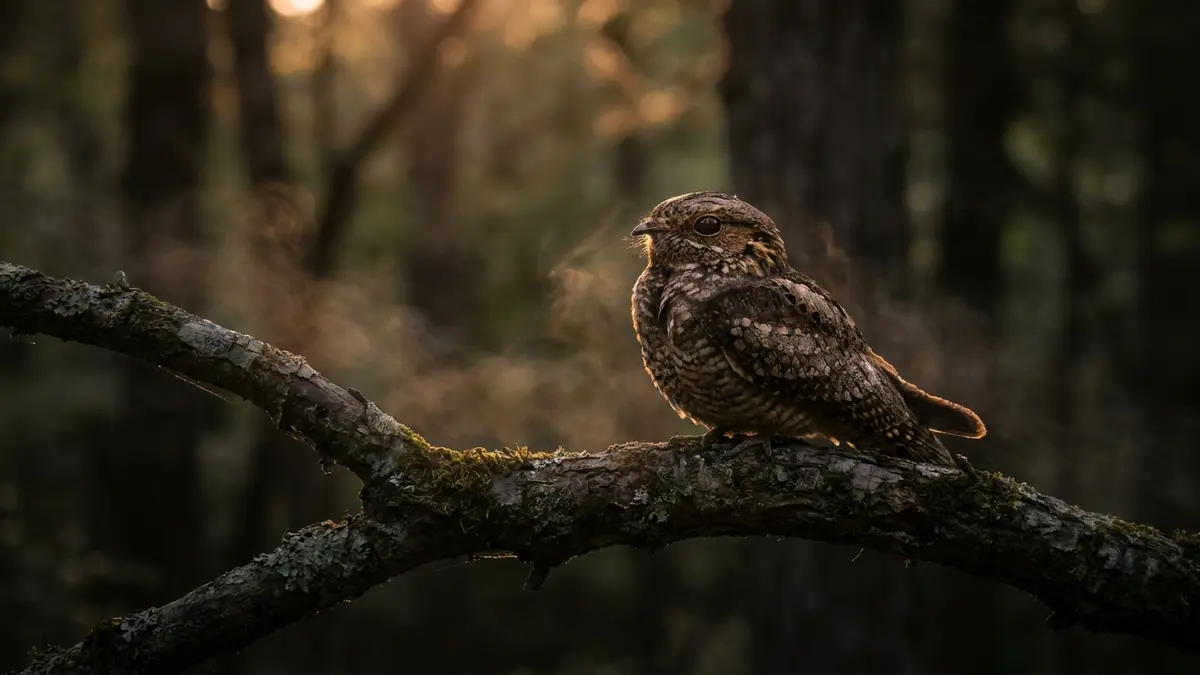
The whip-poor-will is a bird that is typically heard more often than seen. It is known for its patient timing, its ties to the moon, and the courage it takes to speak one's true wants, especially in matters of the heart. In dreams it generally signals the need to gather insight before taking action. In various Native American traditions its calls at night have been thought to portend either misfortune or long life, depending on the tribe.
An almanac
- Core message
- Presence doesn't require visibility
- Spirit animal
- Sharpens inner listening and rhythm awareness
- Totem for
- Quiet, steady contributors who speak up when needed
- Power animal
- Finding your voice for partnership and family
- In dreams
- Step back and gather insight before acting
- Cultural roots
- Native American lore, mixed omens across tribes
- Name origin
- Onomatopoeia, named for its own call
- Conservation status
- Near Threatened; down over 60% since 1970
The whip-poor-will is a ground-roosting bird, a nightjar, who can be heard singing but rarely seen. This makes the whip-poor-will a very private, and patient, creature. Its song can be said to express its longing for real connection with others.
Whip-poor-will Symbolism & Meaning
Although the whip-poor-will is a bird of the air, it spends daylight hours lying flat on the ground with its mottled feathers matching the leaf litter and bark. You won't see it, but you'll hear it, sometimes singing without pause for as long as hundreds of times.
If you approach, it will stop singing. Its call is a mating summons directed toward other whip-poor-wills, not to people. Male adults posture and display to attract mates during spring and summer. After the pair forms, they go away together.
Both mating pairs and parents with young depend on lunar illumination; breeding activity aligns with the lunar cycle. They were particularly vulnerable near full moons, when they fed their nestlings. In folklore, this bird lives by moonlight alone.
Whip-poor-will Spirit Animal
Your animal spirit guide, Whip-poor-will, often reveals itself through sound, rather than visuals. So when you feel disconnected from your spirit, this article can help you get in touch with your inner self by hearing the subtle signals moving through your own spirit.
The article also suggests that you follow natural cycles for energy. Just like Whip-poor-will, you should track sunrise to sunset and follow the phases of the moon as a guide to your own natural rhythm. Each point on the cycle has its own energy and can make you feel more or less alive.
Humans have long built rituals around the rhythm of life, such as greeting dawn or honoring dusk. This article offers suggestions for honoring the turning points in your daily and monthly cycles.
Another core lesson from Whip-poor-will is about relationship. This bird sings confident songs at night, and its calling song symbolizes the need for people to state clearly what they want in a partner and who they are. Honesty is better than trying to force anything that is not right for you.
By exploring your sense of hearing, you can get in touch with what it might mean for you. Perhaps it is time to start paying attention to your own cycles and what they mean for you.
Does Whip-poor-will fit you?
Tap the ones that sound like you — 6 traits, no right answer.
0 of 6 Nothing picked yet — start tapping.
Whip-poor-will Totem Animal
Call the whip-poor-will your totem animal if you like working quietly behind the scenes without fuss or forcing yourself to the fore. The work you do will make a difference in time, so keep at it. When something must be said, you'll see it gets said and understood.
The places you love feel like home, no matter how much they change. You'll especially love them when night falls and everything's quiet. You work best at night, when life is busy all around you but not with you, but you can still see what's going on.
Your sense of home deepens when the moon is full, when its light fuels your undertakings. Write down what comes to mind while the moon is full or when it grows full and then come back to what you wrote later on; you may find ideas to build on that otherwise never would have occurred to you.
Whip-poor-will Power Animal
Call on the Whip-poor-will when you struggle to find your own voice. This power animal's energy can help you develop the confidence you need to speak up and voice your opinions, but not impulsively: its calls always come after clear thought. So, just as this bird makes no casual calls, neither should you say something on a whim that you may regret later. Instead, calling on the Whip-poor-will encourages you to speak with purpose behind every word.
Speaking of purpose, this power animal is also an ally when it comes to new relationships or starting a family of your own. Invoke it when you're thinking of asking someone out for the first time, or give it your weight if a romantic partner is considering having children with you: both are times that demand clear intention behind every choice.
Native American Whip-poor-will Symbolic Meanings
Native American cultures often treat the voice of the Whip-poor-will as a portent of bad news. However, some tribes tell a gentler tale. According to them, night birds including the Whip-poor-will are voices of Makiawisug, small magical spirits who can be invisible and are only about two feet tall. In Mohegan tradition, you can tell where they've been by carved markings on stones.
The Iroquois see the Whip-poor-will differently. To them, hearing it cry near your home is a warning that death is coming. The Ute describe the Whip-poor-will as an evening god who turns frogs into the moon. One Omaha legend tells how a person can be long-lived.
Whip-poor-will Folklore & Superstition
The folks of yesteryear believed many things about the songs of the Whip-poor-will at nighttime. In springtime, a woman who heard the bird call twice was said to find her future partner within the year. You could make a silent wish on that first call and tell no one, and it would come true, especially wishes for love. Another odd cure claimed a person with a sore back could find relief by doing somersaults in time with the bird's rhythm, which was supposed to signal a return to wholeness.
In Appalachia, they counted the number of times the Whip-poor-will repeated its own name. That was supposed to tell how many years you had left to live, or how many were left until you'd marry. Either way, what these beliefs have in common is giving a lot of importance to an idea that sounds brief when someone else says it.
Whip-poor-will Dreams
A Whip-poor-will appearing in your dreams may tell you to take a step back and give yourself some space before taking any action; refrain from centering the scene until you have gained what you need to know.
- If you hear it singing in the moonlight, the timing is right for trying a lunar ritual, following the phases of the moon and noting how each phase changes your feelings.
- If it sings directly at you, there's something hidden in your subconscious pushing for attention; sit with the feelings in meditation and name the memory behind them.
- If you see a silent or missing Whip-poor-will, that message you've been expecting is probably just delayed rather than lost entirely; patient waiting, not worry, is what's needed.
Whip-poor-will Spiritual Meaning
Follow the rhythm of the moon, speak honestly from the heart, and find calm acceptance that feelings are valid without judgments if you want this creature's insight to give you guidance.
Whip-poor-will Natural History & the Fading Call
The name itself says something about how this bird is known: colonial-era listeners simply wrote down what they heard the Whip-poor-will say, and the name, "onomatopoeic after its own song," stuck. No committee chose it; the bird's own voice supplied its name, in keeping with a creature that's known mostly through sound.
That voice exists for more than ritual or romance. Whip-poor-wills forage at night, catching moths, beetles, and mosquitoes on the wing, then sleep through daylight hours hidden in leaf litter. Their rhythm of life runs opposite to ours: the real work happens at night, when almost no one is watching.
When autumn arrives, the bird leaves its northern woods entirely, migrating to the southeastern United States and on to eastern Mexico and Central America for winter. Even its comings and goings follow an unhurried, unseen pattern, arriving and departing on a schedule few people ever witness firsthand.
That unseen quality is growing more literal each year. Citizen-science tracking led the IUCN to uplist the Eastern Whip-poor-will from least concern to near threatened, after population counts showed a decline of more than 60% between 1970 and 2014. Every hearing of that familiar three-note call is quietly becoming rarer, which only adds weight to the old belief that this bird's voice is worth paying attention to while you still can.
Frequently Asked Questions
What does the Whip-poor-will symbolize spiritually?
It's all about listening to what's calling to you inside (your feelings), expressing that in your relationships, and trusting that timing will bring you your desire—rather than forcing something to happen because you don't believe there's a better time. It's also reminding you that life isn't always about talking but about listening too.
What does it mean if a Whip-poor-will appears in your dream?
In a dream, a Whip-poor-will can indicate the need to slow down and take time to think before acting. A singing Whip-poor-will under the full moon might mean that it's time to do some kind of lunar ritual. A singing Whip-poor-will that is directly facing you might mean that something hidden in your subconscious mind is trying to emerge.
Is the Whip-poor-will a good omen or a bad one?
Nightbird cries can be a warning, or a promise, depending on the Native American lore you believe. For some tribes, these birds are bad luck. The meaning depends on the story you follow, and on how you feel.
Why is the whip-poor-will called that?
The bird's call, repeated over and over in various ways, sounds like "whip-poor-will" and early people took the bird's own voice as its name, which fits a creature mostly heard but rarely seen.
Are whip-poor-wills becoming harder to hear?
The IUCN reclassified the eastern whip-poor-will as near threatened mostly because of habitat loss and declines in insect prey. It's harder to find this species now, which makes it even more special when you hear one.
Whip-poor-will also represents
Sources
Claims on this page were checked against these published sources.
- Eastern whip-poor-will
commonly heard within its range, but less often seen because of its camouflage
Read the source → - Whip-poor-will
Cryptic coloring makes this ground-nesting bird very difficult to detect. Upper parts are mottled gray, black, and brown; while the under parts are pale with gray and black spotting.
Read the source → - Eastern Whip-poor-will - Breeding
When the young molt into their black-speckled, highly camouflaged plumage at the age of about 8 days, the female often leaves them in the care of the male and initiates a second clutch within the territory.
Read the source → - Injury or Illusion? Why a Bird With a Broken Wing May Not Be What It Appears
Nightjars take a different approach, using camouflage to blend into their surroundings and hide both themselves and their nests.
Read the source → - Whippoorwill Legend (Native American Legends)
the cries of the whippoorwill are associated with the Little People, who are benign but mysterious nature spirits
Read the source → - Birds in Legend, Fable and Folklore
the Iroquois indulged in the pretty fancy that the moccasin-flowers (cypripediums) are whippoorwills' shoes
Read the source → - As the Whip-poor-will's Chant Wanes, Our Cultural Loss Grows
Among the Iroquois of the northeast and the Menominee of Wisconsin, a whip-poor-will calling near one's home signaled an impending death.
Read the source → - What does it mean when you hear a Whippoorwill?
One superstition holds that the year's first Whip-poor-will can predict the number of years you have left to live. Or your years until marriage, if you're hoping to get married. Just count how many times the bird repeats his name to know how many years you've got left.
Read the source →