Fish & Sea Life · Spirit animal
Shark Spiritual Meaning & Symbolism
Fearless instinct that clears out threats and keeps you moving forward.
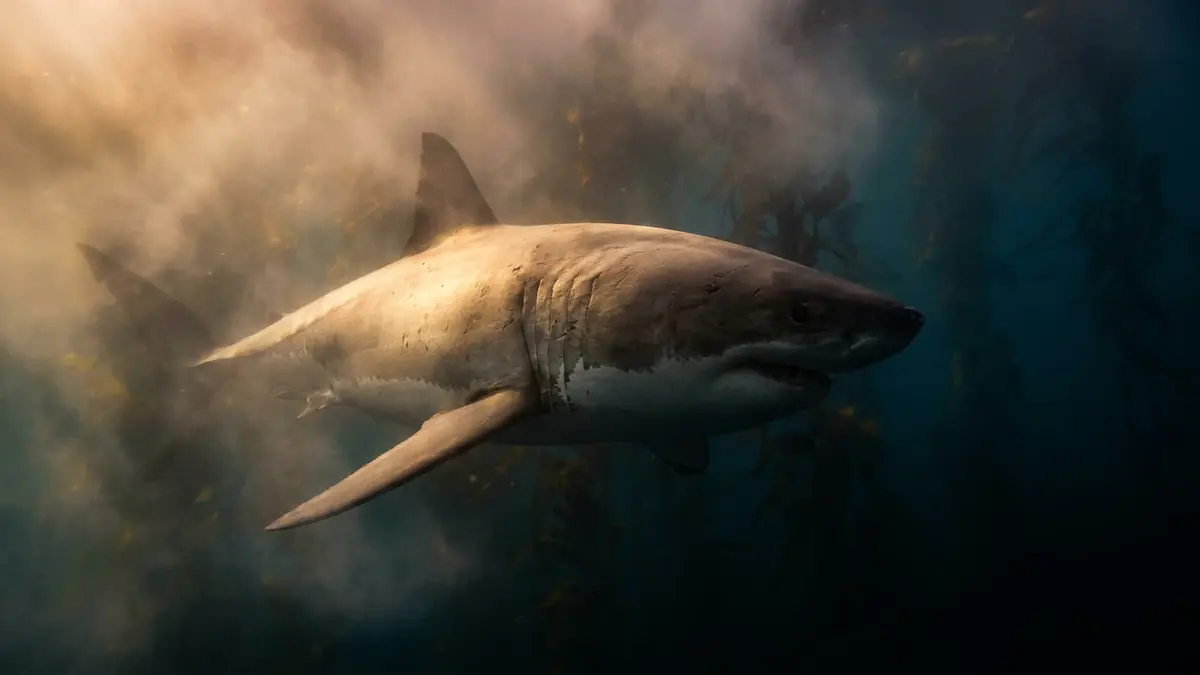
Sharks as spirit animals and totems can serve as a sign that you need to rely on your own instincts and let go of negative situations or people. These mysterious animals are reminders that you have the power and energy to take care of yourself. Shark dreams might serve as a warning against blind anger.
An almanac
- Core message
- Confidence, not aggression
- Spirit animal
- Trust instinct, release what drains you
- Totem for
- Intuitive, emotionally rich, restless travelers
- Power animal
- Sharpens instinct amid indecision
- In dreams
- Aggressive emotion beneath a calm surface
- Cultural roots
- Hawaiian, Celtic, Native American, Japanese lore
- Species age
- ~450 million years — older than trees
- Teeth
- Endless supply, regrown for life
Popular culture tends to portray sharks as villainous characters. But a calm and relaxed disposition is actually characteristic of most sharks in the wild. For example, most sharks are not aggressive unless they are traveling as part of a larger group. This fact helps to explain Shark's connection to confidence, which is at the center of Shark's message. If you find that you are receiving guidance from your spirit animal that includes the spirit of shark, this is a sign that you should seek out situations and people who drain your energy and send them packing.
Shark Symbolism & Meaning
Although sharks have a reputation for being scary and aggressive, they can be quite beautiful and unique. Usually they only respond to threats when they feel threatened in a group, otherwise they are quite peaceful creatures.
Sharks have a strong sense of smell, which enables them to track down things that you need. Their bodies are always in motion due to the fact that they do not have swim bladders to rest on.
In the past sailors and surfers used to wear shark teeth as protection from drowning. People in medieval Europe also wore shark teeth for protection from poisonous food. Today in Hawaii, people believe that Shark symbolizes a protective spirit who watches over family members in times of need.
Wearing a shark tooth serves as more than just a good luck charm or protection, it also symbolizes renewal and the ability to replace what has been lost. Sharks have rows of teeth that are constantly growing in and moving into place. These rows replace any teeth that are lost due to aging or wearing down.
Shark Spirit Animal
The appearance of a shark as your spirit animal is a sign that now is the time to stop holding back and stop hiding. Many things in modern life block our instincts from coming out, the way some people tell us things we should feel but other people tell us other things and we are left all confused. But a shark doesn't play along with this kind of thing. It does what it wants to do without asking for permission first, just as its instinct tells it to do.
And just as Marianne Williamson says that we all have this thing inside us that makes us want to shine, and not just the lucky few who end up having it, sharks show us this too. They have been swimming the seas for ages and they can exist in rough conditions.
Sharks are like 450 million years old and not much has changed them over all that time except some little things here and there. That means that you probably already have inside you everything you need in order to go after what you really want and you shouldn't worry about not having enough.
A real shark doesn't let itself get blindsided like someone is doing behind its back, so make sure you don't either.
Does Shark fit you?
Tap the ones that sound like you — 6 traits, no right answer.
0 of 6 Nothing picked yet — start tapping.
Shark Totem Animal
If the shark is your animal, you're likely a person of many layers. This strength-based personality allows you to exhibit a still face while harboring plenty of emotional power. Because the element water governs sharks, they also relate to instinctive sensation and dreams. While you don't always wear your heart on your sleeve, don't mistake stillness for a lack of feeling.
Shark people run on momentum, making it likely that you'll chase adventure and seek constant change. You likely thrive in deep water, however strong your currents may be. If you have the shark as a totem animal, expect to feel an insatiable desire to travel while journeying towards life-changing events.
You keep pressing forward at full speed until you achieve your goals without hesitation.
Shark Power Animal
Sharks have excellent gut instincts. They don't rely on their eyesight; rather, they use their sense of smell and electrical sensing to get a clear picture of a target. You can turn to a shark as a power animal whenever you're feeling stuck about what you want or can't see the clearest route to it. Once you see your way clearly, a shark won't pull you off course; it'll move calmly and without hesitation.
In Hawaiian tradition, the shark symbolizes the spirits of departed loved ones. A shark is also a good symbol to honor ancestors.
Across cultures
3 traditions — pick one to read its take.
Native American Shark Symbolism
There isn't as much of a role for sharks in Native American beliefs as there is in other cultures, but they're still there. For some coastal tribes, spotting a shark near the shore was like an omen that a storm was coming. As for the clearest connection to a tribe, you find it along the Pacific Northwest coast. That's where you see dogfish (a small member of the shark family) carved into totem poles of different tribes in the region.
Shark in Celtic Tradition
Shark is one of the lesser-known animals in Celtic tradition, which developed around inland forests and river valleys more than any open ocean. When the Celts did speak of the sea, they usually chose things like salmon and seals.
Far Eastern Shark Symbolic Meanings
Sharks, though not as important as totems for cultures in the Pacific islands, have nevertheless been treated with respect and fear in East Asia. Fighter pilots based in Asia in World War II often put menacing shark-like noses on their aircrafts. The practice derived more from earlier German and British fighter squadrons than from local beliefs, however.
Shark in Dreams
A dream about sharks usually signals intense emotions you may be suppressing. These emotions may come from you or someone close to you.
- If a shark is swimming calmly alongside you, it means you're learning to accept the intensity of your emotions.
- A shark circling around above or below you is a message that there's something happening that isn't yet visible to you.
- An attacking or aggressive shark dream can mean pent-up anger — either your own or someone else's — that needs dealing with before it explodes.
- Dreaming about being comfortable in a group of sharks suggests a shift toward trusting in power you once feared within yourself.
Spiritual Meaning of Shark
There is one key lesson in the spiritual significance of sharks: act decisively on your instincts. This means trusting the quiet, unspoken signals that life has been sending you and then moving decisively once you’ve picked them up.
It means not waiting for someone else’s approval before acting on what you already know.
Like a shark, always be alert for those quiet signals, and be ready to act on them.
The ability to survive and thrive in any situation is reflected in the long history of sharks as symbols of protection and safety. If something feels threatening to you, it can be met with steady confidence. No matter how scary it seems, you can last it out.
Shark Gods of Fiji and the Māori
A shark god, Dakuwaqa, plays a central role in the mythology of Fiji. The god is known for both his power and for being a protector. Once, Dakuwaqa tried to rule a stretch of water by turning into a huge shark, but an octopus goddess bested him in single combat. Rather than dwelling on his defeat, Dakuwaqa turned his attention to protecting the fishermen in the area.
Taniwha are a type of guardian spirit or creature in Māori tradition. The word originally meant 'shark.' In Māori traditions, great whites are referred to as mangō-taniwha or 'shark-taniwha.' If shown respect, taniwha protect the people they guard.
Shark and the Aboriginal Dreaming
Aboriginal spirituality is often described using the Dreaming, which is a name for their understanding of a 'timeless time' when ancestral beings shaped the land and left behind spiritual ties. The Dreaming defines the land. That is to say, it is about specific and inherited, rather than universal, features. For example, only some clans and families can tell stories about Honey Ants or the Seven Sisters.
Shark might be part of those stories for some clans along Australia's coasts because they have an ancestral connection to sharks and their power. People along the coasts respect that power by honoring sharks rather than simply fearing them.
Don't take a shark Dreaming story for granted since it belongs only to the community that holds it. The Dreaming is inseparable from people who carry it.
Frequently Asked Questions
What does a Shark spirit animal mean?
Shark is a spirit animal that is there when you're ready to stop deferring to other people's opinions and start following your own instincts. Often it appears just as a draining relationship or situation is about to break free and be replaced with renewed confidence and new motivation.
What does it mean when a Shark appears in your dreams?
The meaning of your Shark dream may depend on its context and details, but the general message is likely to involve aggressive emotion. Sometimes it indicates that you've managed to make peace with those feelings. Other times, especially when the shark is attacking, it may point to a need to address strong feelings that have been building up.
Is Shark a good omen or a bad one?
When people think of sharks they tend to see them as fierce, hungry killers who'd love nothing more than to eat you. But, despite that reputation, sharks are usually a positive symbol of protection and self-assurance. In Hawaiian and maritime traditions, for example, they're seen as guardians. So if you see a shark in your dreams or visions, or if one shows up in life, it's likely a sign that you will soon handle some threatening situation with confidence rather than fear.
Are there shark gods outside of Hawaii?
Yes. Fijian mythology reveres Dakuwaqa, a shapeshifting shark god who became a protector of fishermen after a mythic defeat, while Māori tradition folds Shark into the taniwha, guardian beings tied to a river or coastline whose very name traces back to an old Pacific word for 'shark.' Across the Pacific, the same pattern repeats: what looks like raw danger turns into a source of protection.
How old are sharks, and why does that matter symbolically?
Sharks are the older lineage by a wide margin, dating back roughly 450 million years, tens of millions of years before trees even began to spread out onto land. Symbolically, that is part of why Shark reads less like a scary predator and more like an ancient design that has been around a lot longer and is not here to be coddled or fixed.
Shark also represents
- Other animals that represent protection →Alongside Bear, Wolf, Dog, Elephant
- Other animals that represent resilience →Alongside Cockroach, Camel, Salmon, Turtle
- Other animals that represent determination →Alongside Salmon, Ant, Beaver, Falcon
- Other animals that represent intuition →Alongside Owl, Cat, Wolf, Raven
Sources
Claims on this page were checked against these published sources.
- Shark
sharks rely on a large liver filled with oil that contains squalene, and their cartilage, which is about half the normal density of bone
Read the source → - Shark tooth
many noblemen and royalty wore these 'tongue stones' as pendants or kept them in their pockets as good-luck charms... Glossopetrae were commonly thought to be a remedy or cure for various poisons and toxins
Read the source → - ʻAumākua
this one family... had a supernatural helper or aumakua who appeared in the form of a particular shark. When any of the family go fishing, the shark appears.
Read the source → - Shark/Dogfish legends
Dogfish, a species of small shark, is an important family crest among many Northwest Coast cultures and is often represented on totem poles.
Read the source → - Dakuwaqa
In Fijian mythology, Dakuwaqa (Dakuwanga) is a shark deity and often appears as a fierce sea monster, guarding the islands. ... He was greatly respected by fishermen because he protected them from any danger at sea and its denizens.
Read the source → - Taniwha
Linguists have reconstructed the word taniwha to Proto-Oceanic *tanifa, with the meaning 'shark species'. ... the Māori name for the great white shark: mangō-taniwha. ... Most taniwha have associations with tribal groups; each group may have a taniwha of its own. When accorded appropriate respect, taniwha usually acted well towards their people.
Read the source → - A Shark's Infinite Regeneration of Teeth
In some sharks, a new set of teeth develops every two weeks! ... Sharks do not rely on two sets of teeth – they have an endless supply of teeth, with a dentition that regenerates constantly throughout life.
Read the source → - Are sharks older than trees? A biologist explains
This not only makes sharks older than trees, which first appeared 385 million years ago, but older than the North Star, the Atlantic Ocean and even Saturn's Rings!
Read the source → - Dreaming (Australian Aboriginal art)
The Dreaming...applies to places and localities on indigenous Australian traditional land...where the uncreated creation spirits and totemic ancestors...reside. ... Specific animal Dreamings—such as the Honey Ant Dreaming or Seven Sisters Dreaming—are associated with particular tribal groups or individuals through inheritance.
Read the source →