Fish & Sea Life · Spirit animal
Koi Spiritual Meaning & Symbolism
The graceful ornamental carp that turns struggle into strength and carries lessons of perseverance, prosperity, and quiet resilience.
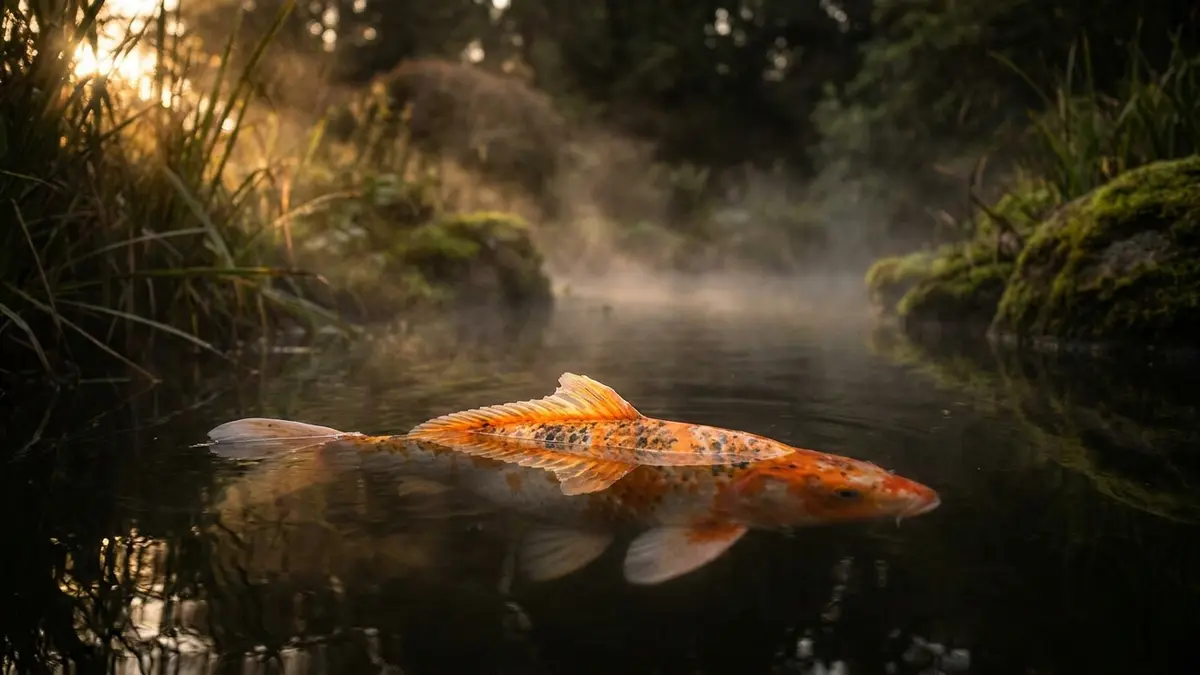
Seeing koi signals a time of financial prosperity or the opening of a new opportunity. Sometimes they mean you should persevere in seeking your goals, instead of fighting against the current. If you see koi in a dream, it often means financial gain will be coming.
An almanac
- Core message
- Dream boldly
- Spirit animal
- Signals a financial upswing and new opportunities
- Totem for
- Cheerful, resourceful people who trust their instincts
- Power animal
- Breaking through stagnation and fear
- In dreams
- Financial improvement or a call for patience
- Element
- Water
- Children's Day
- Koi streamers fly each May 5 in Japan
- Longest-lived
- One famous Koi reportedly reached 226 years
No animal mixes elegance with stubborn persistence like the Koi fish. Fancifully bred from ordinary carp, they've earned a reputation for sparkling color and perseverance, battling against a stream with dogged determination until they've reached their destination. The symbolism of the Koi speaks to not being afraid to be delicate and determined at the same time.
Koi Symbolism & Meaning
Koi, the pretty fish with richly patterned scales, are thought of as "living jewels" in Japanese culture. These fish are peaceful and easily get along with other fish, which has made them a symbol of unity and harmony, especially in China. Koi are also tied to family togetherness.
Many spiritual traditions treat Koi as a reminder of how the soul works its way upstream toward enlightenment, despite life's flowing waters and sometimes-sudden falls.
In feng shui practice, which comes from China, Koi symbols and ponds have been thought of as brimming with good fortune.
Koi Spirit Animal
When a Koi spirit animal shows up, it's a good sign.
Koi signals that you'll soon find money. You'll also open new doors and find that those doors line up with your dreams.
Your Koi spirit animal won't give you something for nothing. You must still work to heal. Let go of baggage. And stay open to new things.
You might need to let go of some projects too. That's okay. If you're not going somewhere, then you shouldn't take this path.
Your Koi spirit animal isn't asking you to abandon your plans though.
The color of the Koi can tell you more too.
A koi with white scales and red spots around the mouth means that nurturing your relationships might help you find what you want. The same color around the head means that making a good career move might help you find what you want.
A gold koi means that more money is coming your way. But it doesn't happen without being careful with how you spend that money, because the chance to do this again might not come your way again soon.
Above all, the koi spirit animal says to keep going even when life tries to knock you down. Don't drown in sadness. Learn from your mistakes.
Does Koi fit you?
Tap the ones that sound like you — 6 traits, no right answer.
0 of 6 Nothing picked yet — start tapping.
Koi Totem Animal
People who are linked to the Koi totem tend not to worry much about money. This isn't because they're lucky. It's because they work steadily toward making their loved ones feel secure.
If you carry the Koi totem, you tend to stay cool and collected when trouble strikes. When you do, lean into your instincts. Often, you second-guess your instincts, which leaves you stuck when you need to adapt.
As a Koi person, you tend to be a cheerful, optimistic person who values others' happiness. You're good at spotting beauty that others miss — and bringing people close in your life, both because you enjoy their company and because you truly want them to be happy. Yet even if you're friendly and outgoing, you need time alone to gather yourself.
Like fish in water, people with the Koi totem feel renewed when they spend time around water like a river or lake — or by taking a ritual bath on their own.
People with the Koi totem tend to thrive when they're focused on making other people's lives better.
Koi Power Animal
Talk to the koi power animal when you're stuck, unable to break free, and don't know what to do next. It's important to make a move with koi—just standing still in a fixed place means that things will never change.
Koi help people:
- Break out of the fear and hesitation that keeps them trapped
- Figure out how to take on something big and scary
- Remember patience when the slow pace feels frustrating
- Find little wins they can identify as evidence of bigger progress
- Reconnect with a sense of flow in their life or project
Koi in Legend
There are two stories about Koi symbolism. The first is set at Dragon's Gate, a place along the Yellow River where there is a waterfall so powerful that not many Koi even try to swim up it. Legend has it that any Koi who managed to get over the falls would turn into a dragon, a very powerful and respected creature — a story about people who are very brave and find new ways around big problems.
The other story compares Koi to samurai warriors. The comparison is that Koi are very brave and calm, just like samurai warriors were supposed to be, going through big falls without panicking or thrashing around in fear when they got caught and taken away. Both stories mean the same thing: That Koi are known for being fearless, keeping on trying with grace even when faced with big problems.
Koi in Dreams
Because koi have so much symbolism to represent in your waking life, they often show up in your dreams to signal something is going on you shouldn't ignore. A koi dream might mean:
- You'll get the opportunity that would really change your finances for the better
- A tough situation will improve, but only if you don't give up and just wait
- It's time to start trusting your gut on the big decisions you're making right now
- A reminder that harmony is important in your relationships, including with the things in your home
- It's going to take patience and persistence to pull through a problem
Koi Spiritual Meaning
They look light and even frail, floating their way through a pond. But they're built to fight. Wherever koi are found, they will choose a stream and head upstream. It's a fight, but they don't give up.
Strength doesn't mean letting go of elegance. Wealth and good fortune do come to those who are consistent, who work patiently, without shortcuts. Whatever happens along your journey, the fish helps you weather it. It represents the version of you on the other side of the river or on the other side of something difficult you have to do.
What Black and Blue Koi Symbolize
In addition to gold and white-red Koi, two other varieties have their own important meanings: black Koi, sometimes called Karasu; and blue Koi. These are very mature fish, usually the ones that have already survived a fight — their coloring signifies that the worst is behind them and they are ready to be a father and take care of business.
There is something quieter about blue Koi, which also exist but are somewhat rarer. These fish mean calm, tranquility, and family strength — strength that protects everyone in the family. The meaning of blue is quiet strength — that you can be strong without yelling and insisting all the time.
Gold means wealth coming in; white-red means courage; black means you've already survived the battle; blue means calm and protective strength. Taken together, these color meanings make it feel like an image of a family portrait. All of these strengths together are what makes a strong family.
How Many Koi? What the Count Symbolizes
Just one Koi fish creates a story, but Koi living together make another. Two Koi, a light and dark one, are often read as two energies moving through the same pool—the masculine and the feminine, conflict and relaxation—coexisting without canceling each other out.
But nine are better. Nine Koi together is the luckiest count there is: one black alongside eight gold or red ones. It's often thought to represent the way gold fish bring money and opportunity to you while the black fish quietly absorbs whatever misfortune otherwise might slip through.
From River Carp to Living Jewels: Where Koi Came From
There's a kind of carp people sometimes call the koi. These weren't the ugly little fish most people picture when they think of a carp. These were special color and shape mutations.
These were found decades later in Niigata, the mountain region in Japan. People there named them Nishikigoi, which means "brocaded carp." Once these people learned they could make beautiful, colorful fish this way, it wasn't long before Nishikigoi were more prized than food.
Until recently, one fish was considered the most long-lived of all: it was more than two hundred years old! Its name was Hanako, it was very beautiful, and it was with several owners over many decades.
Frequently Asked Questions
What does a Koi fish symbolize spiritually?
Spiritually, a koi fish is often associated with perseverance, prosperity, and calm strength. The koi's famous "fighting upstream" ability is a popular metaphor for pushing toward personal growth or enlightenment in spite of obstacles. And the koi's natural beauty makes it a symbol of wealth, harmony, and good fortune.
What does it mean when you dream about Koi?
Dreaming of koi can suggest improving finances, patience during a hard stretch, or trusting your instincts. It can also signify restoring balance in a relationship or remind the dreamer to be persistent.
What is the legend behind Koi turning into dragons?
The legend is that carp that fight and make it up the Yellow River rapids called Dragon's Gate will turn into dragons, a fable that celebrates persistence in the face of very tough challenges.
Is Koi symbolism different in China versus Japan?
Yes and no. The two traditions overlap, but Chinese culture emphasizes a koi fish's symbolic associations with fame, family harmony, and wealth through feng shui readings about abundance and transformation. Meanwhile, Japan generally associates the koi with themes of perseverance and courage. May 5th is Children's Day in Japan, where families traditionally fly koinobori (koi-shaped streamers) for each child in the home.
How long can a Koi fish actually live?
Usually longer than other pond fish. Some long-living Koi have been reported to have lived 100 to 200 years; in fact, one Koi named Hanako is believed to have lived 226 years. Healthier Koi usually live multiple decades.
Does the direction a Koi is swimming change its meaning?
In the folk tradition, yes, though this is more an intuitive interpretation than a strict rule. A Koi pictured swimming upstream is generally read as representing a struggle in progress, the sign of someone actively pushing towards a goal. In contrast, a Koi swimming downstream typically represents a goal already reached and, implicitly, the relaxation of effort needed once you've finished climbing.
Koi also represents
- Other animals that represent death →Alongside Raven, Crow, Buzzard & Vulture, Owl
- Other animals that represent strength →Alongside Lion, Bear, Tiger, Elephant
- Other animals that represent peace →Alongside Dove, Crane, Deer, Elephant
- Other animals that represent rebirth and change →Alongside Butterfly, Snake, Dragonfly, Frog
Sources
Claims on this page were checked against these published sources.
- Koi
Systematic breeding began in the 1820s in Niigata, Japan, where farmers selectively bred Amur carp for ornamental traits.
Read the source → - Dragon Gate (mythology)
If a carp successfully makes the jump, it is transformed into a powerful dragon.
Read the source →