Birds · Spirit animal
Rooster Spiritual Meaning & Symbolism
Bold confidence, watchful timing and the courage to greet the day loudly
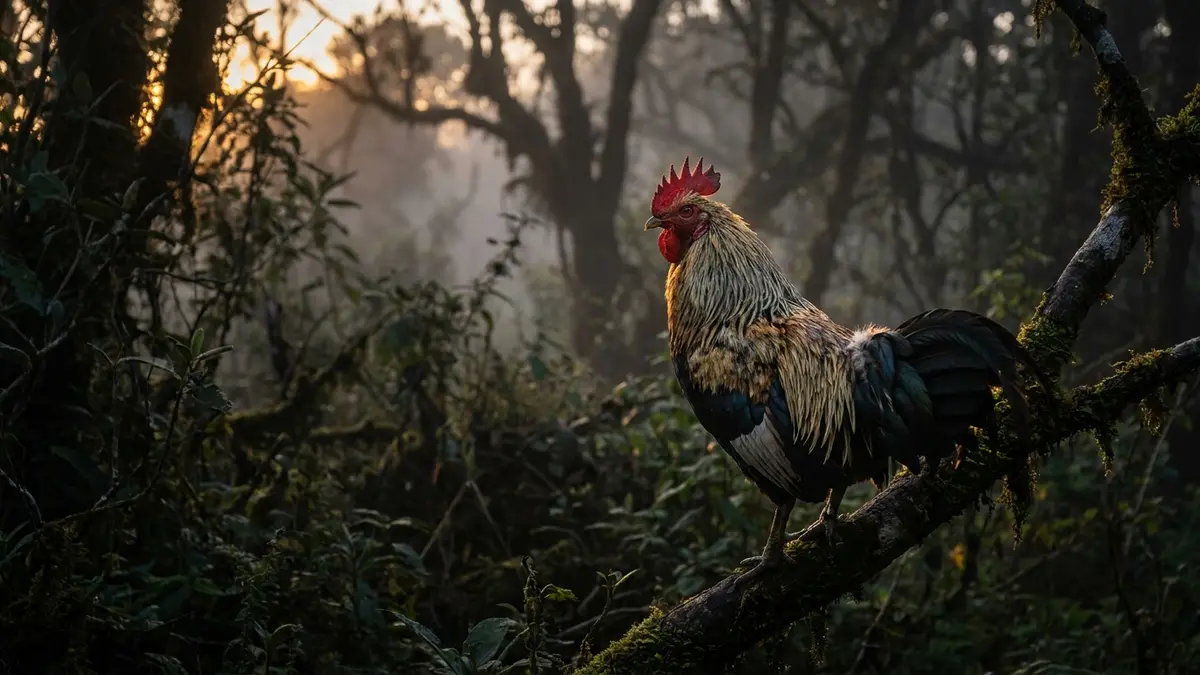
Rooster is an animal with the spirit of confidence, self-assurance, and impeccable timing. As a spirit guide, it tells you to speak up and to meet each day with courage rather than staying quiet because of fear. As a power animal, Rooster brings you vitality and protection and can restore order and help clear any stagnant energy in your life. If you dream of Rooster, you might be looking at your own pride or find yourself putting on too big of a show.
An almanac
- Core message
- Claim your voice and your moment
- Spirit animal
- Confidence, vitality, courage to speak up
- Totem for
- Passion, hope, mental sharpness, prosperity
- Power animal
- Vigilance, self-protection, restoring order
- In dreams
- Pride - healthy confidence or a warning sign
- Cultural roots
- China, Japan, Celtic, Jewish & Native American lore
- Christian symbol
- Watchfulness, conscience and Peter's repentance
- Word root
- "Cocky" traces straight back to Rooster's strut
- First tamed
- Southeast Asia, roughly 3,500 years ago
A Rooster is a barnyard bird with an attitude. From its bright plumage to the loud "cock-a-doodle-doo" crow, there's no doubting the Rooster's confidence. It's no wonder the Rooster is known as a symbol of bravery and assertiveness across many cultures. As a spirit guide, the Rooster has an important message for you: Use your unique voice and make your views heard. The time is now!
Rooster Symbolism & Meaning
Roosters strut, and their strutting is over the top. You think they're pretty, but are they? They have plumage to flaunt, which isn't really surprising since they strut it all over the place. Roosters in China and Japan are icons of good luck — people say the bird's crowing at dawn drives away lingering darkness and misfortune.
In Chinese tradition, the five virtues Roosters have are faithfulness, bravery, generosity, self-belief and civic duty. Because their schedules are pretty consistent, you can count on a Rooster to be reliable and punctual.
Roosters appear in Feng Shui — a Chinese way of arranging your life to get along better with your neighbors, with your house and with yourself — because a red Rooster can protect you from fire, and a white Rooster can ward off unwelcome ghosts. In Japan there's a legend about roosters who crowed to lure the sun goddess out of hiding. And in Taoism, which is all about making sense out of the world and yourself, the rooster is a lucky character. In fact, it sometimes acts as an intermediary between realms.
Rooster Spirit Animal
When people need encouragement, often they get it from someone who is loud and outspoken, who isn't afraid of using their voice.
People who are shy can often feel like they need a boost from the Rooster. It lifts them up and helps them feel more sure of themselves.
When the Rooster comes around you it says: Look! Something good is going to happen today. And if you take just one brave step into this day, something amazing might happen, even if you don't know what it is yet.
Focus on this: Today isn't another day in the same old story. This is a new day in your life, with new possibilities waiting for you. It might change everything.
Does Rooster fit you?
Tap the ones that sound like you — 6 traits, no right answer.
0 of 6 Nothing picked yet — start tapping.
Rooster Totem Animal
Claim the rooster as a personal animal totem if you often experience an enhanced ability to attract prosperity, passion, and creativity. People with the rooster's spirit guide are resourceful. These qualities are like light that is meant to spread, resulting in a community presence that draws others to the path you pave.
Roosters carry a solar energy, so those who follow its guidance often feel infused with physical and creative vitality.
Rooster Power Animal
Call on the rooster when you want to move from being unsure of your strengths to knowing them and declaring them to the world. When you wake up and hear a rooster crow, notice how much you have to be grateful for, especially as that bird stretches and crows. You can do this, too.
Quietly reflect on what roosters stand for: being alert and watchful, protecting yourself, changing your energy into something healthy. Roosters have long helped people tell time; if your schedule is out of whack or your days seem scattered and disorganized, this is the power animal you need.
Across cultures
4 traditions — pick one to read its take.
Native American Rooster Symbolism
Modern native American traditions sometimes use the rooster, or the domestic chicken, as a symbol of male vitality, standing for life, protection, and fertility. Roosters were first brought to the Americas by Europeans, so this isn't a symbol that's been around for very long. Since roosters announce the start of each new day with their morning crowing, they naturally relate to cycles of renewal and guard what matters. This role of protector of what matters is something that cultures around the world often give to the rooster.
Rooster as a Celtic Animal Symbol
The Celts saw Roosters as both messengers and guides. Rather than treating them only as heralds of the morning, they also saw them as attendants to the souls of dead soldiers. The Celtic god known for sending messages often had a Rooster companion. Storytellers used these birds to drive ghosts out, and they associated their crack-of-dawn call with protection from mischievous spirits.
Rooster in Chinese Culture
Roosters are honored in Chinese culture because they're courageous, loyal. They also have a kind personality.
People born in the Year of the Rooster are similarly described.
In feng shui, red and white imagery of roosters is used to protect.
Rooster in Christian Tradition
The story of the rooster in the New Testament book of Mark — where Jesus warned Peter that before the rooster crowed twice he would deny him three times — led the Church to see the bird as an emblem of conscience. Like a voice that signals you after you've left your word, it's something that catches you when you've made a wrong choice.
That idea was carried onto church rooftops in Europe, where a popular legend says a rooster was put on top of every church steeple because Pope Nicholas I commanded it. An earlier pope, Gregory I, had said that a rooster was an especially watchful bird, and it makes sense for Nicholas to have chosen one to help with that responsibility. One example is Gallo di Ramperto, a weathercock from about 820 AD that still stands in a museum in Brescia, Italy.
The stories above show how it's through noticing your own mistakes and feeling bad about them.
Rooster in Jewish Tradition
Jewish teachings treat the rooster as a symbol of bravery. The Talmud teaches that, even without the Torah, humans could learn proper court manners by watching a rooster gallantly wooing his mate.
The Zoroastrian religion goes even further. Zoroastrians consider the rooster a symbol of light triumphing over darkness — a role that suits the bird well. After all, almost everything a rooster does revolves around gathering at dawn to greet the rising sun.
Rooster in Dreams
A rooster appears in dreams to announce pride, whether healthy self-assurance or the kind of display that backfires. To interpret its meaning, reflect on whether you're backing up your confidence with solid ground or flaunting what you lack.
If you see roosters fighting, this might indicate tension with a real rival.
A rooster crowing at dawn often suggests an imminent awakening or fresh start in waking life. The image of being followed or approached by a rooster could reflect a message you have been avoiding or a confidence you have reclaimed.
If the rooster's plumage is colorful (and red), in particular, this image may echo passion and an infusion of new energy into your life.
Rooster in Astrology & Zodiac
Beyond its place among the twelve animals of the Chinese zodiac, Roosters are known for their unabashed confidence and success. They're naturally self-assured, with the ability to draw attention to themselves like their feathered namesakes do with their often elaborate plumage.
Given its reputation for good fortune, this bird is a perfect symbol of having what it takes to make something big. People born under the Rooster sign tend to take charge of their own destinies just as the crowing rooster might take charge of everyone else's routines.
Rooster Spiritual Meaning
Rooster teaches you to boldly stand in your power, make your voice heard and trust in the decisions you make. It urges you to stop hiding and start rising up into who you truly are. If it crosses your path, take this as a sign that the time is right for you to step into your courage.
Rooster in Greek Mythology
A very old story from Greek mythology tells of a young attendant named Alectryon whose vigilance got the best of him. Guarding the entrance as the sun god Helios arrived in the heavens, Alectryon fell asleep at his post just as the celestial deity emerged to shine light.
Consequently, Ares, the war god and suitor of Aphrodite, flew into a rage when he discovered that they had been caught. Ares's jealous wrath turned poor Alectryon into a rooster overnight. And to this day, roosters are compelled to crow each dawn as a punishment for their former handler's failure.
All things considered, this myth provides an intriguing explanation for why roosters seem so intent on calling out loud, early, and often at sunup.
The Biology Behind the Crow
On top of the rooster's mythic reputation as a timekeeper, researchers in Japan kept some birds in constant darkness and found that they still did plenty of crowing on their own, about once every 24 hours. That might be because of what's called an internal circadian clock — a pattern controlled by the animal's body rather than the sun itself. Light and noise can still push roosters to crow early, but their internal bodies basically force them to crow around dawn time no matter what. Beyond being an intriguing bit of research behind all that folklore, this finding helps connect roosters to people too. The wild bird the chicken comes from was domesticated by rice farmers in Southeast Asia who first worked with those birds more than 3,500 years ago. They spread out from their farms to become an essential part of everyday life around 2,800 years ago.
Frequently Asked Questions
What does the Rooster spirit animal mean?
The rooster spirit animal means you're ready for a fresh start, or that you need to find the courage to speak up. Roosters are examples of confidence and vitality in the animal kingdom, so a rooster as a spirit animal might be telling you to trust your voice.
What does it mean to dream about a rooster?
Dreaming about a rooster means you have pride, either healthy self-assurance or a little overconfidence. Dreams of roosters fighting each other mean there's tension between you and someone else who feels competitive with you.
Why is the Rooster a symbol of good luck in Chinese culture?
The Rooster is associated with a number of virtues, including duty, loyalty, courage, kindness and confidence. Because of its ability to awaken people at dawn and to announce the coming of a new day, it's believed that the Rooster crow can drive away evil spirits. This is why red and white Rooster images are used in feng shui for protection.
What does the rooster crowing mean in the Bible?
Roosters have been a symbol of conscience and watchfulness since at least the ninth century, when cockerel weathervanes started topping church steeples. The rooster's a memorable example because of Jesus's story about Peter denying knowing him before the cock crows twice.
Why do roosters crow specifically at dawn?
Roosters crow at dawn and through the day if they see light. But even if they're kept in darkness, a rooster will still crow on a roughly 24-hour cycle. This isn't triggered by light but by the bird's internal clock.
Where does the word "cocky" come from?
The word "cocky" comes straight from "cock," the older English word for a rooster. A cocky person struts like a rooster. The term went on to signify arrogant, unearned confidence — an echo of a rooster's own reputation for swagger.
Rooster also represents
Sources
Claims on this page were checked against these published sources.
- Rooster of Barcelos
while the pilgrim was hanged, the roasted rooster stood up on the table and crowed as predicted
Read the source → - Amaterasu
cocks were set outside the cave in the hope their crows would make the goddess think that dawn had come
Read the source → - Chinese zodiac
the Rooster is confirmed as one of the twelve animals in the Chinese zodiac, holding the tenth position in the cycle
Read the source → - Mercury (mythology)
He was often accompanied by a rooster, herald of the new day, a ram or goat, symbolizing fertility, and a tortoise
Read the source → - Orion (constellation)
the figure of the Rooster is located below and behind the figure of the True Shepherd—both constellations represent the herald of the gods, in his bird and human forms respectively
Read the source → - Mark 14:72
And immediately the rooster crowed a second time. Then Peter remembered the word that Jesus had spoken to him: 'Before the rooster crows twice, you will deny Me three times.' And he broke down and wept.
Read the source → - Weathervane
Pope Gregory I (590-604) considered the cockerel 'the most suitable emblem of Christianity,' linking it to Saint Peter... Pope Leo IV (847-855) placed a weathercock on Old St. Peter's Basilica. Subsequently, Pope Nicholas I (858-867) 'ordered the figure to be placed on every church steeple'... The oldest surviving rooster-shaped weathervane is the Gallo di Ramperto, created around 820 and now housed in the Museo di Santa Giulia in Brescia, Italy.
Read the source → - Alectryon (mythology)
Alectryon however failed at his job when he fell asleep, allowing Helios, the god of the Sun, to see the two lovers... Enraged with Alectryon's incompetence, Ares changed him into a rooster in anger.
Read the source → - How Do Roosters Know When to Crow?
Their internal circadian rhythms keep them crowing on schedule, even when the lights are turned off.
Read the source → - Researchers Pinpoint Date When Chickens Were First Domesticated
the chicken's domestication began in rice fields planted by Southeast Asian farmers 3,500 years ago
Read the source → - Cocky - Etymology, Origin & Meaning
Old English cocc was a nickname for 'one who strutted like a cock,' thus a common term in the Middle Ages for a pert boy
Read the source →