Birds · Spirit animal
Mockingbird Spiritual Meaning & Symbolism
The many-voiced singer who teaches you to borrow wisely, then find and defend your own true song
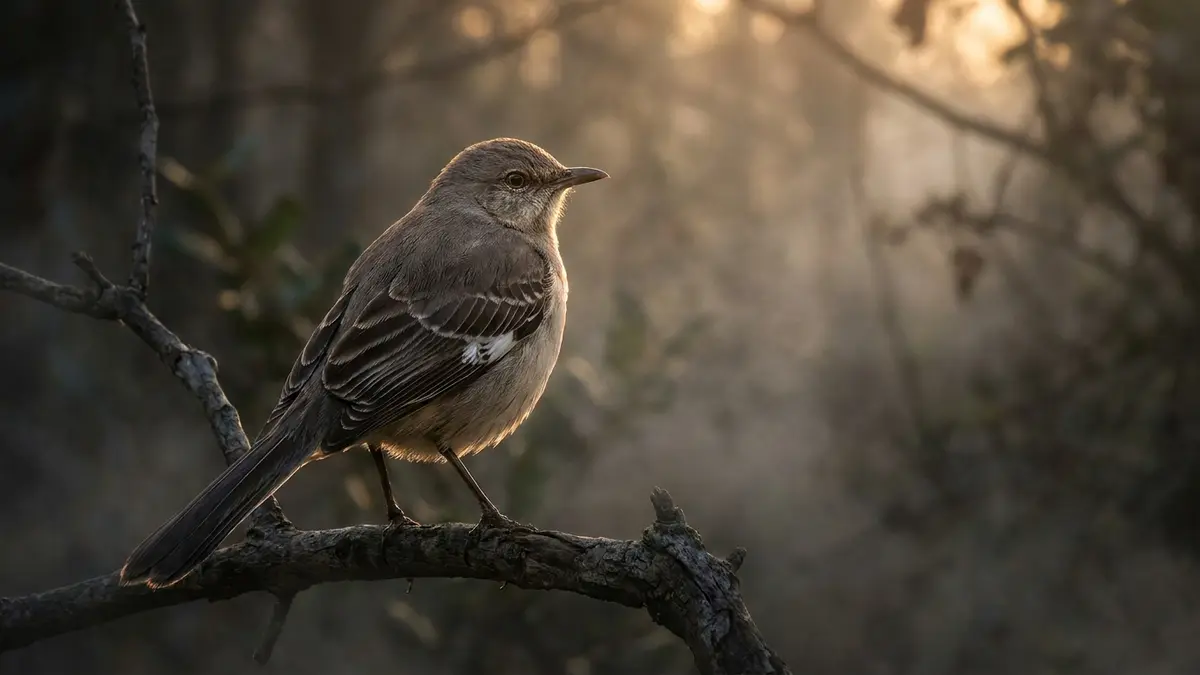
The mockingbird comes to remind you to use your own voice and call things as you see them. It comes to tell you that other people are following their own rules for living, which might be different from yours. It teaches you to communicate in a clear, straightforward way that doesn't go out of its way to be fancy or clever. It comes when you're ready to trust your instincts more than what other people say or do. In particular, it's likely to tell you to stand up for yourself and stand up for the ones you love. Mockingbirds are famous for their ability to imitate the sound of other birds even though they fiercely guard their own territory and family. A mockingbird can come as a warning when someone is pretending or a reminder when you aren't saying what's really in your heart.
An almanac
- Core message
- Own your voice and defend your boundaries
- Spirit animal
- Speak your truth with confidence
- Totem for
- Quick-witted, protective communicators
- Power animal
- Learning by mimicry, clearer communication
- In dreams
- Self-expression and authenticity
- Watch for
- Overstepping, or borrowing without originality
- State bird
- Official bird of Florida & four other US states
- Night song
- Unmated males sing after dark, more under a full moon
Mockingbird is famous for how well it imitates other animals. It has a whole repertoire of animal calls at its disposal: dozens of bird calls, cat meows, and a dog's bark. And if mockingbirds have to be outdone, it's also quite fearless: it's not one to run away from an enemy when its nest is at stake. As a spirit animal guide, it represents a person who knows how to speak up about their needs. It speaks to the topic of what is sacred to you and what you want to protect: your voice, your boundaries, your ideas or beliefs. Mockingbird symbolism can also remind you that you're allowed to assert yourself if you need to.
Mockingbird Symbolism & Meaning
Roughly thirty species answer to the Mockingbird name, but the Northern Mockingbird is the one most people picture, and its scientific label translates loosely to something like "many-voiced mimic." That title is earned honestly: this bird doesn't just borrow the melodies of other species, it can convincingly reproduce a barking dog or a meowing cat, likely to lure certain birds closer and to scare unwanted ones off.
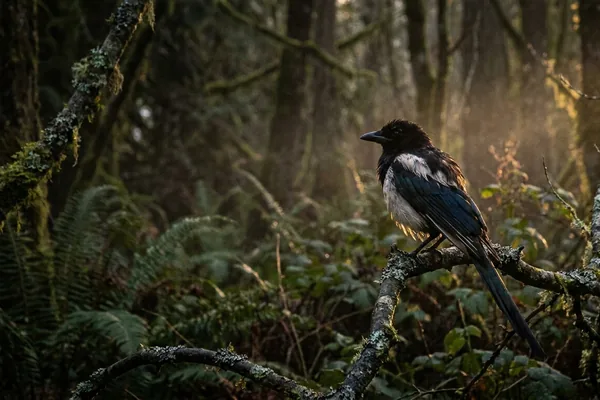
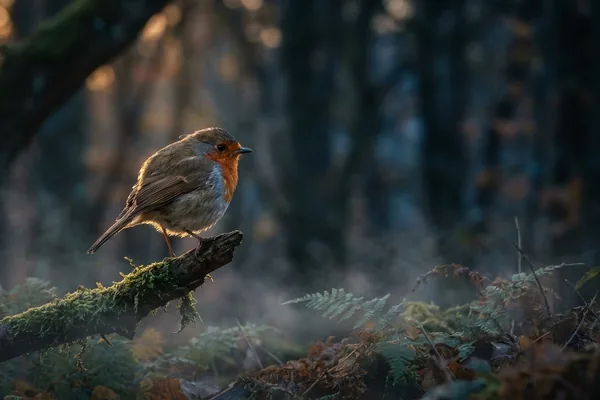
That vocal cunning puts Mockingbird in the same clever company as Ravens and Magpies. Standing about ten inches tall with an excitable, flicking tail, this grey-feathered bird is also surprisingly good at vanishing into dense brush, craftier at hiding than a more exposed bird like the Robin, and it guards its young with a ferocity to rival the Blue Jay. That combination gives it a reputation for loyalty, protective instinct and firm boundaries.
Harper Lee leaned on the bird's gentler side in To Kill a Mockingbird, where harming one becomes shorthand for destroying innocence through contact with cruelty. Add cleverness, joy, playfulness and communication to that list and Mockingbird's outsized place in folklore makes more sense. Even Charles Darwin noticed how the bird varied subtly from island to island in the Galápagos, an observation that helped push him toward his theory of evolution.
Mockingbird Spirit Animal
When mockingbird appears as your spirit guide, you usually need to speak up more. You have a strong voice, and people will take you more seriously if you trust your inner wisdom and say what you mean. You need to communicate more assertively, not just to get your points across, but also to set a good example for others.
Mockingbird is one of those mimics of nature who needs to pay attention and learn from others. This reminds you to listen closely to people who are knowledgeable and not just imitate them blindly.
When the mockingbird appears, it often signals that the person who feels threatened is you. Perhaps rumors or gossip are making you feel insecure or angry. Is there something you are being blamed for that isn't your fault?
You may also need to stand up for yourself when someone else has crossed your boundaries.
At times like these, take a page from mockingbirds and mimic one of nature's strongest skills: observation. Pay attention to everything that happens around you, you'll know when the time is right for action.
Does Mockingbird fit you?
Tap the ones that sound like you — 6 traits, no right answer.
0 of 6 Nothing picked yet — start tapping.
Mockingbird Totem Animal
Mockingbirds often carry exceptional talent without much outward evidence of it until they open their mouths, and then everyone notices. They're fast to move on from stressful situations, rather than carrying grudges or holding on to people who are no longer a good fit. A trustworthy ally, they have little trouble detecting the true intentions of others when they speak.
Loyal to those who earn their affection, mockingbirds take great care of those close to them and have no patience for anyone who causes harm. Their fierce protectiveness extends to an entire circle of loved ones. The same kind of loyalty makes them natural allies and they'll stand up for those who need support.
Music often plays an important role in mockingbird cultures. Loved ones can often tell that something is wrong if the mockingbird stops humming. One aspect mockingbirds have a hard time with is originality: they shine brightest when remixing other people's ideas rather than trying to invent from scratch.
Mockingbird Power Animal
The Mockingbird's power is in its truth.
It helps you locate your authentic voice and to tune in to what brings you joy, so you can then stand up for what you believe. It also teaches you to tell a sincere message from a performance, helping both to understand other people and be honest with yourself.
Because it can mimic the sounds of other birds and animals, the Mockingbird helps you pick up new skills through repetition and mimicry, like learning a language by copying pronunciation.
Along similar lines, Mockingbird helps others hear your message when it matters. So if speaking in public or representing other people is on your path, this power will help you get your message across clearly.
Native American Mockingbird Symbolism
Mockingbird holds a respected place across Native American storytelling. Both Pueblo and Hopi traditions credit this bird with a role in creation, teaching the first humans how to speak. Tribes of the Southeast regard Mockingbird as unusually sharp-minded, the Shasta cast it as a watcher over the dead, the Maricopa treat it as a medicine bird carrying special gifts, and Pima tradition frames it as a natural negotiator and keeper of peace, thanks to its gift for communication. The Cherokee carried that reputation for sharpness furthest of all, naming Mockingbird "the one who learns language" and, in older tradition, feeding a bit of the bird's head to children in the belief that its quickness would pass into them.
A Mayan folktale often called "How Mockingbird Became the Best Singer" tells of a poor, plainly-feathered young Mockingbird who could already sing beautifully but had no means to study formally. Working for a wealthy Cardinal family, she watched as the Cardinal daughter, bored and unwilling, took lessons from a famed singing master who eventually gave up and left.
Panicking before a recital, the daughter secretly convinced Mockingbird to hide nearby and provide the real voice while she only mimed along. The Cardinal father saw through the trick, exposed it publicly, and asked Mockingbird to sing in her own right, a performance so stunning that her descendants were gifted beautiful voices forever after, a reward the Cardinal line never received.
Mockingbird in Dreams
If mockingbirds show up in your dreams, you should probably trust yourself and sing what is on your heart. But do be careful about trying to please others at the expense of listening to yourself. Overall, mockingbird dream interpretations are positive.
• A mockingbird singing happily suggests positive changes are ahead, as long as you trust yourself. • If a mockingbird flies at you angrily, it may mean you've overstepped your bounds or acted too much for the spotlight. • A calm, peaceful mockingbird represents confidence that is not needing outside validation. • Finding a mockingbird's nest in the wrong place indicates someone is trying to claim credit for an idea that wasn't theirs. • Hearing a mockingbird sing from under cover means you have trouble understanding what people are saying to you. • A mockingbird's egg hatching means a project or skill you've worked on has come to fruition. • Harming a mockingbird may be a sign that you're about to repress a voice — whether it's your own or someone else's — out of carelessness or anger.
Mockingbird Spiritual Meaning
This bird's message is to respect and understand your own voice as well as those of others. Mockingbirds learn their songs by absorbing sounds from all around, but they add their own unique variations to create a special tune that's entirely their own.
Mockingbirds defend their nests and young with fierce dedication, showing that, no matter what, what matters most is sacred and must be defended. If you hear the call of this bird or see one passing by, take the message to heart. Listen carefully to the message another person is trying to get across to you, even if it's hard or disturbing. Speak with confidence and don't be afraid to stand up for what you believe in, even when others don't agree. Even if your beliefs are inspired by others or influenced by outside forces, understand that they come from your own personal sense of self and are valid. You must learn how to articulate what's important in your life.
Mockingbird Singing at Night
A mockingbird's singing at night is an unusual sound. Most birds go silent at dusk, but this one keeps going and going. Sometimes it leaps a few inches into the air while it's singing as if the music is lifting it up. If you're lying in bed awake and listening, it really makes you wonder what's going on.
But the singing does have a reason. During mating season, unmated male mockingbirds sing after dark specifically to reach females who are still looking for a partner. A singing bird is much easier to find in the dark than a silent bird, so by making as much noise as he can, he gives himself a better chance of attracting attention.
People can interpret this spiritually. A mockingbird's night song can push you to reach out and speak honestly even when there doesn't seem to be anyone listening. If you hear a mockingbird singing through the night and feel like your voice is being silenced, take that as permission to finally speak what you've been keeping inside. At least one person out there will hear you if you keep speaking up.
Mockingbird as a Devoted Companion
Beyond the spiritual significance that people have attached to Mockingbirds, there's real evidence that they make dedicated companions. Thomas Jefferson kept several of them when he was president, and especially close was one he named Dick, who lived with a surprising closeness to him: Jefferson took him and kept him in his study, where Dick would perch on his shoulder while he worked.
A witness observed that "he could not live without something to love," and Jefferson plainly felt that way about Dick and his gardens. It says something about Mockingbird's deepest message: they perform for an audience. Even if it takes time to win their trust, wherever you find one it will reward your attention with genuine devotion.
Frequently Asked Questions
What does the Mockingbird spirit animal mean?
When you see the Mockingbird spirit animal, know that it's time to find your voice and start using it. Make sure you're also modeling good behavior.
What does it mean when a Mockingbird visits you?
A mockingbird may visit to encourage you to speak your truth, defend your boundaries, and trust your instincts, when other people's opinions crowd out your own judgment. It may arrive when you need the courage for a hard conversation.
What does dreaming about a Mockingbird mean?
People often associate dreaming of mockingbirds with positive qualities like honesty and self-expression, as long as you trust your instincts. If the bird is calm and singing, that might reflect confidence in yourself. But if the mockingbird is aggressive, it could point to a tendency to overstep boundaries.
Can mockingbirds actually recognize individual people?
Some mockingbirds actually recognize individual people. A study at the University of Florida showed that mockingbirds can pick one specific person from a crowd after only about 60 seconds. Every time they saw the same individual come near their nest, the mockingbirds would defend it more vigorously than usual. But they showed barely any reaction to anyone else. Spiritually, a mockingbird's discernment is fitting; it has to keep tabs on who it can trust and who hasn't earned its trust.
Is the Mockingbird a symbol of good luck?
Yes, in the sense that people typically consider it a good sign. They often interpret its presence as encouragement to live honestly, trust their instincts, and stand up for themselves. But this isn't necessarily the Mockingbird's real message. A suddenly bold or aggressive Mockingbird carries the opposite message. It's less a sign of good luck than a call to mindfulness.
Mockingbird also represents
Sources
Claims on this page were checked against these published sources.
- The Traditions of the Hopi (Field Columbian Museum Publication 96, Anthropological Series Vol. VIII)
As soon as they emerged, the Mocking-bird assigned them their places and gave them their languages. To one he would say: 'You shall be a Hopi, and that language you shall speak.' To another: 'You shall be a Navaho…'
Read the source → - The Unwritten Literature of the Hopi (University of Arizona Bulletin Vol. IV No. 4)
given each a separate speech or language by the mocking bird, 'who can talk every way.'
Read the source → - Native American Indian Mockingbird Legends, Meaning and Symbolism from the Myths of Many Tribes
the Cherokees used to give children mockingbird heads to eat out of the belief that it would make them clever
Read the source → - Northern Mockingbirds
The male virtuoso sings his repertoire anytime to attract a female.
Read the source → - Dick the Mockingbird
How he loved the bird! He could not live without something to love… his bird and his flowers became the objects of his tender care.
Read the source → - Northern Mockingbird
The Northern Mockingbird serves as the official state bird for five U.S. states, including Florida.
Read the source → - Mockingbirds -- No Bird Brains -- Can Recognize A Face In A Crowd
Sixty seconds of exposure was all it took for mockingbirds to learn to identify different individuals and pick them out of all other students on campus, said Doug Levey.
Read the source →