Birds · Spirit animal
Blue Jay Meaning & Spiritual Symbolism
Bold-voiced loyalty, resourcefulness, and the courage to speak your truth
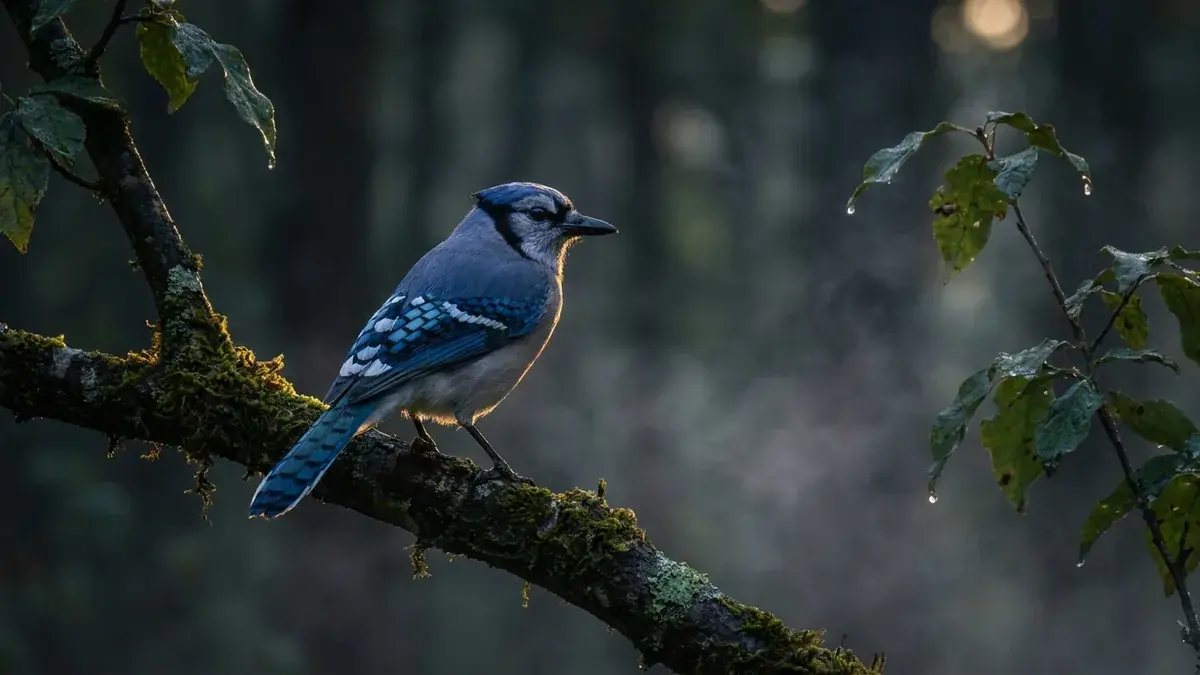
Blue Jays symbolize brave, forthright communication, steadfast dedication, and inventiveness. They tend to appear when you need to trust yourself and tell the truth with conviction. As a spiritual guide, their message is to protect what matters to us, live according to instinct, and be sure to stand our ground.
An almanac
- Core message
- Speak your truth boldly
- Spirit animal
- Trust your potential, communicate clearly
- Totem for
- Curious, protective, self-assured people
- Power animal
- Reclaiming old wisdom, finding your voice
- In dreams
- Unfinished purpose, trust your intuition
- Watch for
- Overconfidence, gossip, possessiveness
- Diet
- Omnivore: acorns, seeds, insects
- Migration
- Inconsistent - some flocks move, some don't
Noisy and easily noticed, the blue jay has a reputation for being one of the bolder members of the bird population. As a guardian, a trickster, and an excellent communicator, the jay possesses all these skills at once. But underneath that showiness lies a devotion to family and incredible ingenuity when it comes to identifying opportunities. That's why this guide covers all aspects of the meaning of blue jays as spirit animals, totems, or symbols.
Blue Jay Symbolism & Meaning
Mark Twain once wondered why no other bird talked quite like the Blue Jay, saying that one sounded practically human when it chattered non-stop. They do have an elaborate vocabulary, can imitate hawks and humans, and will never hesitate to express themselves.
But there’s more substance behind the babble than you might expect. They’re known to stay with each other until death, and will fight off anything larger than they are to defend a nest.
Blue Jay Spirit Animal
When you have a blue jay symbolizing your path (and don't worry if this comes out of nowhere), it's urging you to trust the untapped potential and innate curiosity already present within you. You know you have something special inside; all along, some part of you has intuitively known that you possess deeper gifts than the everyday world ever hinted at.
Your blue jay will stay close for the duration, like a guardian angel, shielding you from dangerously sapping energies and modeling resourcefulness as a first response instead of a last resort.
The heart of the blue jay message revolves around communication, which – being smart creatures – take very seriously. Are your intentions well received? Have you embraced open-mindedness in interpersonal exchanges?
Does Blue Jay fit you?
Tap the ones that sound like you — 6 traits, no right answer.
0 of 6 Nothing picked yet — start tapping.
Blue Jay Totem Animal
Carrying the blue jay as your symbol means you're drawn towards things that are bright and new, like shiny objects, so you learn facts the way other people collect souvenirs. You make great conversationalists because no one is ever bored talking to you. Other people may mistake confidence for pride, before realizing how warmly you feel inside.
You don't often question yourself since blue jays are drawn to opportunities. They do what feels right without caring much about details. Some adopt a deep faith that allows them to connect with others on a very personal level. At home, they throw themselves completely into defending family members, although their loyalty doesn't usually tip over into jealousy.
Blue Jay Power Animal
Use the blue jay as a power animal if you need wisdom from past experiences to help reshape your view of current challenges. This is particularly helpful if you struggle to make yourself heard or are torn between standing up for what you believe in and listening carefully to others' ideas.
If you find you often talk yourself out of goals you value, try calling upon this bird's spirit to shake things up and unlock your imagination. Look for life's little cracks of opportunity and give yourself permission to do whatever it takes to realize a cherished dream.
Across cultures
3 traditions — pick one to read its take.
Native American Blue Jay Symbolism
Among Northwestern peoples such as the Chinook, Chehalis, and Coast Salish, Blue Jay is an ambivalent trickster: selfish, greedy, and mischievous most of the time, yet also clever, entertaining, and occasionally helpful. In these legends he often plays the nosy gossip, bully, or selfish thief, a stand-in for ego and opportunism.
One tale holds that Blue Jay once sang beautifully until pride got the better of him, so a guiding spirit roughened his voice as a lesson in humility. The Chinook and Coast Salish cast him as foolish yet useful, with one story explaining his present form as punishment for boastfulness.
Across these Northwestern traditions his visit is often read as a hint of nearby gossip, fitting for a bird cast as a nosy talker.
One Chinookan tale, recorded as "Blue Jay Finds a Wife," captures his trickster streak in full. His sister Ioi urges him to settle for a sensible older woman, but Blue Jay insists on youth and beauty, so he brings home the corpse of a young girl and asks Ioi to help revive her. She sends him to the Land of the Dead, where village after village turns him away on a technicality: each will only revive someone dead exactly one day, and his answer, "How long has she been dead?," never lines up until the fifth village finally succeeds and names him chief. When he brings his living wife home, her family demands he cut off his hair as tribute; refusing, Blue Jay transforms back into a bird and flees to the Land of the Dead in exile, and his wife falls lifeless again to follow him. It's a fitting coda to his reputation: clever enough to bend the rules of death itself, too proud to pay the price of belonging.
Blue Jay in Christian Symbolism
Many Christians consider blue jays a good omen when seen inside the home. However, scripture doesn't mention the blue jay. Often, people see the quiet moments that blue jays endure while captured as symbols of steadfast devotion even amid pressures. In some cases, people see stocking up on acorns as an example of how someone can prepare for tough times instead of getting overwhelmed when the times get rough. To others, people associate their talking with a message we need to be bold and open about our opinions.
For those who believe the blue jay represents speaking truth out loud despite challenges, the bird shows people how to find their voice and stand firm on holding on to things that have meaning to them.
Blue Jay in Celtic Symbolism
Birds that looked like Blue Jays never lived in the British Isles, so early records only mention them symbolically. Occasionally some people said that a ghostly white Blue Jay might be that old-time magic called the Druids lingering around an Oak tree somewhere. Blue Jays store food in deep holes that look a lot like where a nugget of acorn gets forgotten, then germinates later on into another oak sapling.
There is also a shadowy goddess of kindness and convalescence connected to the Blue Jay and an old man-like spirit often found in groves or forests that rules wishes and amorous behavior
Blue Jay Feather Meaning
Something's about to shift into higher gear: Coming across a feather from a Blue Jay is traditionally taken to mean better times ahead and a powerful invitation to stay patient a while longer. There will be healing waiting for you too, if only you will focus on yourself—tend to your body, mind, and spirit—and give them all the nourishment they need.
According to shamanic tradition, finding the feather means that maybe it's time to become more receptive to messages from other people and express yourself with confidence (especially if you've ever felt too shy for your own good). Focus on the most important thing going on right now—it doesn't matter how many projects are competing for your attention; pick big ones and work like mad on those.
Three things can take us directly to the core of this beautiful creature's meaning: strength, emotional loyalty, sharp intelligence.
Blue Jay in Hindu Folklore
In a beloved story, a princess thinks her rough voice keeps her from marrying the man she loves. A blue jay touched by her sadness offers advice to help them switch places. As long as their roles stay changed, though, how will she ever find true love? Guilt-stricken, the bird helps her search for the prince. His advice leads her to a gift; she hears her strong new voice and realizes something wonderful had already been given in return: the jay now wears a lovely blue ribbon. Her beauty and loving heart win the prince's attention. Today some Hindus also believe the jay brings wealth.
Blue Jay Tattoo Meaning
People often choose a blue jay as their tattoo simply because they like the color. But beyond that, this is also an obvious reference to sharp communication, which blue jays are known for on top of their other qualities: intuitive awareness and circumspection (or being trustworthy).
Choosing such a strong image has its dangers: Brashness becomes even more noticeable and overly loud when accompanied by a vivid tattoo; you might be accused of trying too hard to make an impression. Instead, aim toward winning trust quietly, and show that you're worth keeping.
Blue Jay in Dreams
Dreams with a blue jay often symbolize unfinished business related to your mission, nudging you to confront the truth and act on it. Linked to the air element, this bird represents thought processes and suggests clearing mental fog via meditation or walking. Also connected to humility and reservedness, seeing a blue jay might mean watching for signs of overconfident behavior. Birds have strong associations with creativity and communication, so a noisy blue jay could urge you to follow your instincts while overcoming shyness, whereas one showing aggression may warn of manipulation around you.
Blue Jay Spiritual Meaning
Once upon a time, there used to be big jays wandering around in America, but the people used them for farming so one day a divine spirit decided the jays could have their size cut down if only they gave up on all this trouble. That's when the little blue jay we know today showed up.
Jays have a strong spirit inside them, and their outward appearance has nothing at all to do with how brave and effective they are. If you ever doubt yourself, remember what jays look like on the outside.
Blue Jay and Cardinal Together
Birds can take on symbolic meaning when they appear repeatedly in the same place, or at the same time, or even sometimes simply in conjunction with one another. Traditionally, cardinals symbolize messages from the deceased—usually friends or relatives who wish you well—and an accompanying blue jay will often be interpreted as a push to take some form of action based upon those warm greetings. Since some also see blue jays as symbolizing intense assertiveness, this combination often works out to be a prompting both to feel loving gratitude and keep moving forwards.
While a cardinal seen on its own could sometimes mean drifting to live in the past, two birds help provide balance—one describing thoughts, the other behaviors—that keeps the message grounded. Blue Jays and cardinals together suggest we can make space for sorrow without forgetting there's more to do in our future, particularly if such pairings arrive at moments of key decisions and offers an invitation to get started grieving and planning simultaneously.
What Does It Mean When a Blue Jay Visits You?
A jay that appears near you wants you to find its voice. This idea runs through every culture that takes note of birds: the jay is loud, the jay is aggressive and demanding, the jay will make itself heard. Something in the situation you are faced with wants to be said out loud by you, most likely to an audience you know may not like it very much.
The bird also reminds us that size is not always everything. Like many living things, some talk more loudly than others, and a jay can choose the few moments when to intervene in conflicts between creatures large enough to ignore it.
Jays do more than show aggression in the name of decorum. Their primary tongue may not entertain crows or tits, but jays are excellent mimics who often practise the words of a predator and pass for hawks until their final approach.
A Blue Jay in Your Yard, at the Window, or Appearing Repeatedly
Blue jays stay in your neighbourhood all winter, so if there's a blue jay sitting in the middle of your yard it probably lives near you. If it flits into sight in different places over a short period of time (like passing it by on the street), it could just be wandering around but it might mean someone wants to talk to you. I say 'might' because that last bit only really means something when it keeps happening in lots of separate places, near things they don't usually visit, even though lots of animals visit those places when the food they eat shows up there again.
Frequently Asked Questions
What does the Blue Jay spirit animal mean?
Blue Jays symbolize clear communication, deep loyalty, and great resourcefulness. They often come into our lives when we could use some good advice on speaking our truth, defending what matters most, or trusting our own potential.
Is seeing a Blue Jay a good sign?
Most traditions hold that a Blue Jay is a good omen, associated with loyalty and clear communication. Some Native American teachings also see the Blue Jay as a warning against gossip and pride—or against a person nearby who has other, less-than-honorable motives.
What does a Blue Jay mean in a dream?
You're at a crossroads where it's time to follow through on something with deeper meaning. Clear away old clutter in your mind. Pay more attention to your gut feelings. Look for people who could be manipulating.
What does it mean when a Blue Jay and a Cardinal appear together?
Lots of people find the cardinal encouraging them to let go emotionally while the blue jay urges them to do something now rather than just get wrapped up in their feelings and doing nothing.
What does it mean to find a dead Blue Jay?
Most Blue Jays die accidentally near homes. Many of them fly into windows or other structures. This may seem like a bad omen, but people tend to give a more optimistic reading based on the bird's boldness suggesting that you will face your challenges and then move on to make room for more peaceful things in your life.
How long do Blue Jays live, and do they migrate?
Blue jays are adaptable omnivores. They typically eat plant matter such as acorns, seeds; the percentage of their total consumption these form can be as high as 75 percent, especially in winter. It depends on where you're located. Some groups fly south in flights of thousands during certain years while some don't migrate at all, so in that respect blue jays have well-earned reputations for adaptability.
What does it mean when a Blue Jay keeps appearing?
Seeing several Blue Jays in a short period of time may represent an important idea or realization that has been flying under your nose (literally!). Weigh sightings over multiple situations rather than repeated sightings in just one spot—Blue Jays are territorial birds. So if a blue jay seems always present that's probably a regular neighbor rather than the angelic messenger!
Why does a Blue Jay scream outside my window?
Blue jays are famous for their loud screeching noises. If a blue jay screams at your window, this often means there's something dangerous nearby which hasn't caught your attention yet. For instance, it could be some kind of large predator like a large hawk, or even a large cat which may or may not belong to a neighbor.
Although their call is useful to scare away some predators, blue jays will use those sounds to chase other birds away from birdfeeders, imitating the sound of a hungry bird-hawk chasing prey!
Blue Jay also represents
Sources
Claims on this page were checked against these published sources.
- A Tramp Abroad (Jim Baker's Blue-Jay Yarn)
There's more to a bluejay than any other creature. He has got more moods, and more different kinds of feelings than other creatures; and, mind you, whatever a bluejay feels, he can put into language. ... Yes, sir, a jay is everything that a man is.
Read the source → - Blue jay
Blue jays typically form monogamous pair bonds for life.
Read the source → - Migratory Bird Treaty Act of 1918
The statute does not discriminate between live or dead birds and also grants full protection to any bird parts, including feathers, eggs, and nests.
Read the source → - Native American Bluejay Mythology
Bluejay is a more ambivalent trickster character-- still selfish, greedy, and mischievous most of the time, but also clever, entertaining, and helpful. ... Chehalis legend about Bluejay's boastful lies getting him into trouble.
Read the source → - Chinookan Peoples, Creation Story, & Blue Jay Tales
Blue Jay's sister Ioi decides he needs to settle down... he finds a beautiful young girl's corpse and takes it to Ioi, who directs him to the Land of the Dead for revival... Eventually reaching the fifth village, the people successfully revive his wife and make Blue Jay a chief... her family demands he cut off his hair as a gift to his in-laws. Refusing this tribute, Blue Jay transforms into a bird and escapes back to the Land of the Dead, becoming an exile.
Read the source → - Blue Jay Field Guide
Most of diet is vegetable matter (up to 75% of diet for year, higher percentage in winter), including acorns, beechnuts, and other nuts, many kinds of seeds, grain, berries, small fruits.
Read the source →