Animal Facts
Alligator & Crocodile Facts & Trivia
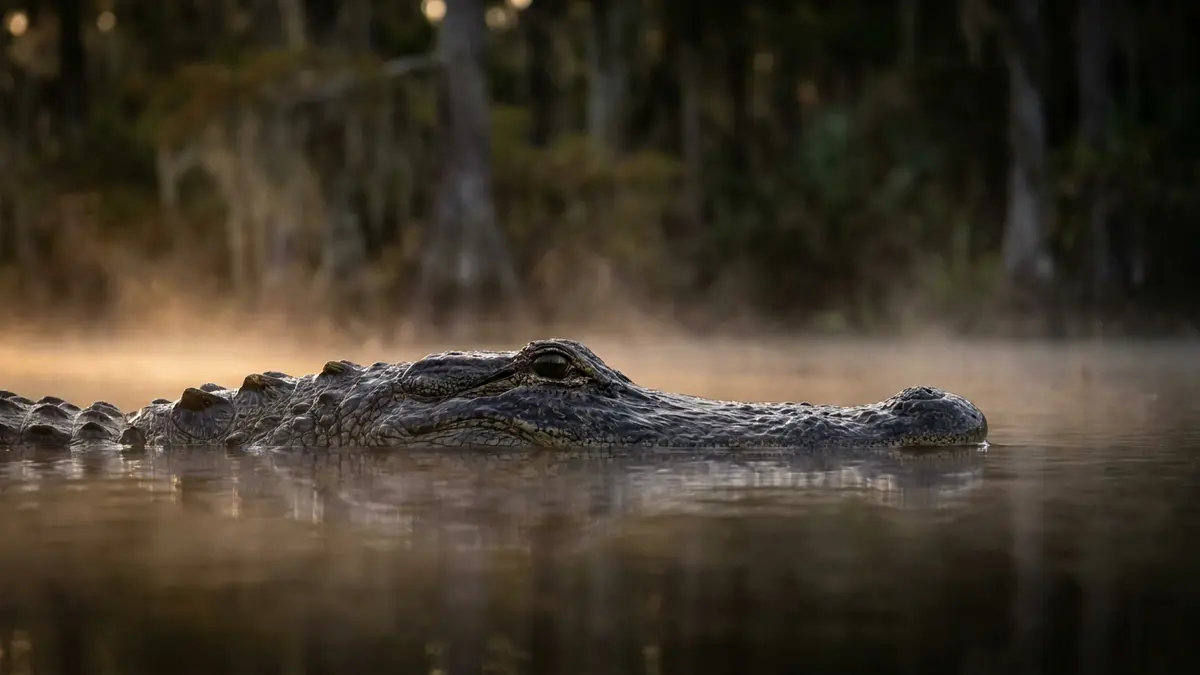
Alligators dig their own water-holding pits, called "gator holes," using their tails — a trick that also helps fish, turtles, and birds survive droughts. A single alligator can wear through 2,000 to 3,000 teeth over its lifetime, with new ones constantly growing in. Snout shape gives away which is which: alligators have a rounded snout, crocodiles a V-shaped one with a visible fourth tooth. Wild alligators live only in the U.S. and China, while crocodiles range across much of the globe and tolerate salt water far better.
An almanac
- Teeth replaced
- 2,000–3,000 in a lifetime
- Snout shape
- Alligator rounded, crocodile V-shaped
- Found in
- Only U.S. Southeast & China (wild alligators)
- Salt tolerance
- Crocodiles handle it far better
- Classification
- Order Crocodilia
- Habitat trick
- Digs "gator holes" to store water
Few reptiles inspire as much awe, and healthy fear, as alligators and crocodiles. These armored survivors were prowling swamps and rivers long before humans showed up, and they've picked up some strange habits along the way — an ever-replacing set of teeth, a knack for reshaping their own habitat. Here's what makes them tick, plus where they've turned up in movies, music, and cartoons.
Fascinating Alligator & Crocodile Facts
One of the coolest things alligators do is dig their own watering holes. By swinging their heavy tails through soft mud, they carve out depressions called "gator holes" that hold water when a drought dries up everything else — a trick that ends up helping fish, turtles, and birds survive too.
Their mouths work like a built-in tooth factory. A single alligator can wear through somewhere between 2,000 and 3,000 teeth over its life, with fresh ones constantly growing in to replace the worn-out ones.
How do you tell an alligator from a crocodile at a glance? Look at the snout. Crocodiles have a narrower, V-shaped face, and when a croc closes its jaws, its fourth lower tooth still pokes out over the lip — alligators keep theirs tucked away.
Geography helps too: crocodiles turn up in the wild across much of the globe, while wild alligators are really only native to the southeastern United States and parts of China. Crocodiles also handle saltwater much better, thanks to special glands that let them tolerate the sea in a way alligators can't.
- Alligators carve "gator holes" with their tails to store water through dry spells.
- Over its lifetime, an alligator can go through 2,000–3,000 teeth.
- Crocodile heads are V-shaped, with the fourth tooth visible even when the jaw is shut.
- Wild alligators live only in the U.S. and China; crocodiles are far more widespread.
- Crocodiles tolerate salt water much better than alligators do.
- Taxonomically, they sit in Kingdom Animalia, Phylum Chordata, Class Reptilia, Order Crocodilia, Family Alligatoridae.
Alligators & Crocodiles in Movies and Music
Toothy reptiles have been reliable movie villains for decades: Eaten Alive, Alligator, Dark Age, Lake Placid, Crocodile, The Brutal River, Black Water, Rogue, and Supercroc all cast scaly predators as the threat. Musicians took a lighter approach: Tegan and Sara, the Grateful Dead, R.E.M.
(with the tongue-twisting "Alligator Aviator Autopilot Antimatter"), the Dave Matthews Band, and Owl City have all released songs called "Alligator" (or close to it), while Elton John's "Crocodile Rock" became a genuine chart hit and This Town Needs Guns wrote a track named just "Crocodile."
Famous Alligators & Crocodiles
Some fictional gators and crocs have become celebrities in their own right. Disney's Fantasia gave the world the dancing Ben Ali Gator, while The Rescuers introduced the menacing duo Brutus and Nero. On the small screen, Leatherhead has long been a fixture of the Teenage Mutant Ninja Turtles universe, Roger causes chaos in The Penguins of Madagascar, and Hanna-Barbera's Wally Gator entertained generations of Saturday morning cartoon fans.
Disney's The Princess and the Frog added the trumpet-playing Louis to the list. College sports has its own reptilian icons too: Albert and Alberta serve as the beloved mascots of the University of Florida.
Frequently Asked Questions
What is the easiest way to tell an alligator apart from a crocodile?
Check the snout shape and teeth: alligators have a wider, rounded snout that hides the lower teeth when the jaw is closed, while crocodiles have a narrower, V-shaped snout with the fourth lower tooth visible even with the mouth shut.
Why do alligators dig 'gator holes'?
Alligators use their powerful tails to hollow out depressions in mud, which fill with water and become "gator holes." These pits help the alligator survive droughts, and they give fish, turtles, and other wildlife a place to survive when the surrounding area dries out.
Where do alligators and crocodiles live in the wild?
Wild alligators live only in the southeastern United States and parts of China. Crocodiles range much more widely, turning up across many regions of the world, including salt water that alligators can't tolerate nearly as well.
More about the Alligator & Crocodile
More from Animal Facts



Not sure which animal is yours?
Consult the quiz