Gemini Spirit Animal
May 21 – Jun 20 · Mutable Air · ruled by Mercury
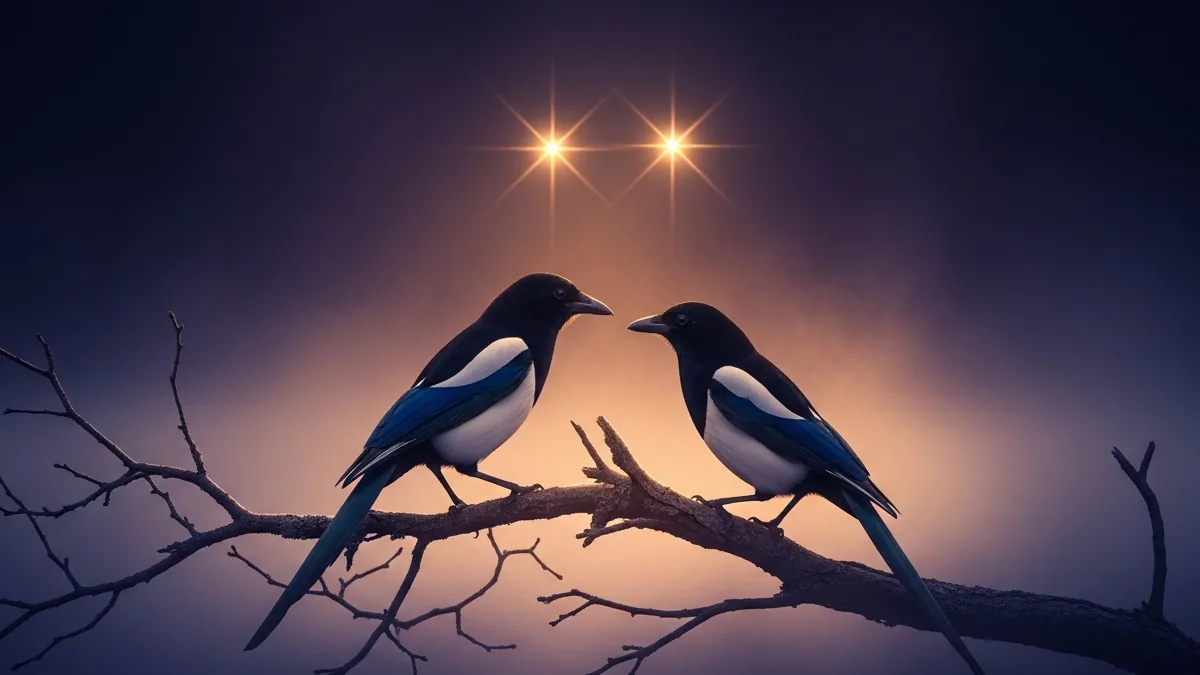
The spirit animal of Gemini is the Magpie. Gemini (May 21 – Jun 20) is a mutable air sign ruled by Mercury, and the Magpie carries the same temperament: quick, talkative, curious. Gemini’s constellation is the Twins — not an animal at all — so this is a match made from the sign’s traits rather than a symbol it inherited. Butterfly, Fox and Chameleon are the closest alternatives.
Gemini is Mercury's air sign: fast, verbal, and genuinely two things at once. The Twins are not a metaphor for indecision — they are two whole people who happen to share an address, and Gemini is rarely lying when both of them speak.
The Magpie: Gemini’s spirit animal
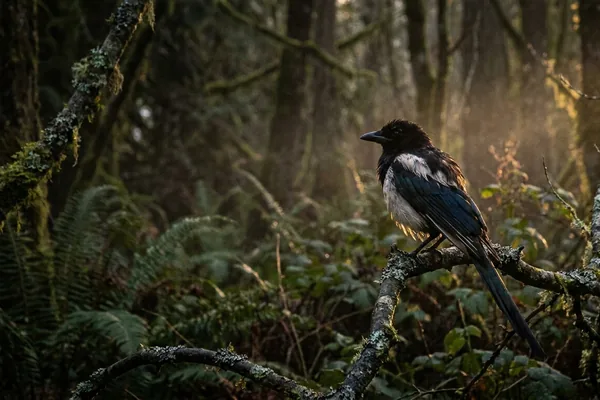
Gemini is Mercury's sign: voice, mimicry and gathering. The Magpie is the bird folklore assigns all three to — it chatters, it imitates, it collects — and it is read in pairs, which answers the Twins directly.
Voice and duality: the pull of shiny things, and the call to say what you actually mean.
The Butterfly: Gemini’s second animal
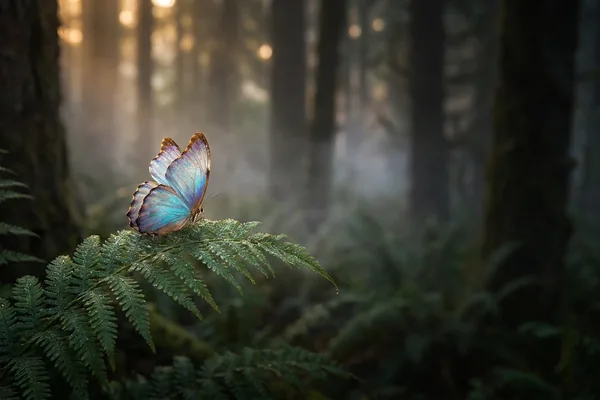
For the two-sidedness. The Butterfly's symbolism is a creature that is genuinely two beings in one life, which is the closest animal parallel to Castor and Pollux.
Transformation already underway, asking you to release the self you have outgrown.
The Fox: Gemini’s second animal
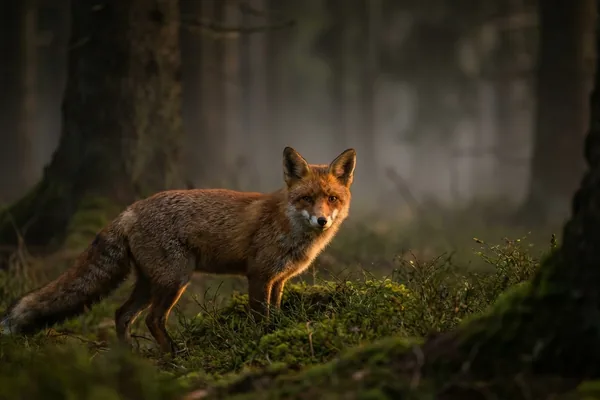
Gemini talks its way through. The Fox is the standard folkloric figure for winning by wit rather than weight.
Quick thinking and adaptability turn a reputation for cunning into everyday wisdom.
The Chameleon: Gemini’s second animal
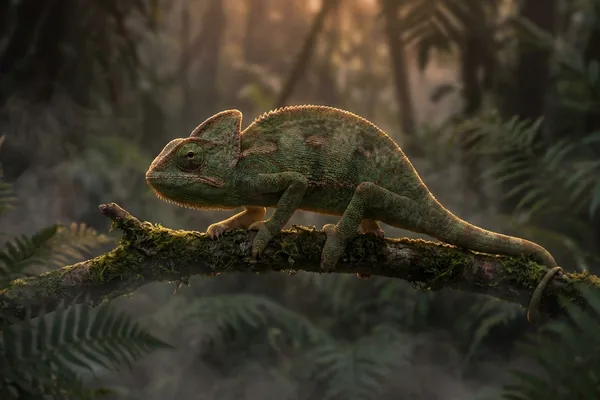
The mutable half: Gemini changes register to suit the room, and the Chameleon is the animal read for exactly that adaptability.
The quiet shape-shifter who reads a room before it ever reveals itself
The Gemini constellation, glyph and myth
The Roman numeral II with a bar above and below — the twins standing side by side, and the plainest glyph in the zodiac.
The twins are Castor and Pollux. Pollux was fathered by Zeus and immortal; Castor was mortal and the son of Tyndareus. When Castor was killed, Pollux asked to share his immortality rather than live without him, and Zeus placed them both in the sky, alternating between Olympus and the underworld. The constellation is not a metaphor for indecision — it is a story about being two things that cannot be separated, one of which keeps dying.
Gemini's constellation is the Twins — Castor and Pollux — so the sign has no animal symbol of its own. The picks below come from the sign's traits rather than from the star figure, and that is worth knowing before you take any of them as traditional.
That matters for how you read everything above. Where a sign’s constellation is an animal, there is nothing to argue with. Where it is not, any animal you are given is somebody’s interpretation — including ours — and you are entitled to see the working. That is why each animal on this page states the trait it came from.
Gemini strengths, weaknesses and shadow side
Strengths
- Learns anything at speed
- Says the difficult thing well
- Connects fields nobody else links
- Genuinely curious about people
- Adapts to any room
Weaknesses
- Leaves at the point things stop being new
- Talks around a feeling instead of having it
- A dozen half-built projects
- Changes position without noticing
- Uses humour to end sincerity
The gift for talk becomes a way of not arriving. Gemini can describe a feeling fluently while avoiding having it, and it will use humour or a change of subject to leave a room that has become sincere. Scattering is the other cost — a dozen half-built things, each abandoned at exactly the point where it stopped being new.
The three Gemini decans — which one is yours?
Each sign covers about thirty days, and traditional astrology splits that into three ten-day decans, each with its own sub-ruler. It is why two people with the same sign can recognise almost nothing of each other — and it decides which of the animals above sits closest to you.
| Dates | Sub-ruler | Leans toward | What it changes |
|---|---|---|---|
| May 21 – May 31 | Mercury | Magpie | The most verbal third — quickest, most restless, and the one that collects information for the pleasure of collecting it. |
| Jun 1 – Jun 10 | Venus | Butterfly | Gemini with charm rather than speed. The duality shows up in taste and company instead of in argument. |
| Jun 11 – Jun 20 | Uranus | Fox | The strangest and most independent third. Quick in a way that unsettles people, and the least interested in being liked. |
Gemini compatibility: who it matches with
Air pairs with air here: Libra and Aquarius follow the conversation without needing it slowed down. Aries and Leo supply momentum Gemini enjoys borrowing. Sagittarius is the opposite sign and the mirror — both restless, both honest to a fault, and the pairing works when they are going the same direction and breaks when they are not. Virgo shares a ruling planet with Gemini and almost nothing else, which is why the two find each other simultaneously familiar and exhausting.
Gemini in love and friendship
Gemini courts with attention and language, and it is very good at both. What it struggles with is the part after the interesting part: once a person has been understood, the Magpie's eye moves, and Gemini reads that as the relationship changing rather than as its own restlessness. It does best with someone who stays slightly unfinished — not a game, just a partner with a life of their own that keeps producing new material.
Gemini at work
Gemini is the fastest learner in the zodiac and the least willing to specialise. It will absorb a new field in a fortnight, connect it to three others nobody had linked, and present the result better than the people who spent a decade in it. Give it variety and a deadline. Give it a single repetitive brief and it will quietly stop being present at about week three.
How to work with the Magpie
Call on the Magpie when you need to say the difficult thing well, when a problem needs to be looked at from a fourth angle, or when you have been so committed to one version of yourself that you forgot the other one exists.
Your other birth animals: the same dates in the Medicine Wheel
The Western zodiac is one of three systems that assign an animal to a birth date, and they do not agree — which is useful rather than contradictory. The Native American Medicine Wheel divides the year differently, so Gemini’s window sits inside one birth totem:
| Birth totem | Dates | Elemental clan |
|---|---|---|
| Deer | May 21 – Jun 20 | Butterfly (Air) |
Frequently Asked Questions
What is the Gemini spirit animal?
The Magpie. Gemini is Mercury's sign: voice, mimicry and gathering. The Magpie is the bird folklore assigns all three to — it chatters, it imitates, it collects — and it is read in pairs, which answers the Twins directly. Butterfly: For the two-sidedness. The Butterfly's symbolism is a creature that is genuinely two beings in one life, which is the closest animal parallel to Castor and Pollux. Fox: Gemini talks its way through. The Fox is the standard folkloric figure for winning by wit rather than weight. Chameleon: The mutable half: Gemini changes register to suit the room, and the Chameleon is the animal read for exactly that adaptability.
What animal represents Gemini?
No animal, strictly speaking. Gemini's constellation is the Twins — Castor and Pollux — so the sign has no animal symbol of its own. The picks below come from the sign's traits rather than from the star figure, and that is worth knowing before you take any of them as traditional. The Magpie is the closest match by temperament, and this page says which trait produced it rather than asking you to take it on faith.
Is the Gemini spirit animal the same as my birth totem?
No. The Magpie comes from the Western zodiac sign covering May 21 – Jun 20. A birth totem comes from the Native American Medicine Wheel, whose twelve periods begin around the twentieth of each month and use a different set of animals entirely. You have one of each, and they often describe the same person in two vocabularies.
What are the Gemini traits behind this animal?
Gemini is mutable air, ruled by Mercury, and reads as quick, talkative, curious, two-sided, restless. Those are the traits the Magpie was matched to — element gives the sign its raw material, modality decides what it does with it, and the ruling planet sets the tone.
Can I have a spirit animal that is not my Gemini animal?
Yes, and most people do. A sign's animal describes a fixed temperament; a spirit animal is usually understood as a guide that turns up for a particular stretch of your life and can change when that stretch ends. If a different animal keeps appearing to you, that is worth reading on its own terms rather than overruling with your star sign.
What is Gemini’s mythical animal?
None. Gemini’s constellation is the Twins, which is neither an animal nor a mythical beast. When people ask for a sign's mythical animal they generally mean the figure behind the constellation and the story attached to it, and that story is set out in full in the constellation section above. The Magpie is the closest animal answer, matched to the sign's traits.
Is the Gemini animal different for a man and a woman?
No. The sign's animal comes from the sign, not from the person carrying it, so a Gemini man and a Gemini woman have the same one. What differs is expression, and far more of that comes from your decan — the ten-day third of the sign you were born in — than from gender. The decan table above is the more useful split.
Which Gemini decan am I, and does it change my animal?
May 21 – May 31 is ruled by Mercury and leans toward the Magpie; Jun 1 – Jun 10 is ruled by Venus and leans toward the Butterfly; Jun 11 – Jun 20 is ruled by Uranus and leans toward the Fox. The decan does not replace the sign's animal — it decides which of the animals on this page sits closest to you, and it is the usual explanation when someone does not recognise themselves in the standard Gemini description.