Birds · Spirit animal
Stork Spiritual Meaning & Symbolism
The gentle bringer of new beginnings, guarding home and family through quiet, steady renewal.
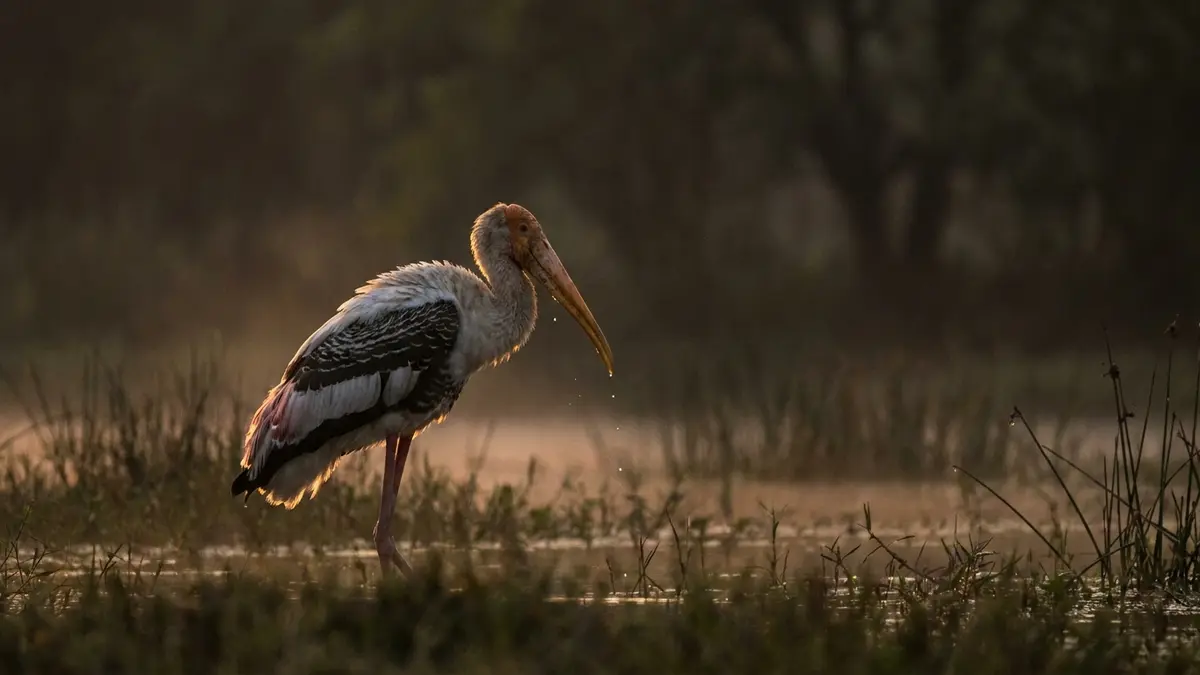
Stork is associated with beginnings, birth, and protecting your family. It's seen as loyal and protective. These behaviors are reflected in its nature to come back each year to guard its nest. As a spirit or totem animal, Stork signals new things are coming and encourages you to have patience, communicate openly, and trust your own instincts.
In dreams it points towards moving forward with confidence and suggests new relationships, pregnancy or regained calm may be on the way.
An almanac
- Core message
- Life renews; quiet devotion protects it
- Spirit animal
- New arrival or fresh start on the way
- Totem for
- Loyal, spring-loving caregivers
- Power animal
- Stillness and balance between logic and emotion
- In dreams
- Trust your instincts, move forward with confidence
- Cultural roots
- Egyptian, Norse, Roman, and Chinese myth
- Wingspan
- Up to 215 cm (85 in) tip to tip
Before greeting cards, storks earned a reputation for heralding new life. That's because they're devoted birds that return to the same nest each spring and guard it with quiet ferocity. Here's what storks mean as spirit guides, totems, and power allies, along with their symbolism across world cultures, dreams, and astrology.
Stork Symbolism & Meaning
You've probably seen pictures of a stork carrying a newborn infant to an awaiting family. Those images tap into a really old story, and it might even feel instinctive. For ages, people have built that picture on something real: the stork as a symbol of rebirth, birth, and new beginnings.
In Germany, some people refer to storks as "luck bringers."
You can see that reputation in how Storks defend their nests. And sometimes those nests are 250 kg (or more than 550 lbs)! The Stork will defend its nest against anything that tries to invade.
The birth delivery legend was born (so to speak) of several common threads: (1) the fact that Storks appear every spring lines up with a season of rebirth; and (2) the fact that most storks build nests near flowing water connected them to old beliefs about unborn spirits who waited in flowing water until a passing Stork would carry them gently home.
In ancient Greece and Rome, people associated Storks with so much parental devotion that an ancient Greek law actually required citizens to care for their own aging parents.
Storks tend not to make loud noises; instead, they communicate through their posture and their flights. They also tend not to flap their wings too much, since they're able to use hot currents in the air — this helps them go where they need to go without too much effort. They also form strong seasonal pairs and return to the same nest site year after year — which helps explain why they're seen as guardians of home and family.
Stork Spirit Animal
When the stork spirit animal crosses your path, you can expect change. Something new is about to be born into your life. And chances are that whatever's coming is going to be positive.
The stork is especially good at finding alternatives when it's blocked from reaching its goal. So if someone's blocking you from speaking your mind, your spirits need to stay cool and collected. Have faith that even when direct communication isn't an option, there'll be another way.
Storks aren't just great at keeping their cool. They can also help you deal with issues you don't want to think about, especially around relationships. Dealing with unwanted emotions and saying what you mean helps you to approach matters from a calmer, clearer place of understanding.
Since storks are such devoted parents, when they show up, they're always there for your family. Your homes and families will be safe and protected with them around.
You may also see the stork as a symbol of good fortune: either good luck or the prospect of financial lift arriving soon. But keep an eye out for danger as well: Sometimes a stork is a warning.
Does Stork fit you?
Tap the ones that sound like you — 6 traits, no right answer.
0 of 6 Nothing picked yet — start tapping.
Stork Totem Animal
People with the totem of the stork awaken with the first warmth of spring. They come back to life and struggle through the rough winter days, waiting impatiently for spring. Then, when the warm breeze comes and the earth thaws and new buds open and show their colors, a Stork totem person feels like everything will be better. When they feel this way, they fill up with this hope and spread it around them.
If you have this totem, you can expect lots of loyalty in your relationships. Some people may call you monogamous, but you don't do that. You have long stable relationships. When your relationships break up, you don't drift away; you rebuild them somewhere else.
If this is your animal spirit guide, you will always have a soft spot for babies – young people or animals – and a desire to help care for them. You are drawn to working as caregivers or on welfare projects where you really thrive.
You should spend time keeping in touch with your inner child so you know when babies – human or animal – need your help because they are innocent and fragile.
Water recharges you too – even a backyard pool, if you can have it.
People with storks as their totem also collect small strokes of luck that they find when things go bad; there's a few dollars found on the ground or a detour.
Above all, they get how life always gives back: however cold winter is, then spring always comes again.
Stork Power Animal
Ask Stork to join you as a power ally if you need to quiet things down. Stork teaches you to trust yourself, stay independent, and shut out the noise so you can get the subtler messages from deep within — and far beyond.
When you're stuck between your reason and your emotions, look at how calmly Stork travels between the Air and the Water: it can do so without creating any friction, and so can you.
If you're getting ready for a new child to join your family, Stork power animal support can help you through preparation right on through the long haul afterward. It builds stability and contentment into everything around you as it grows.
Across cultures
2 traditions — pick one to read its take.
Native American Stork Symbolism
Native American traditions don't have much to say about the stork directly, but they do have some interesting things to say about the crane. They view the crane as a sign of good luck for those who fish, and they also view it as a figure honored through ceremonial dance who serves as a peacemaker and a leader.
Far Eastern Stork Symbolic Meanings
Far Eastern storks and cranes both stand for good luck to fishermen and immortality to Taoists. Chinese people call them both 'crane,' and they're often depicted as symbols of long life in Chinese art, along with pine trees.
Storks' Chinese characters also double as homonyms for 'harmony' and 'foremost,' adding leadership concepts to the symbolism. Feng Shui uses Stork imagery alongside Rabbit and Elephant to boost fertility.
Japan continues its fusion of meanings. Fukurokuju, a Shichifukujin (Seven Lucky Gods) god, is typically depicted with a stork or crane beside him — the bird representing the number of years he's meant to bestow.
Global Stork Myth and Symbolism
Stork myths and symbolism crop up all over the world. Among the ancient Egyptians, people saw a stork as a spirit wandering during sleep and coming back at waking.
Ancient Greek myth tells of how Antigone was punished by being transformed into a white stork after comparing her own beauty to that of Hera. The moral of the story is this: Be careful with your vanity, because you could be transformed into a stork. However, there's also hope for new life. Renaissance Europeans depicted the stork as feeding on snakes.
Storks have also been linked to the god Hœnir, both through his epithets — like "Long-legs" — and through ancient folk beliefs about them delivering babies.
In Christian Europe by the time of the Renaissance, people called it "The Bird of God," praising its watchfulness and predation on snakes. In Germany people believed that storks brought babies to human families, so much so that it's said some families would put sweets out for them near the windowsills — an idea later repeated in Hans Christian Andersen's stories.
In Austria today, a stork's nest on top of someone's chimney is still considered good luck.
Stork in Dreams
A stork in dreams tells you to trust your gut instincts and take positive steps forward. If you're at a deadlock, that means you'll need to ask for help to get through it, not hold back.
Different circumstances change the meaning of the stork:
- A stressed or unsettled stork indicates that you're avoiding something important.
- A stork with a baby in its beak tells you there's happy news coming in your relationships.
- Seeing two storks together means you have a strong and fruitful partnership, often in business.
- A wounded stork suggests that someone in your family needs attention; check up on them.
- A hovering, circling stork predicts restored calm and confidence, possibly accompanied by an unexpected financial windfall.
- Feeding a stork shows that you already have all the answers to your problems; it's time to act on them.
A stork flying freely on a clear day is promising new happy events, like weddings or babies.
Finally, if you see yourself walking or flying alongside a stork, that means you have a dependable friend by your side.
Spiritual Meaning of Storks
Stork's spiritual meaning is uncomplicated once the folklore settles: life renews itself, and quiet devotion protects that renewal. It moves easily between sky and water, between silence and clear communication — a kind of balance most of us reach for but rarely hold.
Stork presses you to trust the instincts that keep you steady, to guard what matters without letting fear turn into hostility, and to remember that endings — like winter — always give way to spring. When Stork appears, take it as reassurance that whatever is beginning in your life is meant to be nurtured, not rushed.
Stork Migration: A Journey of Endurance
Storks are big birds with a wingspan of more than 5 and a half feet, about the width of a car. That's important for what they do, called soaring flight. They can ride the updrafts of warm air, and keep flying that way with barely any effort. When you see a stork in the distance, it's probably just sitting on an invisible pillar of warm air that lifts it up.
It's amazing that they can keep soaring like this for so long. In Europe and Africa, they migrate in enormous flocks — hundreds of thousands cross the Bosphorus by themselves — and then fly south to Sudan and Egypt for winter. Springtime is different: they fly back from Africa. It takes them twice as long as leaving in the fall.
That says a lot about storks. They're willing to put in an effort when their home needs defending. But they know when to stay calm and safe once everything is all right again.
Frequently Asked Questions
What does a Stork spirit animal mean?
A Stork as a spirit animal signals that something new is about to happen, like a child coming into the world or an idea coming to life. It also encourages you to maintain grace under pressure. Consider another way of communicating when you don't feel heard or face uncomfortable emotions honestly instead of avoiding them.
What does a Stork in your dreams mean?
Storks in dreams suggest trusting your instincts and moving confidently forward, especially when feeling stuck. Details further clarify the message: a Stork carrying a baby signifies happiness or pregnancy; two Storks indicate a strong partnership; and a wounded Stork represents needing to pay attention to a family member.
Why is Stork associated with bringing babies?
The legend about storks probably blends a number of real observations: Storks return home each spring, which is the season of renewal. They also tend to build nests near water, and so some ancient people thought that water was the place where an unborn baby waited for its parents. Greco-Roman tradition reinforced this idea even more: Stork became such a powerful symbol of parental devotion that an ancient Greek law said that citizens had to take care of their aging parents.
Why is a newborn's birthmark sometimes called a "stork bite"?
A birthmark called a "stork bite" is a reddish or pink mark on the baby's forehead, eyelids, or back of the neck. It isn't a mark left by the stork. In fact, it isn't a mark at all, exactly—although it seems like one—but a cluster of very small dilated blood vessels. Most "stork bites" fade within two years, although some on the back of the neck may stay around a little longer.
Did the ancient Greeks connect Stork to a specific god?
Yes. In Ovid's Metamorphoses, Hera transformed the Trojan princess Antigone into a stork for boasting that her beauty or hair surpassed the goddess'. The story is a warning against vanity more than an origin story, and it's why storks were often shown preying on snakes in European art. By later times, Christian writers had reinterpreted that detail as the bird's stand against evil.
Stork also represents
- Other animals that represent love →Alongside Dove, Swan, Wolf, Seahorse
- Other animals that represent rebirth and change →Alongside Butterfly, Snake, Dragonfly, Frog
- Other animals that represent protection →Alongside Bear, Wolf, Dog, Elephant
- Other animals that represent loyalty →Alongside Dog, Wolf, Swan, Penguin
Sources
Claims on this page were checked against these published sources.
- White stork
They arrive back in Europe around late March and April, after an average journey of 49 days.
Read the source → - Stork
Saddle-billed storks were 'seen as being amongst the most powerful animals' and represented the ba (soul concept) during the Old Kingdom. The deity Bennu may have been inspired by a stork, though it was more likely an ibis or heron.
Read the source → - Antigone of Troy
Athena included the story of the Trojan princess Antigone, daughter of king Laomedon, who was transformed into a white stork by Hera for trying to compete with her.
Read the source → - Shichifukujin
He is depicted as short in height but with a very high forehead and is usually to be found in the company of a stork or crane.
Read the source → - Stork Bite (Nevus Simplex)
The myth of stork bites comes from folklore, where storks (large birds) delivered babies. People came up with the term 'stork bite' as a cute way of explaining the marks, as if they came from the stork's beak while carrying the baby by the back of their neck.
Read the source →