Mammals · Spirit animal
Mandrill Spiritual Meaning & Symbolism
Bold color, close-knit family bonds, and grounded self-mastery.
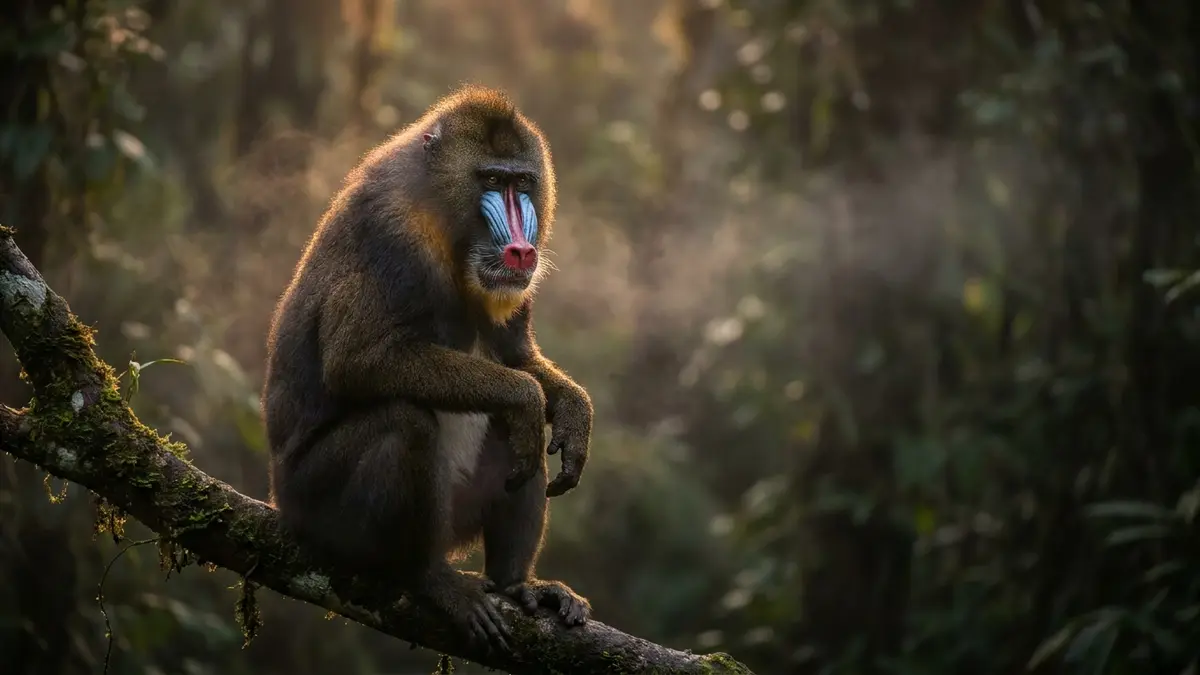
The Mandrill spirit animal is bold, so let your feelings and ideas show. It will also make you feel more disciplined and grounded. Connect with your family as well. The Mandrill spirit animal suggests that you be yourself, keep it together, and stay close to family.
An almanac
- Core message
- Own your presence while staying rooted in family
- Spirit animal
- Authenticity, discipline, and stronger family ties
- Totem for
- Direct communicators who recharge alone
- Power animal
- Confidence in decisions and personal boundaries
- In dreams
- A call to get grounded and find clarity
- Cultural roots
- Chinese Shanxiao mountain-spirit folklore
- Scientific name
- Mandrillus sphinx — echoes the riddling Greek Sphinx
- Conservation status
- Vulnerable, due to habitat loss and hunting
The Mandrill is one of the most colorful creatures on the planet and one that stands out at once. This ape has become known as a spirit animal around the world, suggesting bold self-expression. This primate provides lessons about family, discipline, and strength.
Mandrill Symbolism & Meaning
If you're looking for an animal that's the star of a story, consider the mandrill. It's not a baboon; it's closer to the mangabey. It lives in troops in western Central Africa with females working together to raise each other's young.
This is a good animal symbol for sisterhood or communal caring. Though its teeth look fierce when bared, that's usually just friendly greeting.
Its colors come from collagen fibers making the sky-blue look bright and blood moving near the skin to get its red look. This shows bold self-expression and courage. The mandrill can be on the ground or up in trees so it keeps one ear on earthiness while having perspective about life.
Mandrill Spirit Animal
If you see a mandrill in your life, take it as a sign to let go of the social expectations that have been holding you back. Only then can you finally realize who you really are, why you’re here, and how to connect with the people that matter. You’ve got to be authentic; being honest about who and where you stand in life is vital. If you can stay compassionate and yet firm about your boundaries, then your relationships with others will get stronger.
For those who know people far away from them, this spirit will let them know they have family wherever they go—because the truth is, family is love and care, not distance.
And for those in trouble—be it conflict or misunderstanding—they’ll receive wise counsel from this animal guide so that any ensuing action comes from foresight rather than reactivity.
Does Mandrill fit you?
Tap the ones that sound like you — 6 traits, no right answer.
0 of 6 Nothing picked yet — start tapping.
Mandrill Totem Animal
If your totem animal is the mandrill, you're a social creature who prefers to be around people but can also enjoy solitude. At first glance, you may seem guarded or intense, but that's your natural way of protecting yourself from potential threats. As a natural communicator, you excel at teaching, hosting events, and being heard. Money seems to find you easily whenever you need it. You're refreshingly direct and speak your mind, so people often see you as honest and dependable. You can adapt to any situation without getting flustered. You love bright colors and are often drawn to colorful destinations when traveling.
Mandrill Power Animal
Call on the Mandrill as a power animal whenever you face a major decision that leaves you uncertain about the right course of action. It will help you gain new insight so you can see and learn the lesson.
One of the ways in which it can support you is by guiding you to own your choices and boundaries — that's especially the male side. It'll show you how to gather the courage to find your own path, and to stay composed while carrying responsibilities for others.
It can also show you how to direct yourself well, if you're not sure what direction to go in. The Mandrill will then support you as you decide what direction to take and why.
Mandrill in Far Eastern Symbolism
A "mountain spirit" is what some scholars say the mandrill was thought to be in Far Eastern mythology. The term Shanxiao is Chinese for this creature, and it can also mean "mountain imp" (Also, note that Shanxiao sounds a bit like mandrill.)
In legend, the arrival of the mandrill warned of impending droughts. People saw that it had a bad smell and acted like a goblin.
Another story had to do with a fast tree-dwelling spirit who mocked people and was connected with typhoons. While this character was often mean, people did appreciate its cleverness.
If cornered, legend says the spirit would change into things like drums or even dragons so as not to be found out.
Mandrill Dreams
When you dream about a mandrill, this usually means that it's time to get grounded and pay attention to your surroundings. If your thoughts have been scattered or if you're overwhelmed by things that are happening to you, you may need to take some time alone where you can sit quietly until clarity returns. The other details of your dream also tell a story:
• Two mandrills fighting with one another may be a reminder that you need to choose your words carefully and only trust someone completely if they've earned it. • A playful mandrill suggests that good times and positive news are on the horizon. • A hidden or shy mandrill may be trying to tell you that someone nearby isn't being honest with you, no matter how polite they seem; it might be wise to keep your distance.
Mandrill Spiritual Meaning
The Mandrill's message invites you to come into your full color and personality, to be the unique person you were born to be. It encourages you to stay rooted in community — your family and friends are your backbone — and at the same time, inspires you to own who you are without apology. It shows that earthy discipline can exist with bold confidence and shows that self control is strong, not weak.
True strength includes kindness toward those you protect.
So know your colors, wear them brightly, blend right into community and find power in strength and tenderness together.
The Name Behind the Mandrill
The English borrowed it about 1744, joining "man" with "drill" — a word the locals called the related animal. The first known recording of the name didn't say why exactly. A traveler to Sierra Leone admitted he wasn't sure why the animal was called what it was, but that it looked like a human being: "nothing at all like an ape." That uncertainty suited the mandrill itself. What to call animals who sit on the edge between the wild and domestic is hard. Not quite animals, not quite human, its symbolism mixes the two.
The scientific name deepened the riddle further. In 1758, Carl Linnaeus classified it as Simia sphinx. He borrowed directly from Greek mythology. He gave it the name of one of its mythic guardians — a creature with a human head grafted onto an animal body. Whether he meant to point to its almost-human face or to its uncertain half-identity — or maybe both — he kept that name for nearly three centuries. Spiritually, it points to the same message these animals keep saying: identity isn't simple — not simply one thing — and traits that seem at odds can really be compatible: fierce and nurturing, wild and disciplined.
Rank, Color, and the Impermanence of Status
A Mandrill's coloring doesn't stay the same throughout its life. When a male claims alpha status, it looks darker red and blue. Its scent glands become more noticeable, and its whole body seems to announce that the male is in charge. If the male later loses that position, those colors fade back over time.
The Mandrill isn't hiding anything here. The Mandrill shows whether it's in charge or not. Dominance isn't permanent. It wears, displays, and easily surrenders. Just like the Mandrill, you shouldn't think of yourself as a bunch of fixed ranks. Everything is temporary and temporary does not mean useless. Real self-worth is more than a badge.
Studies have found that Mandrills have bigger canines (fangs) than females do.
In wild groups of Mandrills, males with smaller canines sired fewer babies than males with bigger canines did! So it looks like a bigger canine may help you get and keep something good for your next generation.
Frequently Asked Questions
What does the Mandrill spirit animal mean?
The Mandrill spirit animal encourages being authentic, self-disciplined, and strengthening your bonds with family, whether they're your blood relatives or your chosen ones. It also acts as a steady guide to help you figure out the best thing to do when loved ones are struggling.
What does it mean to dream about a Mandrill?
Often when people dream of a Mandrill, they are in need of some mental grounding. Two Mandrills arguing may indicate the need to choose your words carefully while a playful Mandrill may foreshadow that coming happiness. Be mindful of hidden Mandrills which may warn of individuals acting dishonestly.
What is the Far Eastern symbolism of the Mandrill?
In Far Eastern folklore, the Mandrill is associated with the Shanxiao, a mischievous mountain spirit. The Shanxiao is said to be able to change its shape at will. People once believed that when the Shanxiao appeared, it was a sign of upcoming droughts or storms, but also that it was this spirit that gave humans both fire and salt.
Why is the Mandrill's scientific name linked to the Sphinx?
Carl Linnaeus called this monkey Simia sphinx when he described it in 1758. Why did he choose that name? The riddle-posing, human-headed figure of Greek legend, the Sphinx, is what came to mind when Linnaeus looked at the Mandrill's startlingly human-like face paired with its animal body. The Mandrill becomes one with all within it — wildness and discipline, ferocity and warmth.
Is the Mandrill endangered?
The Mandrill is on the International Union for Conservation of Nature's list of vulnerable species, and its populations have probably declined by at least a third over the past two decades. Bushmeat hunting is a reason, but habitat loss also plays a role. Culturally, this makes the Mandrill a compelling messenger about stewardship: to fully embody its bold presence, you'll first need to protect its native space.
How long do Mandrills live?
Mandrills tend to live around 12 to 14 years in the wild, depending on predators, disease, and competition. Protected Mandrills can live up to 30 or 40 years. That gap says something about the environment they live in: a safer environment allows a longer presence.
Mandrill also represents
Sources
Claims on this page were checked against these published sources.
- Mandrill
morphological and genetic studies in the late 20th and early 21st centuries found a closer relationship to white-eyelid mangabeys of the genus Cercocebus
Read the source → - Mandrill, Mandrillus sphinx
larger groups called 'troops' that may feature 600–800 mandrills
Read the source → - Xiao (mythology)
Shanxiao (山魈; shānxiāo) translates as "mountain imp"... In Modern Standard Chinese, shanxiao is indeed the name for the African 'mandrill monkey; Mandrillus sphinx.'
Read the source → - Mandrill - Etymology, Origin & Meaning
The word mandrill dates to 1744 and likely combines English components... formed from "man" + "drill," where "drill" is a West African word for a type of baboon... the earliest reference comes from William Smith's account in Sierra Leone, noting the name was "called by the white men in this country" but explaining: "why it is so called I know not."
Read the source → - Simia sphinx Linnaeus, 1758
Simia sphinx Linnaeus, 1758 is the type species for the genus Mandrillus Ritgen, 1824.
Read the source →