Mammals · Spirit animal
Groundhog Spiritual Meaning & Symbolism
Grounded watchfulness, seasonal renewal and fierce self-reliance
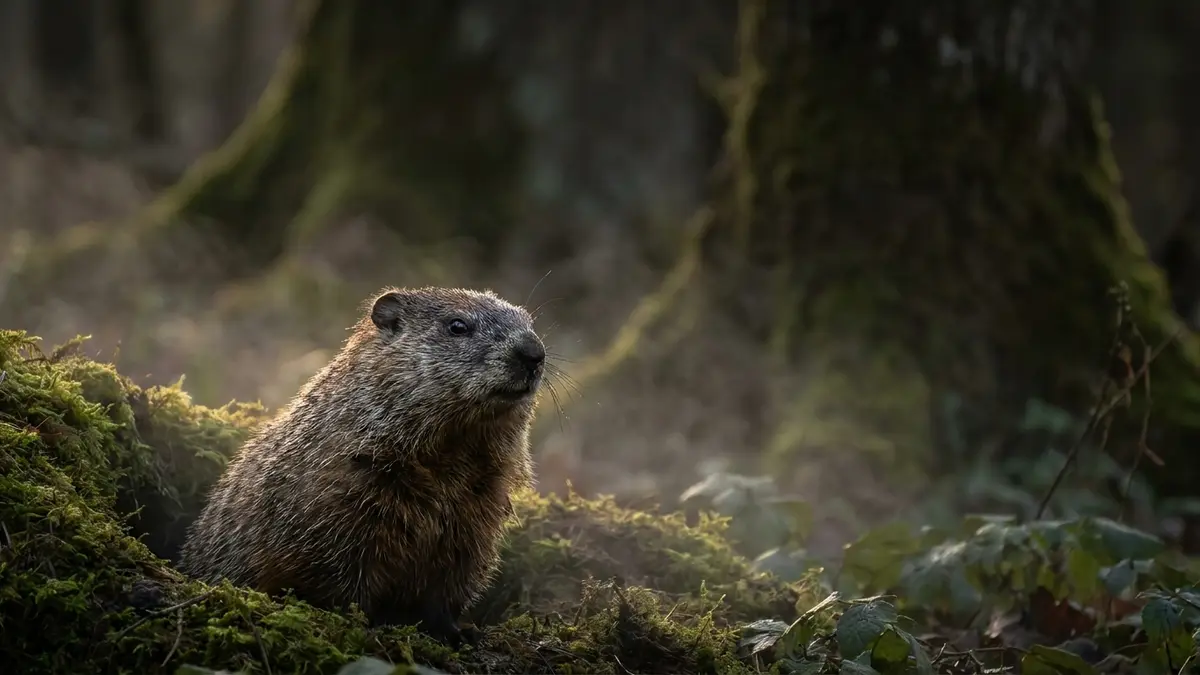
The Groundhog is a spirit animal. It can trust in stillness. When it appears in dreams, it may indicate fear or a need for rest.
An almanac
- Core message
- Retreat, rest, then re-emerge stronger
- Spirit animal
- Inner reflection and instinct
- Totem for
- Quiet thinkers who guard their boundaries
- Power animal
- Finding rest amid life's transitions
- In dreams
- Fear, timing, and a need for rest
- Cultural roots
- Native American mentor tale; Celtic Imbolc weather lore
- Litter size
- Usually 3–5 pups per year
- Hibernation vitals
- Heart rate falls to 4–10 bpm
The groundhog is "digger." This name sums up what this creature stands for: safety and protection from harm; solitude and quiet watchfulness; the tendency to go deeper, or keep things hidden.
The groundhog is the surprise star of an entire holiday that happens in February. As a spiritual guide, the groundhog can trust in rest and renewal.
Groundhog Symbolism & Meaning
Groundhogs, part of the marmot group of ground squirrels, are sometimes known as whistles, moonacks, thickwoods or red monks. An Algonquin name for them translates roughly to "digger," because that's one of their defining characteristics.
They burrow into the ground to find shelter from predators and from harsh weather conditions. Their sharp, defensive teeth also keep intruders out of their dens. So self-protection and self-preservation form a big part of what Groundhog symbolism means.
Their burrows may be many feet deep and extend 50 feet or more underground. If you dig down to them you'll find side galleries — rooms — where they can make a home. Making your home under the earth gives Groundhog symbolism an element of sacredness and protection that other meanings build on.
When Groundhog emerges, it often stands up on its hind legs to take a look around, showing where watchfulness and the ability to see things from far above them come in. The incisors of Groundhogs grow back almost as quickly as they wear down. This cycles on, tying Groundhog symbol meanings to traits like discipline, focus and hard work.
When they come back outside they get fatter gradually rather than gorging themselves in one day, which also ties Groundhog symbolism to meanings like tenacity, renewal and hardiness.
Outside of their courtship time they typically live alone, so they represent independence.
Groundhog Spirit Animal
When Groundhog is your spirit animal, it's a sign that you should clear out the negativity in your life. Look inward to see what is getting in your way.
Look deeper than what seems to be true on the surface. Get rid of old habits and patterns, and show the world who you really are.
This spirit animal is like a guardian that keeps an eye on what happens around you. It nudges you to trust your instincts. You should notice important changes in your life.
Sometimes this animal spirit appears when there is danger heading toward you or a loved one. Other times it appears when kindness helps you out of a bad situation.
Groundhog spends most of its time underground, where it is quiet and focused. However, it eventually brings you out into the sunlight, so that you can apply what you have learned from being introspective.
Does Groundhog fit you?
Tap the ones that sound like you — 6 traits, no right answer.
0 of 6 Nothing picked yet — start tapping.
Groundhog Totem Animal
If a groundhog is your totem animal, you are probably a lifelong learner and enjoy browsing for hours in the bookstore. If it is, you are also aware of your personal boundaries and express them clearly to family and friends. You work very hard, and play just as hard. You protect your downtime fiercely; if someone pushes the boundaries, they will find themselves dealing with an unexpectedly powerful groundhog.
Groundhog-totem people are also usually quite philosophical about life. They are quieter and enjoy examining their own thoughts. Groundhogs have good situational awareness and usually notice anything unusual which protects them against trouble.
Groundhog Power Animal
When you feel like you just can't get ahead, ask Groundhog for help. The most important step in succeeding is taking the time to rest and refill your own energy. Call on Groundhog power when the pile of work seems insurmountable or when your own needs are being ignored. Refill your reserves with quiet energy.
Groundhog also is especially adept at helping you feel comfortable with big life changes. Groundhog medicine reminds you that turning points are unavoidable; you can look to the future or look back to the past, but ultimately change is just a part of life. No one enjoys saying goodbye to a familiar way of doing things, but let this power animal calm your jitters and remind you that uncertainty can be comforting too.
Across cultures
2 traditions — pick one to read its take.
Native American Groundhog Symbolism
The groundhog, or woodchuck, plays a small but significant role in Native American oral tradition. In a story, Groundhog serves as a kind and steady friend to a young legendary figure. In the tale, Woodchuck is cast in the role of not just teacher, but nurturing mentor — a figure whose quiet yet faithful example helps guide someone destined for much larger things.
Woodchuck appears only rarely in Native American symbolism; no tribe is known to claim it as a clan animal or totem animal. But two notable traditions do respect the groundhog. The Tlingit people of Alaska feature an animal very much like Woodchuck — but actually its high-altitude cousin the hoary marmot — among their clan symbols. The Cherokee people include Woodchuck in their traditional dances, which honor animals in natural ceremonies. Neither of these examples assigns Woodchuck the great mythic weight or deep history shared by some animals in Native tradition; but both affirm that the groundhog held at least a small and respected place in the ceremonial life of these peoples.
Celtic Groundhog Symbolism
Imbolc, a Celtic festival for Brigid, goddess of poetry, fell on February 1st. An equivalent Christian feast on February 2nd is Candlemas. In Pennsylvania the Groundhog takes part in a very different tradition: it makes weather predictions.
That's because some German settlers carried a tradition of weather prediction to America, and that included Groundhog Day, which started in Europe as Candlemas.
That one little belief eventually grew into the famous celebration of Groundhog Day and the tradition's mascot, Punxsutawney Phil. But Groundhog Day lives on as an American holiday.
Groundhog in Dreams
Groundhogs often appear in dreams. Depending on what they're doing in the dream, the images are something important about timing, communication, or fear.
If you dream of a Groundhog in a dark burrow, you might be facing a challenge but avoiding facing it. Instead of running away from your problems, think about what's stopping you from dealing with them — maybe you're scared.
A Groundhog that is peeking its head out of a hole usually means that something will soon be revealed. Perhaps you've met someone new or had an opportunity come up, but it's not all that it seems. Take the time to get to know this person or situation better before you make up your mind.
If you see a Groundhog digging through soil, it's telling you that the time has come to work hard and stay persistent — whatever seems blocked right now can be worked through if you put in the effort.
Sleeping or hibernating Groundhogs represent your own need for rest and time to recharge. You may be feeling worn down by people or situations draining your energy, so try distancing yourself from them and getting some alone time to clear your head.
Most people see catching a Groundhog as a good omen. It might mean that all of your hard work is about to pay off! Or maybe there's an advantage that you didn't notice before.
Aggressive or snapping Groundhogs are warning signs. Someone close may not be who they seem. Keep your eyes open and don't trust everything at face value — some people are not who they appear to be.
If you dream of communicating with a Groundhog, then it means there's someone who has confidence in you and wants to support you.
Groundhog Spiritual Meaning
Groundhog's spiritual message turns on honoring cycles: rest and action, solitude and connection, endings and fresh starts. It teaches that real strength often looks like retreat — stepping back into stillness long enough to gather your resources, then coming back ready to act.
It also insists that boundaries aren't unkind; they're what make deeper connection possible once you choose to lower them.
When Groundhog shows up in your life, treat it as permission to slow down, tend to your own foundation, and trust that whatever season you're in will shift in its own time. Like the animal waking each spring, you're built to come back stronger after every necessary pause.
Groundhog's Shadow Side
Groundhogs use their in-ground burrows as protection from threat. But if pushed too far, groundhogs can turn aggressive, swiping at people or pets who get too close to a burrow entrance. On a symbolic level, the same protective instinct might manifest as an over-sensitivity to boundary encroachment — whether real or imagined — resulting in unnecessarily guarded behavior.
Groundhogs also spend a lot of time alone in their burrows during the winter. Alone-time is healthy, but Groundhog-natured people can slide into true isolationism: cutting off friends and relationships to maintain an independent "aloofness". Groundhog-human beings can have big and generous natures. But when taken to extremes by nature or culture alike, generosity can lead Groundhogs into situations where they feel isolated and misunderstood because they give so freely and without boundaries.
Frequently Asked Questions
What does the Groundhog spirit animal mean?
The Groundhog spirit animal means looking inward, trusting your instincts, and letting your true self surface. It appears when you need to examine yourself, ground yourself, and be vigilant about a situation that's changing.
Is seeing a Groundhog a good sign?
When Groundhog shows up, things have often just been restored to balance or there is unexpected kindness in the air. Groundhogs are often said to represent the shifting seasons and are an indicator of renewal. They could be warning you to stay alert to subtle shifts nearby.
What does it mean to dream about a Groundhog?
Groundhog dreams normally suggest a fear of the future, an awareness of time pressure, or the need for rest rather than anything dramatic. A hidden Groundhog shows caution, digging calls for determination, and sleeping Groundhog dreams urge rest.
Can groundhogs actually swim or climb trees?
Yes, groundhogs can swim and climb trees, even though they look pretty well-suited for a life of ground-hugging. Symbolically, this hidden agility is a reminder that a calm and sedate exterior doesn't mean the same thing as a limited range. There is a lot of untapped adaptability underneath that great hunch.
What does it mean to dream about catching a groundhog?
Catching a groundhog in a dream can be a positive sign because you're about to see some positive effects of hard work, or you're about to discover an advantage over your rivals that you haven't noticed yet. The idea of going public with something important is also connected with this dream.
Why is Groundhog Day celebrated on February 2nd?
The custom traces back to German settlers. They took a German tradition where they watched a badger's shadow as a sign of upcoming weather and adapted it to use the local groundhog instead. The first celebration of Groundhog Day considered "official" was at Gobbler's Knob in Punxsutawney, Pennsylvania in 1887. There was a gathering that year consulting the groundhog on what the weather would be like.
Groundhog also represents
- Other animals that represent freedom →Alongside Eagle, Horse, Hawk, Butterfly
- Other animals that represent rebirth and change →Alongside Butterfly, Snake, Dragonfly, Frog
- Other animals that represent protection →Alongside Bear, Wolf, Dog, Elephant
- Other animals that represent healing →Alongside Snake, Deer, Dog, Bee
Sources
Claims on this page were checked against these published sources.
- Groundhog
Monax (Móonack) is an Algonquian name of the woodchuck, which means 'digger' (cf. Lenape monachgeu).
Read the source → - Woodchuck / Grandmother Woodchuck in Native American Legends
the Wabanaki tribes of New England and the Canadian Maritimes have a mythological woodchuck character, named Grandmother Woodchuck, who is the adoptive grandmother of their culture hero Glooskap ... She is usually depicted as a wise elder whose patience and wisdom teaches lessons to the good-hearted but often impetuous Glooskap.
Read the source → - Groundhog Day
A German tradition marked Candlemas (February 2) as 'Badger Day' (Dachstag): if a badger emerging from its sett encountered sunshine, and thereby cast a shadow, four more weeks of winter were predicted. ... The Pennsylvanians maintained the same tradition as the Germans on Groundhog Day, except that winter's spell would be prolonged for six weeks instead of four.
Read the source → - Native American Indian Groundhog Legends, Meaning and Symbolism from the Myths of Many Tribes
Groundhogs are not prominent animals in Native American mythology, and we do not know of any tribe with a groundhog clan or totem... The Tlingit of Alaska have a Groundhog Crest... The Cherokee also have a Groundhog Dance among their tribal dance traditions.
Read the source →