Birds · Spirit animal
Goose Spiritual Meaning & Symbolism
Fierce protection, loyal partnership and clear-voiced guidance toward home
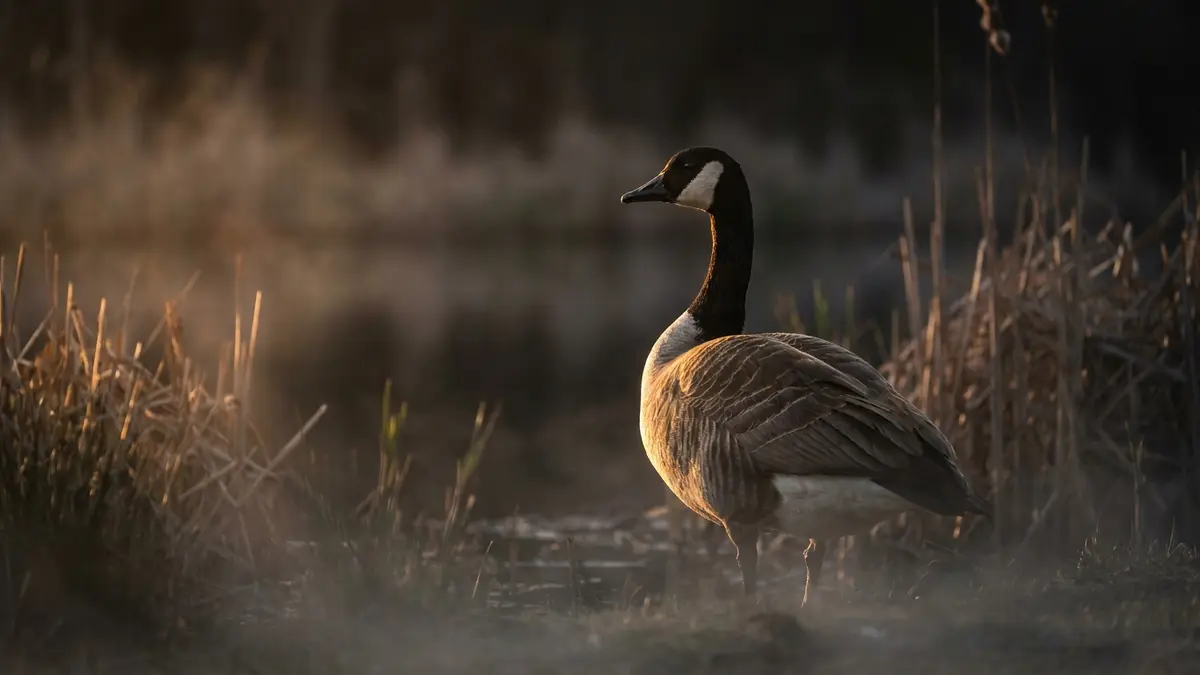
The goose is known as a totem for the qualities of fierce protection, loyal partnership, and clear-voiced guidance. It urges its owner to speak honestly and take good care of people who depend on him or her, and to trust his or her own sense of direction even when taking long journeys. In a dream, the goose usually points to the necessity of protecting people who are in danger, welcoming new beginnings, or resting and seeking real companionship.
An almanac
- Core message
- Protect fiercely, speak up, keep moving with purpose
- Spirit animal
- Refocus on a near goal; seek real, lasting connection
- Totem for
- Natural leaders who protect and guide their circle
- Power animal
- Finding your voice and building lasting stamina
- In dreams
- Meaning shifts with the goose's behavior
- Cultural roots
- Roman, Egyptian, Native American, Celtic, Nigerian, Asian lore
- First domesticated
- Ancient Egypt, 3,000+ years ago
When a flock of geese fly past, honking to each other as they move. This image of Geese coming together in a tight formation is a strong metaphor for the kind of loyalty Geese spirit can bring to you. As guardians of family and home, Goose symbolism is associated with fierce protection, loyal partnership and clear communication, as they will protect one another from danger. This faithfulness extends to being allies with their fellow Geese, friends and partners. Being spiritually aligned to Goose can also show courage in communicating one's truth to others. People in ancient Rome, Egypt and Native America have long seen Goose as protection for the home and destiny.
Goose Symbolism & Meaning
The goose has a long history, both as a working animal and a source of symbolism. Its ancestry stretches back as far as twelve million years. Some of this symbolism came from the way a goose defends its territory: it makes lots of noise before it fights to protect itself if the noise doesn't make whatever threatens it retreat.
In Jack and the Beanstalk, a goose takes the place of a hen. In ancient Rome, geese were associated with Juno, who is often thought of as guardian of the state, wife to Jupiter and associated with marriage, fertility, and giving prophecy about what will happen in the future.
Ancient people used goose feathers to write with things called quills. Geese were also given credit for inspiring people who wrote those things to find inspiration in their work.
Sometimes geese team up to take care of an injured one by walking beside it until it heals up and can keep flying again.
Goose Spirit Animal
When you see a goose, it might be a reminder that what you want is closer than you think. It means that you may be standing closer to your dreams than you believe, and simply need to refocus. If your circumstances have soured, or have become stagnant or unhealthy, the goose may be signaling that it's time to move on, like a flock relocates for better food or a more fertile environment.
Geese are loyal and determined. They can appear when someone has withdrawn from others or neglected the people in their life. If that's the case for you, then it may be a sign that it's time to make some real connections again, and maybe even find a life partner who is right there beside you.
Those who are trying to start or expand a family might find the symbol helpful for channeling their own fierce protective instincts. Those who are feeling scared or ill might notice the goose. It can bring them comfort and shelter until they're able to steady themselves again.
Does Goose fit you?
Tap the ones that sound like you — 6 traits, no right answer.
0 of 6 Nothing picked yet — start tapping.
Goose Totem Animal
A goose totem animal is a sign of leadership, someone who's happy to take a stand, to be heard and set a direction for others. They're very caring towards those in their circle; emotionally, financially and in all the little ways. They can hide behind this caretaking to dodge their own ambitions. A goose person quickly spots who's drifting off and helps them find their footing again. Big families are just the kind of project they'll throw themselves into, and if that's not practical they'll dedicate the same devotion to chosen people or pets.
A goose often feels driven to seek for deeper truths — quests into the mysteries of life.
Goose Power Animal
If you're struggling with isolation or depression, bring in Goose as a power animal. It can help you see which relationships truly matter. When you feel ready to give up on a long project, ask Goose for help.
Talkativeness, gossipy or otherwise, may feel useful to you. But when it crosses a certain line into inappropriate behavior, Goose helps you to find balance and restraint.
Above all, use Goose as a mentor when speaking an uncomfortable truth or finding your own voice.
Across cultures
5 traditions — pick one to read its take.
Native American Goose Symbolism
In the "Native American zodiac," Snow Goose holds the place in the medicine wheel. That's a circle map used to show a person's place in the world. It was created by Sun Bear, an author. The Snow Goose rules December 22 to January 19.
Snow Goose people usually are reliable and honest, have strong willpower and work hard for what they believe is important. They tend to be practical people who make plans before taking action.
Snow Goose people are thought to have strong feelings about their family and close friends. They help these people whenever they can, and when they find their loved ones happy, they feel good too.
Snow Goose people usually are sensitive and emotional. They like beautiful things, both man-made and natural. Snow Goose people also have strong feelings about love. They usually feel love deeply and give love freely. That gives them great joy.
Snow Goose people usually make good artists, teachers or storytellers because they enjoy passing information on to others and know how to tell their stories well.
Goose as a Celtic Animal Symbol
Celtic sources say relatively little about the goose itself. What does survive says that the bird has to do with allegiance to home ground, family, and country. That's consistent. Everywhere else in every culture where the goose appears, it matches this story: it's a defender of hearth and home.
Goose Symbolism in Nigeria
The Wawa of Nigeria have a saying about how a flock of geese can travel a very long way by traveling together. As each goose beats its wings to get lift, it also helps the goose behind it by giving it an easier time. And it encourages the ones behind it to keep going by honking away.
A goose at the front will tire out quicker than all the ones behind it, and will fall back to rest and let another goose fly at the front. This creates a cycle of easy labor then harder labor and this rotation keeps all the geese in good shape.
Goose Symbolism in Egypt
In Egypt, they saw the Great Honker as bringing the world into being. He was male and some Egyptians credited him as a self-created deity. Over time, they confused him with Geb, the father of Osiris. Other Egyptian writers still saw that Great Honker as more like Amun, whom they worshipped as the beautiful goose.
In Egypt, thousands of years ago, people domesticated geese. One of the oldest known breeds of goose might have come from wild greylag geese. Early art shows these domesticated birds.
In ancient Egypt, people combined two ideas about geese: first, that a divine goose created the world, and second that geese made good dinner. Those two ideas are still together today in people's views of geese.
Far Eastern Goose Symbolism
The goose's flight around the globe often drew imagery related to the naturalist's ideal of yin and yang: a symbol of pairs of opposites in dynamic equilibrium. People used it to suggest a balance between their loyalty and their freedom, between staying close and flying away. In China, a poem attributed to Lao Tzu said it represented authenticity because geese didn't have to be washed clean before they flew away—they were white all along.
China began using domestic geese. Vessels in the shape of a goose shaped from earthenware had expressive eyes that would travel thousands of miles via the Silk Road as trade goods. Because they represented devotion, art made in their likeness often showed up as romantic gifts, bringing wishes for a marriage as lasting and stable as that of a dedicated goose.
Goose in Dreams
Dreams about geese tend to be about something related to the bird's behavior:
- If the goose is aggressive, you might have missed a serious situation in your life. Check on a friend or family member who's feeling down, perhaps.
- If it's trying to make a nest, it may be telling you that a child is coming into your life -- it could be literal or something creative that you've recently started and need to protect.
- Flocks of geese often indicate that it's time for a break: get some time away from whatever is stressing you out and maybe even consider not jumping into that big commitment just yet. When geese are scattered with no obvious goal in mind, it means they're on a wild goose chase! It's time to reassess your priorities.
Goose Spiritual Meaning
The central message of this bird remains the same: it is an incredible protector to those you love. You'll stand strong and tall against anyone trying to harm or hurt the people you care about. Plus, you've got a great sense of where you belong. When conflicts come your way, don't be afraid to bring up your side.
And don't lose faith if you're currently flying towards something that doesn't quite feel like home yet.
Goose in Greek Mythology
A while before Romans chose the bird for Juno, Greek storytellers already made Goose a player in their tales of the gods. The most familiar story places Goose's egg on the roster of how Helen of Troy came into being. In Zeus' version, he turned himself into a swan and Leda laid an egg that gave birth to Helen. But in the lost epic Cypria, there's a longer tale, one in which Goddess Nemesis appears instead. Fleeing from Zeus, she changes form several times — first a hare, then a bee, then a mouse — but after that she turns herself into a goose and it's no use: Zeus becomes a swan and catches her anyway. From their coupling comes an egg that hatches into Helen, whose beauty will later be the spark for starting off a war.
It's strange to see such an everyday bird play such an honored role: here Goose is the last, cleverest disguise Goddess Nemesis dons when she needs to escape fate — but fate catches up with her anyway. It's another ancient story in which Goose shows up right at the start: either at the beginning of the world, as it is with ancient Egypt and its creator-goose; or at the start of an age like the Trojan War.
Goose in Hindu Mythology
It appears that a goose is the preferred vehicle, or vahana, in Hindu mythology of the god Brahma and goddess Saraswati. Experts have debated for generations whether this divine mount is a swan or a goose, but since the mythos was developed on the Indian subcontinent, bar-headed geese would have been familiar birds to the poets who first described it.
Mother Goose & the Folklore Behind the Name
The name Mother Goose is synonymous with nursery rhymes. But the little feathered creature behind this wonderful emblem has an origin story more than most people expect.
In 1695, a French writer named Charles Perrault published a collection of fairy tales called Histoires ou contes du temps passé— or "Tales of Past Times." The book would go on to become known as Contes de ma mère l'Oye— and Mother Goose became the name for the grandmotherly fairy-tale teller who gathers her flock close while they listen to stories by the fireside.
It's a poetic image that suits a bird already linked by its habits to motherhood, protection, and vigilance in caring for its young. Mother Goose is an archetypal maternal figure—one who gathers and protects little ones in close until they are grown.
Frequently Asked Questions
What does a Goose spirit animal mean?
A Goose spirit animal could be indicating the need for protection and loyalty or a clear direction. You may be close to a goal or the truth, but distracted. You may be in an unhealthy situation that requires a change, or have an opportunity to join the "flock" and companionship with new friends.
What does it mean when Geese keep appearing in your life?
Goose sightings suggest home, family, and open, honest communication. If you keep seeing them, you might get a push to speak up when you've been quiet or to trust the direction you already know even if it feels long.
What does it mean to dream about a Goose?
If a goose acts aggressively toward you in your dream, you're likely overlooking something important. If a goose is nest-building, a child or new project may be on the way. If the dream brings a flock of geese, you probably need rest and renewal. And if there's chaos among the geese, that signals a 'wild goose chase' worth reassessing.
Is seeing a Goose considered good luck?
In some folk traditions, geese have special significance. Seeing a goose in one of these traditions is believed to bring good luck. Geese will often cross your path, which means safe travel, protection, and good news for your family. The goose's significance will change with the context. Always pay attention to how the bird is acting and what's happening in your life to truly understand the meaning of the sight.
What does it mean if a Goose chases you in a dream?
A chasing Goose in a dream usually means there's a problem you're avoiding. Goose is calling you to address the situation and turn around before it goes too far.
Goose also represents
Sources
Claims on this page were checked against these published sources.
- Goose
Goose fossils have been found ranging from 10 to 12 million years ago (Middle Miocene)... The genus Anser atavus, dating back approximately 12 million years, represents an ancestral form sharing more characteristics with swans than modern geese.
Read the source → - Juno (mythology)
Juno's sacred geese warn the Romans while the Gauls approach the Capitol in 390 BC... The divine couple received from Greece its matrimonial implications, thence bestowing on Juno the role of tutelary goddess of marriage (Iuno Pronuba)... a sovereign deity, a martial goddess and a fertility goddess... her oracular character, her announcement of perils
Read the source → - Geb
The mythological creator 'goose' referred to above, was called Gengen-Wer meaning 'Great Honker' and always depicted as a Nile Goose/Fox Goose or Egyptian goose (Alopochen aegyptiacus).
Read the source → - Waawa
Waawa... Igbo... Enugu and Ebonyi State
Read the source → - Leda
Nemesis next changes into various other creatures including a hare, a bee, and then a mouse, but Zeus merely becomes a swifter or more predatory creature each time until, finally as a swan, Zeus captures Nemesis while she is a goose.
Read the source → - Hamsa (bird)
In Hindu iconography, hamsa is the vahana (or vehicle) of Brahma, Gayatri, Saraswati, and Vishvakarma.
Read the source → - Mother Goose
Charles Perrault, one of the initiators of the literary fairy tale genre, published a collection of such tales in 1695 called Histoires ou contes du temps passés, with des moralités under the name of his son, which became better known under its subtitle of Contes de ma mère l'Oye or Tales of My Mother Goose... An English translation of Perrault's collection, Robert Samber's Histories or Tales of Past Times, Told by Mother Goose, appeared in 1729.
Read the source → - Genetic and Phenotypic Characterization of Domestic Geese (Anser anser) in Egypt
Historically, the goose was one of the first birds domesticated in Egypt more than 3000 years ago.
Read the source →