Animal Dream Symbol
Sheep Dream Meaning: Dreams About Sheep Explained
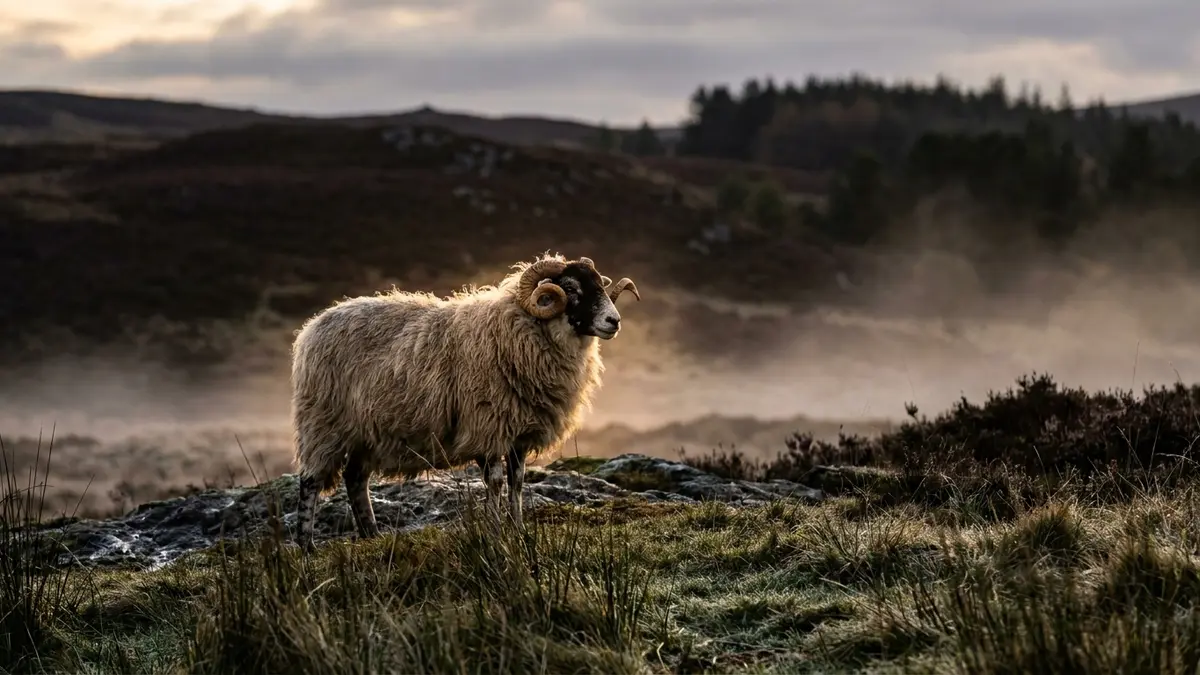
Dreaming about a sheep generally symbolizes gentleness, belonging, and the pull between fitting in with a group and trusting your own voice. A calm, unified flock points to harmony and support within your community or family, while a lone or dark-coated sheep suggests you're being called to stand apart, even if that path brings some short-term friction. Spiritually, the sheep ties to selfless giving and sacrifice — real progress may ask you to give something up first.
An almanac
- Core message
- Belonging vs. staying true to yourself
- Spirit animal
- Soft power through patience and trust
- In dreams
- Calm flock = harmony; lone sheep = independence
- Best qualities
- Gentleness, cooperation, quiet devotion
- Watch for
- Losing your voice to fit in (black sheep = outsider)
- Cultural roots
- Ritual sacrifice symbolizing selfless giving
- Instinct behind it
- Flocking together is safety in numbers, not just conformity
There's a reason so many of us were taught to picture sheep as a way to drift off to sleep: the image itself carries a quiet, unhurried calm. When one wanders into your actual dream rather than just your bedtime ritual, it's rarely random. A sheep tends to represent gentleness, belonging, and the pull between fitting in and standing on your own, and the specific way it shows up, alone or in a crowd, pale or dark-coated, calm or startled, usually points to which side of that tension you're wrestling with right now.
What It Means
A sheep dream is asking you to look honestly at your relationship with the people around you. Sheep survive by moving together, and that instinct to cluster shows up in the dream world as a symbol for community, cooperation, and mutual protection.
If your dream sheep felt content and unhurried, it may simply mean you're in a season where you feel supported, safe, and at peace within your circle of family or friends.
But the same imagery carries a second, less comfortable reading. Sheep are so often used as shorthand for someone who follows instead of leads, so the dream can also point to where you've been going along with a group decision, a trend, or someone else's expectations instead of trusting your own judgment. The animal doesn't condemn you for wanting connection; it's asking whether that connection has quietly cost you your own voice.
Color matters here too. A pale, clean-coated sheep generally leans toward innocence, contentment, and childlike joy, while a dark-coated animal, an echo of the old phrase about the one who doesn't match the rest of the family, can hint at friction ahead, particularly if the dream shows that animal wandering off from the others.
Straying from the group in the dream isn't automatically a bad sign, but it does suggest that choosing your own path may come with some turbulence before it settles.
Common Sheep Dream Scenarios
13 scenarios — tap the one you remember
Symbolism & Message
The sheep, underneath all its variations, is a symbol of soft power — the kind of strength that comes from patience, gentleness, and knowing when to move with others rather than against them. Where a dream predator might demand that you fight or flee, a sheep dream usually asks for something quieter: cooperation, trust, and a willingness to let go of the need to control every outcome.
That said, the dream is rarely just a compliment. Sheep have long stood in for the risk of losing yourself inside a crowd, whether that crowd is a workplace culture, a family expectation, or simply the pressure to agree with everyone around you to keep the peace.
When this animal appears, it's worth asking yourself directly whether you've been keeping quiet about something you actually believe, purely to avoid standing out.
There's also a softer, more nurturing layer worth noticing. Sheep are so closely tied in the collective imagination to childhood, playfulness, and untroubled joy that their appearance can simply be a signal that you need more lightness in your life, permission to rest, to feel cared for, or to stop treating every decision as high stakes.
Spiritual Meaning
Across many older belief systems, the sheep held a place of genuine reverence, valued precisely because of how much it offered in exchange for so little: wool for warmth, milk, and companionship, all from an animal that asked for nothing but grass and safety in return.
That history is part of why the sheep still reads spiritually as a symbol of selfless giving and quiet devotion.
Its role in ancient ritual sacrifice adds a heavier note to that same spiritual thread. Offering a sheep to appease a deity or seal a sacred agreement said, plainly, that something valuable had to be surrendered to earn a greater blessing.
When a sheep shows up in a sacrificial context in your own dream, it's often less about literal loss and more a spiritual nudge that real progress usually asks you to give something up first, whether that's comfort, certainty, or an old version of yourself.
Taken as a whole, a sheep dream tends to circle two spiritual poles at once: the peace that comes from belonging to something larger than yourself, and the courage it takes to occasionally walk away from the flock when your own path pulls you elsewhere.
The Shepherd, the Lost Sheep, and Being Guided
Long before sheep became shorthand for blind conformity, the relationship between a flock and its shepherd was one of the oldest images humans reached for when talking about being cared for and led. "The Lord is my shepherd, I lack nothing," opens one of the best-known lines in the Hebrew psalms, and that pairing, a vulnerable animal and a guide who knows the terrain it cannot see, still colors how a sheep dream feels even outside a religious frame. If your dream sheep seemed to be waiting on direction rather than resisting it, the image may be less about pressure to conform and more about a quiet willingness to be led somewhere you can't map out yourself.
A related, gentler thread shows up in the story of the one sheep that wanders from a flock of a hundred, and is searched for until it's found and carried home rejoicing. If your dream showed a single sheep separated from the others, and especially if something in the dream felt like relief at being found again, it's worth asking whether you've secretly worried that drifting from your usual circle means being written off. This older image suggests the opposite: that straying doesn't cancel your belonging, it just means someone, or some part of you, comes looking.
The darker cousin of that same symbolism traces back to the Passover story, where families were instructed to mark their doorframes with a lamb's blood as a sign of protection before a night of danger. That layer adds a third possible reading to a sacrificial sheep dream beyond simple trade-off: sometimes the sheep in a dream isn't asking what you'll give up; it's marking that you're already protected heading into something hard. Taken together, these older threads suggest a sheep dream can be less a verdict on your independence and more a reminder that being led, being searched for, or being marked safe are all still forms of belonging.
Frequently Asked Questions
What does it mean to dream about a black sheep?
A black sheep in a dream often echoes the familiar phrase about the family member who doesn't quite fit the mold, and can point to feelings of being the outsider in your own circle. It doesn't automatically forecast disaster, but if the dream shows that sheep leaving the rest of the flock, it may mean choosing your own direction will stir up some friction before things settle down.
Why do I keep dreaming about a whole flock of sheep?
A dream flock generally reflects your relationship with community, family, or any group you rely on for support. A calm, unified flock suggests you feel genuinely safe and connected within that circle, while a scattered or anxious one may mirror real tension or a sense that the group isn't as aligned as it should be.
Does dreaming about sheep have a spiritual meaning?
Yes. Sheep have long carried spiritual associations with gentle giving, devotion, and sacrifice, since historically they offered wool, milk, and companionship while asking little in return. A sheep appearing in a spiritually charged dream, especially one involving an offering or ritual, often suggests that meaningful progress in your life will require you to give something up first.
What does it mean to dream about a lost sheep, separated from its shepherd or flock?
A lost or wandering sheep often reflects a real feeling of being unmoored, disconnected from the people, purpose, or guidance that usually keeps you steady. It doesn't necessarily mean you've been abandoned; in the older image of the single sheep searched for until it's found, being separated from the group is often followed by being actively sought, not written off. If the dream carried any relief or reunion, it may be reassurance that the connection you're worried about losing is more durable than it feels right now.
What does it mean to dream about a sheep giving birth or seeing a newborn lamb?
A birth scene involving a sheep or lamb typically points to new beginnings, a fresh, unguarded start, or the arrival of something in your life that still needs gentle protection while it grows. Because lambs carry such a strong association with innocence and purity, this dream often shows up right as an idea, relationship, or project is young enough that it still needs shielding from too much scrutiny or pressure before it's ready.
Sources
Claims on this page were checked against these published sources.
- Sheep
Sheep are flock animals and strongly gregarious; much sheep behavior can be understood on the basis of these tendencies. ... All sheep have a tendency to congregate close to other members of a flock, although this behavior varies with breed; sheep can become stressed when separated from their flock members.
Read the source → - black sheep
A nonconformist; an unusual or unconventional person, who may be rejected or disdained by others for this reason.
Read the source → - sheep's eye
a secretive, pining look, or humble doting glance
Read the source → - Animal sacrifice
The animals used are, in order of preference, bull or ox, cow, sheep (the most common), goat, pig ... A qorban was an animal sacrifice, such as a bull, sheep, goat, or a dove ... Muslims engaged in the Hajj (pilgrimage) are obliged to sacrifice a lamb or a goat, understood as a symbolic re-enactment of Abraham's sacrifice of a ram in place of his son.
Read the source → - Psalm 23 (NIV)
The Lord is my shepherd, I lack nothing.
Read the source → - Luke 15:3-7 (NIV)
Suppose one of you has a hundred sheep and loses one of them. Doesn't he leave the ninety-nine in the open country and go after the lost sheep until he finds it? And when he finds it, he joyfully puts it on his shoulders and goes home.
Read the source → - Exodus 12:7 (NIV)
Then they are to take some of the blood and put it on the sides and tops of the doorframes of the houses where they eat the lambs.
Read the source → - Behavior of Sheep
When they perceive a threat, they organize into tightly packed groups for protection from predators, becoming vigilant, flocking together, and quickly moving to protected areas.
Read the source →