Fish & Sea Life · Spirit animal
Clam Spiritual Meaning & Symbolism
The ancient, soft-bodied burrower that teaches grounded contentment, quiet self-protection, and the wisdom of opening up only when it's safe.
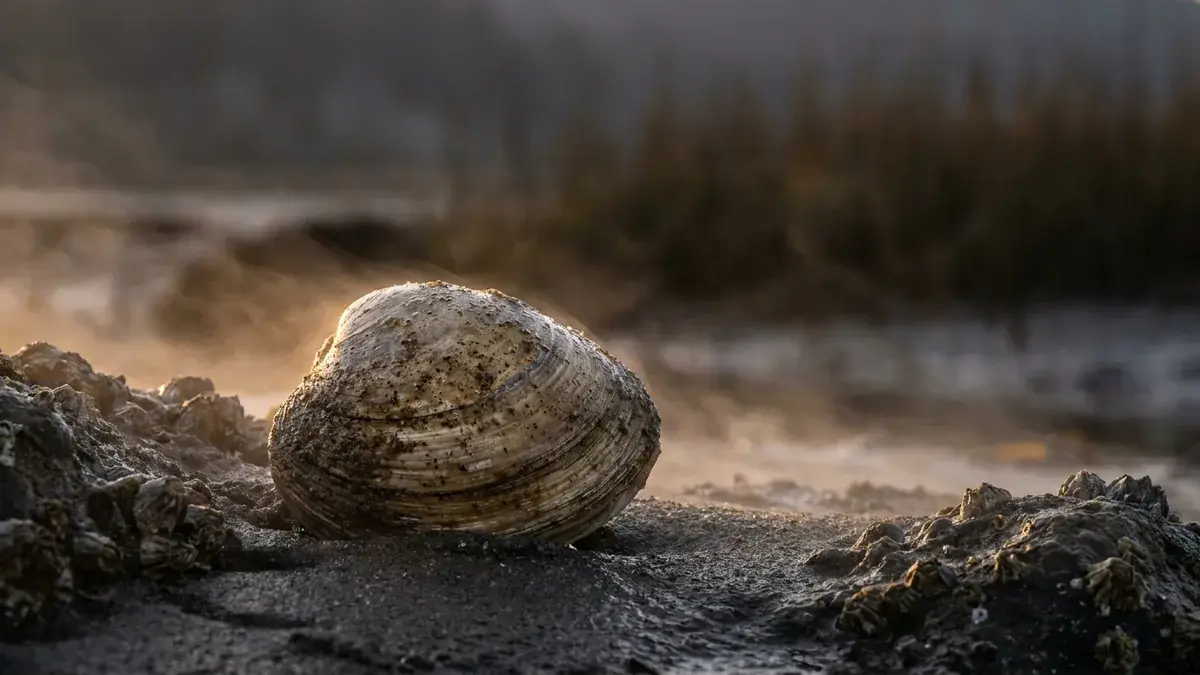
The Clam represents inner peace, defense, and stability. That's because it's a very old creature, it doesn't open its shell until it feels secure. People who connect with it as a spiritual guide often shy away from showing their true emotions. They tend to act with great care before they trust anyone. When they dream about Clams, they should prepare themselves for a period when they need to practice patience and stay in the background.
An almanac
- Core message
- Contentment through balance
- Spirit animal
- Comfort and healing on the way
- Totem for
- Deep, private, patient people
- Power animal
- Retreat and protect when exposed
- In dreams
- A season calling for patience
- Watch for
- Privacy tipping into isolation
- Longevity record
- Ming the quahog lived 507 years
Some people say they're happy as a clam, or feel snug as a clam, while others might go so far as to clam up and keep quiet. But these aren't just cute sayings: They actually reveal quite a bit about clams, which are some of the oldest creatures on Earth. Clams are mollusks that live inside a pair of hinged shells for protection. They have a shell to protect them from harm and can close themselves up tight when they want to stay private.
Clam Symbolism & Meaning
Clams have a truly ancient history. They've been around for about half a billion years. In fact, they're the living relatives of things we call oysters, mussels, and scallops.
Clams keep going for a very long time. A clam might be hundreds of years old. So clams are sometimes taken to mean persistence and endurance.
Watch a clam digging into sand or mud with its muscular foot, and you'll understand how it stays grounded. Clams also have two tubes on their bodies: one draws water in, and the other sends it out, always letting some go and taking some in.
Freshwater clams are different from saltwater ones in that most freshwater clams are hermaphrodites, which means they both fertilize and protect their own eggs without needing anyone else's help.
Of course, saltwater clams breed differently. They release eggs and sperm into the ocean in huge numbers. So this way of breeding really encourages growth and fertility.
Even though they have no eyes, clams are sensitive to shifts in light through simple light receptors. They can also hide in sand or mud instantly if something scares them. This makes them symbols of being alert and taking care of yourself.
They grow algae that use light from the sun to make their food in a special kind of partnership.
There's even a story about the beginning of life from many Pacific islands--in one version of it, an enormous clam is actually what calls all ocean life into being at first.
Clam Spirit Animal
If the clam is your spirit animal, it's a sign of good things to come, both for your work and for your life in general. It will be like a turning tide, things getting easier on you.
But that doesn't mean you can be careless about sharing your ideas with everyone else. Maybe there's something special you're cooking up.
When you're talking about things being "locked up," that can be either good or bad. It's bad when you bottle up your feelings instead of releasing them in a healthy way. And it's bad when you're afraid to bring some project into the light where it could thrive.
Does Clam fit you?
Tap the ones that sound like you — 6 traits, no right answer.
0 of 6 Nothing picked yet — start tapping.
Clam Totem Animal
If a clam is your totem animal, people close to you may have to draw your feelings out gradually because you hold your emotions close. People often see the calm surface, but they can't see what's underneath. You are likely an empath and sensitive to things. You tend to move slowly when it comes to making decisions and spending money. When you love someone deeply, you'll do everything in your power to keep them close.
When you feel threatened, you may clam up and hide. But before shutting down, remember there may be nothing wrong at all. Water near oceans, rivers, or even a backyard pool can be calming for you.
Clam Power Animal
Seek out the clam power animal whenever you need to retreat from an encounter that feels overwhelming. The clam instinctively recedes from whatever shows itself to be a threat, whether external or psychological. Use that moment to take stock of your responses rather than acting on them.
The clam is also helpful when directing subtle energy. The spirit of the animal reminds us to act carefully and with consideration for others. Clam helps focus our attention on a specific problem instead of leaving our intentions vague and harmful.
Across cultures
2 traditions — pick one to read its take.
Far Eastern Clam Symbolic Meanings
Chinese tradition says that the ch'en is a shape-shifting sea creature whose name is often translated as "great clam." People believed it conjured mirages and exhaled churning bubbles from its deep undersea lair before eventually turning into a Dragon, linking the Clam to illusion, mystery, and transformation.
A ceremony honoring Earth spirits once used clamshells as ritual tools across the region, highlighting how seriously the Clam's protective and grounding nature has been taken there.
Native American Clam Symbolic Meanings
The clam is more than just food on many east coast shores. People who live along the coast respect the clam as if it's family, and they don't want to offend its spirit. But some of that respect isn't just about being polite. Respect can take a tangible form; along the coast, people make beadwork from the shells of clams. That beadwork is called wampum. Eastern Woodlands people make wampum from clamshells.
Wampum does more than just decorate things. People also use it to make records of treaties and important agreements with other groups of people. Wampum can also be used to transfer leadership among the Haudenosaunee, turning a clamshell into a literal container for memories, for rules, and for trust.
Some Haida people live in a group of islands they call Haida Gwaii. Some stories told by these people say that the first Haida people came out of a great shell that Raven found on the beach at Rose Spit; the shell was filled with small creatures who came out as they were coaxed by Raven's beak and their own curiosity.
This story isn't just about how Raven found the first people in the Haida Gwaii Islands; it's also about how he protected them when he cradled them in his own giant clamshell. The shell wasn't just there to protect them; it was also where all newborn babies waited until they could take their first steps outside into the world.
Clam Dreams
A clam in a dream often points to a long period in your life when patience is needed — a time when the best way to get through it is to stay still, quiet, and listen carefully, letting your instincts guide you on when to make your move.
Often, the context of the dream adds clarity:
- If you are the clam yourself, maybe you're bored, and looking for something new to do.
- If the clam is closed up tight, there's probably something being hidden from you, whether a secret or some past family history.
- If the clam is hiding itself or burying into sand, this points to a period when it might be best not to try so hard.
Clam Spiritual Meaning
Contentment, according to the Clam's spiritual message, gets earned through balance rather than chased outright. It shows you how to draw in what nourishes you, release what doesn't, and protect your inner world without permanently sealing yourself away from connection or opportunity.
Its long lifespan is a reminder that steady, patient living tends to outlast anything built in a rush, while its quiet partnership with sunlight and algae shows how thriving often depends on cooperation rather than isolation. Let this guide encourage you to trust your instincts about when to open up and when to hold back, and to remember that real safety and real growth can, and should, coexist.
Ming: The 507-Year-Old Clam
In 2006, divers drew up a small ocean quahog. Nobody expected the animal to be the oldest confirmed living thing until scientists counted the ring-like markings on its shell and discovered that it had been alive for 507 years. The creature was still alive when China's Ming dynasty ruled and even longer before scientists named its species. They called it Ming.
Ming wasn't magical; it was the result of biological slow motion. Its metabolism ran so slowly that one year barely made a dent in its health, giving the animal a chance to last much longer than many other creatures that just aged faster. It was an argument for going slow.
There's a bittersweet coda worth thinking about here, too. The careful study that preserved Ming for analysis actually ended its life. Even a creature that had lived so much and seemed so well protected still ended up vulnerable eventually.
Frequently Asked Questions
What does the Clam symbolize spiritually?
Clams spiritually represent contentment, protection, and balance. Their evolutionary lineage is ancient, but their symbolic value is still useful today. Clams represent these themes because of their consistent way of burrowing, as well as their ability to both eat and release what they no longer need. Clams were seen as symbols of longevity because they're often long-lived. They've also traditionally symbolized fertility.
What does it mean when a Clam appears in your dream?
When a clam shows up in your dreams, it's a reminder to slow down and be patient before acting. If you feel stuck in your current life, a clam may suggest you need to take in some new experiences or explore something beneath the surface of what seems normal.
What kind of person has the Clam as a totem animal?
The Clam totem means a person is emotional and sensitive, and doesn't always share their feelings with others. But once you gain their trust, they have a strong sense of loyalty and protection for the people they love. Many Clams have natural empathy and may find themselves reacting emotionally to other people's troubles. They may need to find time to ground themselves so they can cope with that sensitivity.
What does it mean to dream about eating clams?
In dreams, clams are sometimes interpreted to indicate hunger for emotional or physical nourishment, suggesting that you may have been running low for a while. They can also symbolize your readiness to finally receive something or to act on an idea. If the clams taste sweet, it could mean that the nutrition they represent will feel welcome. If the clams taste bitter or bad, it might indicate an unbalanced diet that isn't providing what you need.
What does a dead or empty clam shell mean in a dream?
A dead clam or a broken shell is a sign of a completed chapter in your life. You don't need to keep guarding something that's already over. Don't be too concerned about the loss. Allow yourself to look forward to something new.
Is finding a clam shell on the beach a spiritual sign?
If you happen to see an open shell as you're walking on the beach, consider it a gentle encouragement to look into whether it's time for you to "reveal yourself" and allow others to see more of your personality and emotional state. On the other hand, finding an intact shell is more likely to indicate a need for some protective measure to stay in place a bit longer before opening it.
There's no "fortune telling" here: the point of these nautical signs is not about clairvoyance but about checking in with yourself and heeding what your instincts tell you at the moment.
Clam also represents
Sources
Claims on this page were checked against these published sources.
- Bivalvia
Bivalves appear in the fossil record first in the early Cambrian more than 500 million years ago.
Read the source → - Arctica islandica
An individual specimen was reported to have lived 507 years, making it the longest-lived non-clonal metazoan whose age was accurately known.
Read the source → - Giant clam
One of a number of large clam species native to the shallow coral reefs of the South Pacific and Indian oceans, they may weigh more than 200 kilograms.
Read the source → - Shen (clam-monster)
The plastic exhalations of the clam-monster sometimes burst the film of surface tension and appeared to astonished mariners as stunning mansions adrift on the surface of the deep.
Read the source → - Wampum
The term first referred to white and purple beads made from the quahog, also known as the Western North Atlantic hard-shelled clam... Before European contact, strings of wampum were used for storytelling, ceremonial gifts, and recording important treaties and historical events.
Read the source → - The Raven and the First Men
He was alerted by some sounds to a large clamshell that had little creatures dwelling inside, reluctant to emerge from their shell. With some coaxing from Raven using his beak, and their curiosity about the outside world, the beings emerged from the clamshell to become the first Haida people.
Read the source → - The Raven and the First Men: From Conception to Completion
The Raven and the First Men is one of Haida artist Bill Reid's most iconic large-scale works, based on a tiny boxwood sculpture he created ten years earlier, entitled The Raven Discovering Mankind in a Clamshell, 1970.
Read the source → - Ming (clam)
Ming was the oldest individual (non-clonal) animal ever discovered whose age could be precisely determined... the clam was 507 years old when it was caught... The mollusk's long life came to an end in 2006 when the researchers, unaware of the animal's exceptional age, froze the specimen, killing it in the process.
Read the source →